


iPhone 16 Plus Vs Xiaomi Redmi Note 12 Pro

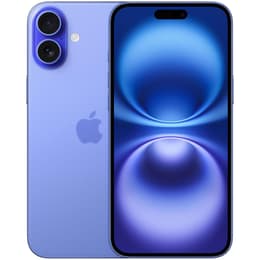
iPhone 16 Plus
iPhone 16 Plus
Starting at

Refurbished price:559.00

Versus €979.00 new

See options
Xiaomi Redmi Note 12 Pro
Starting at

Refurbished price:114.00

Versus €399.00 new

See options

Ratings

The iPhone 16 Plus, released in September 2024, and the Xiaomi Redmi Note 12 Pro, launched in early 2023, represent different generations and ecosystems within the smartphone market. While both offer large displays and capable camera systems, the iPhone 16 Plus benefits from more recent technological advancements and a distinct software experience. The primary differentiators lie in their core processing power, camera capabilities, and long-term software support.

Scores

Durability

When considering the practical lifespan of these devices, their release timelines and software support play a significant role. The iPhone 16 Plus, being a more recent release, offers a longer expected period of software updates and security patches compared to the Redmi Note 12 Pro.

  • Software Longevity: The iPhone 16 Plus launched with iOS 18 and is expected to receive major iOS updates for approximately 5-6 years from its release, currently running iOS 26.4. The Redmi Note 12 Pro, initially running Android 12 with MIUI 13, typically receives around two years of major Android updates and security patches for a slightly longer duration, meaning its update cycle is nearing its end.
  • Physical Durability: The iPhone 16 Plus features a Ceramic Shield front, which Apple states is tougher than previous generations, and an IP68 rating for significant dust and water resistance, allowing submersion up to 6 meters for 30 minutes. The Redmi Note 12 Pro utilizes Corning Gorilla Glass 5 for screen protection and carries an IP53 rating, providing protection against dust and splashes.
  • Repairability: While specific repairability scores can vary, both devices are designed with components that can be replaced by skilled technicians. However, the availability and cost of parts can differ between ecosystems.

Year of Release

2024

2022

Compatible with latest Update

Yes

No

Foldable

No

No

Performance

The performance capabilities of these two smartphones reflect their generational gap and target segments, impacting how smoothly they handle various tasks and applications.

  • Processing Power: The iPhone 16 Plus is equipped with a current-generation processor that delivers substantial improvements in both CPU and GPU performance, enabling seamless multitasking, demanding applications, and graphically intensive gaming. The Redmi Note 12 Pro features a mid-range processor that handles everyday tasks and moderate gaming efficiently, though it may show limitations with very intensive applications or prolonged heavy use.
  • System Responsiveness: Users of the iPhone 16 Plus generally experience fluid navigation and rapid app loading, supported by its 8GB of RAM. The Redmi Note 12 Pro, available with up to 12GB of RAM, provides a responsive user experience for most daily activities, though some users have reported occasional thermal management concerns during extended demanding usage.
  • Storage Options: The iPhone 16 Plus offers storage configurations up to 512GB, catering to users with extensive media libraries or numerous applications. The Redmi Note 12 Pro is available with up to 256GB of internal storage, which is ample for many users but may require more careful management for those with large digital content needs.

Memory (GB)

8 GB

8 GB

Screen quality

Both devices offer large, vibrant displays, but there are distinctions in their underlying technology and visual characteristics that influence the viewing experience.

  • Display Technology and Clarity: The iPhone 16 Plus features a 6.7-inch Super Retina XDR OLED display, providing deep blacks, high contrast, and vibrant colors with a resolution of 2796x1290 pixels. The Redmi Note 12 Pro comes with a 6.67-inch Flow AMOLED display, offering rich colors and good contrast at a 2400x1080 pixel resolution.
  • Brightness and Refresh Rate: The iPhone 16 Plus delivers excellent brightness for outdoor visibility, though its refresh rate is a standard 60Hz. The Redmi Note 12 Pro boasts a 120Hz refresh rate, contributing to smoother scrolling and more fluid animations, and reaches a peak brightness of 900 nits, ensuring good visibility in various lighting conditions.
  • Viewing Experience: Both phones provide an immersive viewing experience due to their large screen sizes. The iPhone 16 Plus's display is noted for its color accuracy and overall visual quality, while the Redmi Note 12 Pro's higher refresh rate enhances the perception of smoothness during interactions and content consumption.

Resolution

1290 x 2796

1080 x 2400

Screen type

Super Retina XDR OLED

AMOLED

Audiovisual

The camera systems on the iPhone 16 Plus and Redmi Note 12 Pro approach photography with different hardware and software philosophies, leading to distinct results.

  • Rear Camera Capabilities: The iPhone 16 Plus features a dual-camera system with a 48MP main sensor and a 12MP ultrawide lens, capable of 2x optical-quality zoom through sensor cropping. It excels in capturing sharp, detailed photos with consistent color science and offers advanced video features like Cinematic Mode and Action Mode. The Redmi Note 12 Pro includes a 50MP main sensor with Optical Image Stabilization (OIS), an 8MP ultrawide, and a 2MP macro lens. Its main camera performs well in good lighting, producing detailed images, while the ultrawide and macro lenses offer versatility but with varying quality.
  • Low-Light and Video Performance: The iPhone 16 Plus generally delivers strong low-light performance and high-quality video recording up to 4K at 60fps, with improved audio capture for video content. The Redmi Note 12 Pro's main camera also performs decently in low-light conditions, aided by OIS, and supports 4K video recording at 30fps.
  • Front Camera and Features: The iPhone 16 Plus has a 12MP front camera known for clear selfies and video calls. It also introduces a dedicated Camera Control button for more tactile adjustments. The Redmi Note 12 Pro features a 16MP front camera that captures good selfies, though some users note inconsistencies in portrait mode edge detection.

Main camera

48 megapixels

50 megapixels

Front camera

12 megapixels

16 megapixels

Miscellaneous

Beyond core performance and display, several practical elements contribute to the overall user experience and differentiate these two devices.

  • Connectivity and Ports: The iPhone 16 Plus supports Wi-Fi 7 and Bluetooth 5.3, along with 5G connectivity and a USB-C port for charging and data transfer. The Redmi Note 12 Pro offers 5G, Wi-Fi (2.4GHz, 5GHz), Bluetooth 5.1, and also features a USB-C port, but notably includes a 3.5mm headphone jack and an IR Blaster, which are absent on the iPhone.
  • Biometric Security: Both devices offer reliable biometric authentication. The iPhone 16 Plus relies on Face ID for secure facial recognition. The Redmi Note 12 Pro typically includes a side-mounted fingerprint sensor for quick unlocking.
  • Design and Handling: The iPhone 16 Plus has an aluminum frame and a glass back, weighing around 199g. The Redmi Note 12 Pro features a plastic back and frame with a glass front, weighing approximately 187g. Both are large devices, with the iPhone 16 Plus measuring 160.9 x 77.8 x 7.8 mm and the Redmi Note 12 Pro at 163.64 x 74.29 x 8.80mm.

Weight

199 g

187 g

Screen size (in)

6.7

6.67

Network

5G

5G

SIM card

eSIM

Dual Physical SIM

Carrier compatibility

Unlocked

Unlocked

Connector

USB-C (USB 2)

USB-C

User feedback for the iPhone 16 Plus frequently highlights its exceptional battery life, often lasting multiple days for many users, and its reliable, high-quality camera system that consistently produces good results. Users also appreciate its powerful performance for all tasks and the intuitive iOS user interface. Some common observations include its standard 60Hz display, which some find less fluid compared to higher refresh rate screens on other devices, and the absence of a dedicated telephoto lens found in Pro models.

For the Xiaomi Redmi Note 12 Pro, users often praise its vibrant 120Hz AMOLED display, fast wired charging, and generally good battery life for its class. The main camera is considered capable in good lighting conditions. However, some users have noted that the secondary cameras (ultrawide and macro) are less impressive, and there are occasional reports of the device experiencing warmth during intensive use or gaming.

Users prioritizing a device with a longer software support window, a highly refined camera experience, and top-tier processing power for demanding applications may find the iPhone 16 Plus well-suited to their needs. Its robust durability features and extended battery life also cater to those seeking a reliable daily driver. Conversely, users who value a smoother visual experience with a high refresh rate display, very fast wired charging, and the flexibility of a 3.5mm headphone jack might lean towards the Redmi Note 12 Pro. It remains a capable option for everyday use, especially for those seeking an eco-friendly, quality-assured refurbished alternative. Ultimately, the choice depends on whether a user prioritizes the latest performance and ecosystem benefits or specific display and connectivity features.


See all articles

Our recent comparisons