

Galaxy A06 Vs Galaxy A15

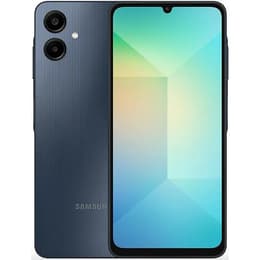
Galaxy A06
Galaxy A06
Starting at

Refurbished price:108.00

Versus €186.96 new

See options
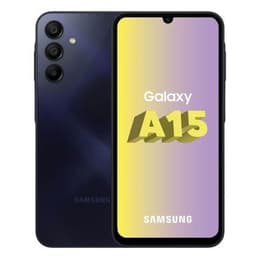
Galaxy A15
Galaxy A15
Starting at

Refurbished price:124.00

Versus €189.00 new

See options

Ratings

The Samsung Galaxy A06, released in August 2024, and the Samsung Galaxy A15, launched in December 2023, are both Android-based smartphones from Samsung's A series. While both devices aim to provide essential smartphone functionalities, the Galaxy A15 generally offers a more refined user experience, particularly in display technology and software longevity, whereas the Galaxy A06 focuses on core features with a more recent release date for its base model. Both operate on the Android platform, offering access to a wide ecosystem of applications and services.

Scores

Durability

When considering the practical lifespan of these devices, software support and hardware resilience are key factors.

  • Software Longevity: The Galaxy A15 (LTE) was released with Android 14 and is promised four generations of Android OS upgrades and five years of security patches, extending its software support significantly into the future. In contrast, the Galaxy A06 (LTE), despite its later release with Android 14, is guaranteed two major OS updates and four years of security updates. This means the Galaxy A15 will receive a longer period of feature updates and security enhancements.
  • Expected Practical Lifespan: Both devices feature plastic frames and backs, which are common for this segment. The Galaxy A06 (LTE) does not have an official IP rating for water and dust resistance, while the Galaxy A06 5G variant offers IP54 dust and water resistance. The Galaxy A15 also lacks an official IP rating. Users can expect a practical lifespan influenced more by software support and battery degradation over time, with the Galaxy A15 having an edge due to its extended update policy.

Year of Release

2024

2023

OS

Android

Android

Foldable

No

No

Performance

The performance of a smartphone is largely determined by its internal components and how efficiently they handle daily tasks and applications.

  • Processing Power: The Galaxy A15 is equipped with a processor designed to handle everyday applications smoothly, ensuring efficient performance for tasks like web browsing, social media, and casual gaming. The Galaxy A06 features a processor that also supports smooth gaming, video streaming, and social media browsing. For demanding applications or intensive multitasking, the Galaxy A15's processor generally offers a more responsive experience.
  • Multitasking and Storage: The Galaxy A15 offers various RAM configurations, including options up to 8GB, which contributes to smoother multitasking. It also utilizes UFS 2.2 storage, providing faster app loading and data transfer speeds. The Galaxy A06 typically comes with 4GB or 6GB of RAM and uses eMMC storage, which is generally slower than UFS 2.2, potentially leading to slightly longer loading times for apps and files.
  • Battery Behavior: Both smartphones are powered by a 5000mAh battery, supporting 25W fast charging. This capacity typically allows for a full day of mixed usage for most users.

Memory (GB)

4 GB

4 GB

Screen quality

The display is a primary interface for smartphone interaction, and differences in technology and specifications can significantly impact the viewing experience.

  • Display Technology and Clarity: The Galaxy A15 features a 6.5-inch Super AMOLED display with a Full HD+ resolution (1080 x 2340 pixels), offering deep blacks and vibrant colors. This technology provides a rich visual experience for media consumption. The Galaxy A06 comes with a larger 6.7-inch PLS LCD display, but with a lower HD+ resolution (720 x 1600 pixels). This results in a lower pixel density, meaning content may appear less sharp compared to the A15.
  • Brightness and Smoothness: The Galaxy A15's Super AMOLED screen can reach up to 800 nits in High Brightness Mode, making it clearly visible even in direct sunlight, and features a 90Hz refresh rate for smoother scrolling and animations. The Galaxy A06's PLS LCD display has a standard 60Hz refresh rate, which provides a less fluid visual experience, and its brightness levels are generally lower, potentially impacting outdoor visibility.

Resolution

720 x 1600

1080 x 2340

Screen type

PLS LCD

Super AMOLED

Audiovisual

Both devices offer camera systems designed for everyday photography, with some distinctions in their capabilities and versatility.

  • Rear Camera System: The Galaxy A15 features a triple-camera setup on the rear, including a 50MP main sensor, a 5MP ultrawide lens, and a 2MP macro lens. The 50MP main camera is capable of capturing clear and vibrant photos in good lighting conditions. The addition of an ultrawide lens allows for broader landscape shots and group photos. The Galaxy A06 comes with a dual-camera system, consisting of a 50MP main camera and a 2MP macro or depth sensor. While its main camera also performs well in adequate lighting, it lacks the versatility of an ultrawide option.
  • Front Camera and Video: For selfies and video calls, the Galaxy A15 is equipped with a 13MP front camera, while the Galaxy A06 has an 8MP front camera. Both devices support video recording up to 1080p at 30 frames per second. Neither device offers 4K video recording capabilities, and low-light photography performance may be limited on both.

Miscellaneous

Beyond core features, several practical elements contribute to the overall user experience and device utility.

  • Connectivity and Ports: The Galaxy A15 (LTE) supports 4G LTE networks, with a 5G variant also available. It includes Wi-Fi 802.11 a/b/g/n/ac, Bluetooth 5.3, a USB Type-C 2.0 port, and a 3.5mm headphone jack. NFC for contactless payments is also available in some regions. The Galaxy A06 (LTE) also offers 4G LTE connectivity, Wi-Fi 802.11 a/b/g/n/ac, Bluetooth 5.3, and a USB Type-C 2.0 port. The A06 5G variant also exists and offers 5G connectivity and IP54 dust and water resistance, which the A06 (LTE) does not.
  • Security and Design: Both smartphones feature a side-mounted fingerprint sensor for biometric security. They share a similar design language with plastic backs and frames. The Galaxy A15 has a weight of 200g and dimensions of 160.1 x 76.8 x 8.4 mm. The Galaxy A06 is slightly larger and lighter at 167.3 x 77.3 x 8 mm and 189g.

Weight

189 g

200 g

Screen size (in)

6.7

6.5

Network

4G

4G

SIM card

Dual Physical SIM

Dual Physical SIM

Carrier compatibility

Unlocked

Unlocked

The Samsung Galaxy A06 and Galaxy A15 cater to users seeking reliable Android smartphones, each with distinct strengths. User feedback for the Galaxy A15 often praises its vibrant Super AMOLED display and extended software support, making it a compelling option for those who prioritize a rich visual experience and long-term usability. Some users have noted that while its overall performance is efficient for daily tasks, intensive multitasking might reveal some limitations, and low-light camera performance could be improved.

The Galaxy A06, on the other hand, is recognized for providing essential smartphone features with a large display and capable main camera for its segment. However, its LCD display and shorter software update commitment are frequent points of comparison. The existence of a more capable Galaxy A06 5G variant, with improved display refresh rate, processor, and IP rating, further highlights the differences within the A06 lineup.

Users prioritizing a superior display, faster storage, and a longer period of software updates may find the Galaxy A15 better suited to their needs. Its Super AMOLED screen and extended support offer a more premium experience for media consumption and future-proofing. Conversely, users who prioritize a larger screen size and core functionalities for everyday use, and are less concerned with the absolute latest display technology or prolonged software updates, might consider the Galaxy A06. Both devices represent solid choices within their respective offerings, and opting for a quality-assured refurbished option can provide an eco-friendly alternative for either model.


See all articles

Our recent comparisons