

Compare models

Google Pixel 6A Vs iPhone Air

  • 1-year minimum warranty
  • Free delivery on all orders
  • Free 30-day returns
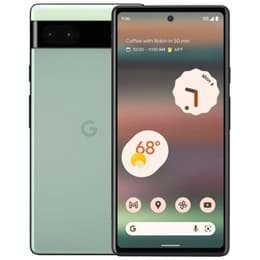
Google Pixel 6A
Starting at

Refurbished price:€190.00

Versus €459.00 new

See options
iPhone Air
Starting at

Refurbished price:€717.00

Versus €1,339.00 new

See options

Differences at a glance

The Google Pixel 6A (2022) and the iPhone Air (2025) represent entirely different eras and design philosophies in the smartphone market. While the Pixel 6A focuses on providing a balanced, accessible everyday experience on the Android operating system, the iPhone Air introduces an ultra-slim titanium build running on iOS. Despite their generational gap, both devices target users looking for streamlined mobile performance tailored to distinct hardware styles.

Available Models

Colour

Storage

Scores

Durability

When examining hardware longevity and physical resilience, these two smartphones reflect different release timelines and engineering standards.

  • Release timeline and software support: The Pixel 6A launched in 2022 and relies on an established software update lifecycle, whereas the newer iPhone Air benefits from an extended support window backed by modern iOS updates.
  • Build durability and repair: The iPhone Air utilizes a rigid titanium frame with advanced glass protection, while the Pixel 6A features a composite back and aluminum frame with standard water and dust resistance ratings.
  • Expected lifespan: Both units handle daily wear reliably, though the iPhone Air provides a more extended future window for software patches due to its recent market entry.

Year of Release

2022

2025

Performance

Underneath the surface, these devices handle multitasking, application loading, and daily energy consumption through vastly different internal architectures.

  • System responsiveness: The iPhone Air handles demanding apps, heavy multitasking, and complex gaming effortlessly with high-tier processing power, while the Pixel 6A manages routine tasks, web browsing, and moderate app switching smoothly.
  • Battery behavior: The Pixel 6A's moderate battery capacity comfortably supports a standard day of mixed use, whereas the exceptionally slim profile of the iPhone Air houses a smaller battery that may require more frequent charging for heavy users.
  • Memory and storage configurations: The iPhone Air offers expansive storage starting at higher baseline tiers paired with generous memory capacity, while the Pixel 6A provides a standard fixed storage tier suited for everyday media storage.

Screen quality

Display characteristics differ significantly in size, panel technology, and visual fluidity between the two models.

  • Display technology and size: The iPhone Air features a large 6.5-inch OLED display providing deep contrast, whereas the Pixel 6A comes with a compact 6.1-inch OLED screen designed for easier single-handed reach.
  • Refresh rate and smoothness: The iPhone Air supports high refresh rate technology for fluid scrolling and animations, while the Pixel 6A utilizes a standard refresh rate suitable for typical viewing tasks.
  • Outdoor visibility: Both panels deliver crisp resolutions and vibrant colors, with the iPhone Air reaching higher peak outdoor brightness levels for clear legibility under direct sunlight.

Audiovisual

Multimedia capabilities and hardware layouts vary greatly, reflecting contrasting design priorities for photography and audio.

  • Camera systems: The iPhone Air utilizes a single high-resolution rear lens system capturing sharp detail and advanced portraits, while the Pixel 6A features a dual-lens setup combining a main sensor with an ultra-wide option.
  • Video and low-light performance: Both devices offer reliable stabilization and night photography modes, with the iPhone Air providing enhanced video recording depth and fidelity.
  • Audio output: The Pixel 6A includes stereo speakers for media playback, whereas the ultra-thin build of the iPhone Air incorporates a mono speaker setup alongside clear microphone arrays for calls.

Miscellaneous

Practical daily elements such as connectivity standards, physical ports, and handling ergonomics shape the overall user experience.

  • Connectivity and ports: The iPhone Air adopts a USB-C port alongside modern wireless standards including advanced Wi-Fi and 5G, matching the Pixel 6A's inclusion of 5G connectivity and a USB-C charging port.
  • Security and authentication: The Pixel 6A uses an under-display fingerprint sensor alongside facial recognition, while the iPhone Air relies entirely on secure facial authentication technology.
  • Form factor and weight: The iPhone Air emphasizes an exceptionally thin and lightweight profile built from titanium, whereas the Pixel 6A features a thicker, traditional footprint that sits comfortably in the hand. Choosing a quality-assured refurbished option provides a sustainable choice for acquiring either device.

Screen size (in)

6.1

6.5

Network

5G

5G

SIM card

Physical SIM + eSIM

eSIM

Carrier compatibility

Unlocked

Unlocked

Connector

USB-C

USB-C

What the community thinks

Choosing between the Google Pixel 6A and the iPhone Air depends closely on your preferred operating system and physical design priorities. Users prioritizing a compact form factor, reliable everyday battery retention, and a traditional dual-lens camera setup will find the Pixel 6A well-suited to their daily routine. Conversely, users prioritizing an ultra-slim titanium build, a larger high-refresh-rate display, and advanced processing headroom may prefer the iPhone Air. Those seeking an eco-friendly alternative can find both models available as quality-assured refurbished options, supporting more sustainable technology consumption without compromising on functional reliability.