

iPhone 12 mini Vs OnePlus 10 Pro

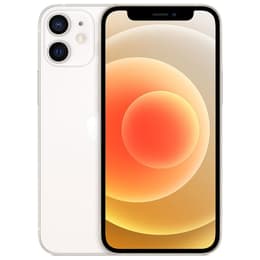
iPhone 12 mini
iPhone 12 mini
Starting at

Refurbished price:146.50

Versus €689.00 new

See options
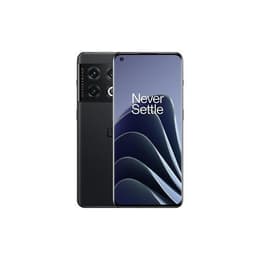
OnePlus 10 Pro
OnePlus 10 Pro
Starting at

Refurbished price:228.00

Versus €999.00 new

See options

Ratings

The iPhone 12 Mini, released in late 2020, is Apple's compact offering, running on iOS. The OnePlus 10 Pro, launched globally in early 2022, is a larger Android-based device. These two smartphones cater to different user preferences, primarily differing in their physical size, operating system ecosystems, and camera philosophies.

Scores

Durability

The practical lifespan of a smartphone is influenced by its release timeline, software support, and physical resilience. Both devices offer robust build quality, but their age and software ecosystems present distinct longevity profiles.

  • Release Timeline: The iPhone 12 Mini was introduced in November 2020, making it an older device compared to the OnePlus 10 Pro, which saw its global release in March 2022. This difference in launch dates inherently means the OnePlus 10 Pro will receive software updates for a longer period from its initial release.
  • Software Support: Apple typically provides iOS updates for its devices for approximately 5-6 years from their release. The iPhone 12 Mini is expected to receive software support until late 2025 or 2026. OnePlus generally offers three major Android OS updates and four years of security updates for its flagship devices, suggesting the OnePlus 10 Pro will receive updates until around Android 15 (2024/2025) and security patches until 2026.
  • Durability and Repairability: The iPhone 12 Mini features a Ceramic Shield front cover, designed for enhanced drop performance, and an IP68 rating for water and dust resistance. It received a repairability score of 6 out of 10 from iFixit, noting modular components for easier battery and display replacements, though the glass back is fragile. The OnePlus 10 Pro also boasts an IP68 rating for water and dust resistance and uses Gorilla Glass Victus on the front and Gorilla Glass 5 on the back for protection.

Year of Release

2020

2022

Compatible with latest Update

Yes

Yes

OS

iOS

Android

Foldable

No

No

Performance

Performance in smartphones is about more than just raw speed; it encompasses how smoothly the device handles daily tasks, multitasking, and demanding applications, alongside efficient power management.

  • System Responsiveness: The iPhone 12 Mini, powered by its internal processor, delivers a highly responsive user experience, handling demanding applications and graphics-intensive games without noticeable lag. Users report a consistently smooth operation across various tasks. The OnePlus 10 Pro, equipped with a current-generation processor, also offers slick performance, ensuring a rapid interface and smooth gaming, making it well-suited for heavy multitasking and demanding apps.
  • Battery Behavior: The iPhone 12 Mini has a smaller battery capacity, which means it typically lasts a full day with moderate usage, but heavy users may find themselves needing to recharge before the day ends. The OnePlus 10 Pro features a larger battery, providing good battery life that can often extend into a second day with lighter usage, and it supports rapid charging technologies for quick power replenishment.
  • Storage and Multitasking: The iPhone 12 Mini is available with storage options up to 256GB, paired with sufficient memory for smooth app switching and background processes. The OnePlus 10 Pro offers more generous storage configurations, up to 512GB, and higher memory options, which contribute to its capability in managing numerous applications simultaneously and handling large files efficiently.

Memory (GB)

4 GB

8 GB

Screen quality

The display is a primary interface for smartphone interaction, and both devices offer distinct visual experiences tailored to their form factors and target users.

  • Display Technology and Clarity: The iPhone 12 Mini features a 5.4-inch Super Retina XDR OLED display, providing deep blacks, vibrant colors, and excellent contrast. Its resolution results in a high pixel density, ensuring sharp text and detailed images. The OnePlus 10 Pro boasts a larger 6.7-inch Fluid AMOLED display with LTPO technology, offering a higher resolution and pixel density, which translates to exceptionally crisp visuals and more screen real estate for content consumption.
  • Brightness and Refresh Rate: The iPhone 12 Mini's display offers a typical brightness of 625 nits, peaking at 1200 nits for HDR content, providing good visibility in various lighting conditions. It operates at a standard 60Hz refresh rate. The OnePlus 10 Pro's display can reach a peak brightness of 1300 nits, making it highly visible outdoors. Its adaptive 120Hz refresh rate dynamically adjusts from 1Hz to 120Hz, contributing to smoother scrolling and a more fluid user interface while optimizing power consumption.
  • Viewing Experience: The iPhone 12 Mini's compact screen is ideal for one-handed use and portability, offering an immersive viewing experience despite its smaller size. The OnePlus 10 Pro's expansive display is well-suited for media consumption, gaming, and productivity tasks, providing a more immersive visual canvas.

Resolution

1080 x 2340

1440 x 3216

Screen type

Super Retina XDR OLED

LTPO2 Fluid AMOLED

Audiovisual

Camera capabilities are a significant factor for many users, and both the iPhone 12 Mini and OnePlus 10 Pro approach photography with different hardware and software optimizations.

  • Rear Camera Systems: The iPhone 12 Mini features a dual 12MP camera system, comprising wide and ultra-wide lenses, known for consistent image quality, excellent color reproduction, and strong low-light performance through features like Night mode and Deep Fusion. It supports HDR video recording with Dolby Vision up to 4K at 30 frames per second. The OnePlus 10 Pro offers a versatile triple camera setup, including a 48MP main sensor, a 50MP ultra-wide lens with a wide 150° field of view, and an 8MP telephoto lens with 3.3x optical zoom. It can record video up to 8K at 24 frames per second and 4K at 120 frames per second.
  • Low-Light and Specialized Photography: The iPhone 12 Mini excels in low-light conditions, producing detailed and well-exposed images. Its computational photography features enhance overall image quality across various scenarios. The OnePlus 10 Pro's main camera also performs well in low light, capturing good detail. However, some users note that consistency across its multiple sensors, particularly in low-light and telephoto performance, can vary.
  • Front Camera and Audio: The iPhone 12 Mini includes a 12MP TrueDepth front camera with features like Portrait mode and Night mode for selfies. The OnePlus 10 Pro has a 32MP front-facing camera, capable of capturing detailed selfies. For audio, the iPhone 12 Mini supports stereo sound recording for videos. The OnePlus 10 Pro's speakers are generally considered acceptable for media consumption.

Main camera

12 megapixels

48 megapixels

Front camera

12 megapixels

32 megapixels

Miscellaneous

Beyond core performance and display, several practical features contribute to the overall user experience, from connectivity to physical design.

  • Connectivity and Ports: Both devices support 5G connectivity and Wi-Fi 6 for fast wireless internet. The iPhone 12 Mini uses a Lightning port for charging and data transfer, while the OnePlus 10 Pro features a more universal USB-C port. The OnePlus 10 Pro also supports Bluetooth 5.2, a slightly newer standard than the iPhone 12 Mini's Bluetooth 5.0.
  • Biometric Security and Design: The iPhone 12 Mini relies on Face ID for secure authentication, utilizing its TrueDepth camera system. The OnePlus 10 Pro incorporates an optical in-screen fingerprint scanner for convenient unlocking, alongside face unlock. The iPhone 12 Mini is notably compact and lightweight, measuring 131.5 x 64.2 x 7.4 mm and weighing 135g, making it ideal for one-handed use. The OnePlus 10 Pro is a larger and heavier device at 163 x 73.9 x 8.55 mm and 200.5g, offering a more expansive feel.
  • Build Materials: The iPhone 12 Mini features an aluminum frame with a Ceramic Shield front and a glass back. The OnePlus 10 Pro uses an aluminum frame with Gorilla Glass Victus on the front and Gorilla Glass 5 on the back.

Weight

135 g

201 g

Screen size (in)

5.4

6.7

Network

5G

5G

SIM card

Physical SIM + eSIM

Physical SIM

Carrier compatibility

Unlocked

Unlocked

Connector

Lightning

USB-C

User feedback for the iPhone 12 Mini often highlights its compact form factor as a major advantage, appealing to those who prefer a smaller device that is easy to handle with one hand and fits comfortably in pockets. Users frequently praise its powerful performance and capable camera system, which delivers consistent results. However, a common criticism revolves around its battery life, which many heavy users find insufficient for a full day without recharging.

The OnePlus 10 Pro is generally lauded for its slick performance, vibrant display with a high refresh rate, and rapid charging capabilities. Its battery life is also frequently praised for lasting longer than many competitors. On the other hand, some users express concerns about the consistency of its camera performance across all lenses, particularly in challenging low-light conditions, and its software update policy, which is shorter than some other flagship brands.

Users prioritizing a highly portable device with a strong, consistent camera and a long software support window may find the iPhone 12 Mini well-suited to their needs. Conversely, individuals who value a large, high-refresh-rate display, extended battery life, and fast charging, and who are comfortable with the Android ecosystem, might lean towards the OnePlus 10 Pro. Both devices offer distinct advantages, and choosing between them often comes down to personal preference regarding size, operating system, and specific feature priorities. For those considering either device, exploring quality-assured refurbished options can be an eco-friendly alternative.


See all articles

Our recent comparisons