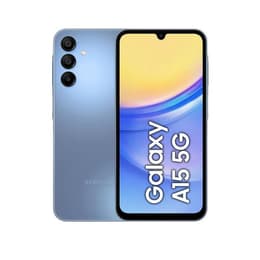
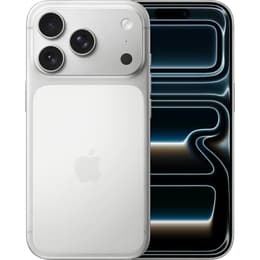


Galaxy A15 5G Vs iPhone 17 Pro

Galaxy A15 5G
Galaxy A15 5G
Starting at

Refurbished price:124.00

Versus €248.54 new

See options
iPhone 17 Pro
iPhone 17 Pro
Starting at

Refurbished price:1,064.00

Versus €1,339.00 new

See options

Ratings

The Samsung Galaxy A15 5G, released in late 2023, and the iPhone 17 Pro, unveiled in late 2025, represent distinct offerings in the smartphone market. While the Galaxy A15 5G operates on Android with Samsung's One UI, the iPhone 17 Pro runs on Apple's iOS. These devices cater to different user priorities, with the iPhone 17 Pro emphasizing advanced performance and camera capabilities, and the Galaxy A15 5G focusing on essential features and extended software support.

Scores

Durability

When considering the long-term usability of these devices, their release timelines and software support policies are key factors.

  • Release Timeline: The Samsung Galaxy A15 5G was released in December 2023, making it a more established device. The iPhone 17 Pro, launched in September 2025, benefits from being a newer model with a more recent hardware and software foundation. [2, 23, 32]
  • Software Longevity: Samsung commits to four major OS upgrades and five years of security updates for the Galaxy A15 5G, extending its support until Android 18 and security patches until 2028. [3, 17, 32, 37] Apple typically provides 5-7 years of iOS updates for its devices, suggesting the iPhone 17 Pro will receive software support well into the future, likely surpassing the A15 5G's update window.
  • Repairability: The iPhone 17 Pro has received a repairability score of 7 out of 10 from iFixit, noting improvements like screw fasteners over glue for some components, though display removal is often required for repairs. [8, 9, 12, 41] Information on the specific repairability score for the Galaxy A15 5G is less detailed, but its construction is generally considered to be more straightforward for common repairs.

Year of Release

2023

2025

Compatible with latest Update

Yes

Yes

OS

Android

iOS

Foldable

No

No

Performance

The performance capabilities of these two smartphones cater to different user expectations, influenced by their respective processors and system optimizations.

  • Everyday Responsiveness: The iPhone 17 Pro, powered by its advanced A19 Pro chip, delivers exceptionally smooth performance across all tasks, from launching demanding applications to seamless multitasking and graphics-intensive gaming. [27, 31] The Galaxy A15 5G, featuring a MediaTek Dimensity 6100+ processor, handles daily tasks like web browsing, email, and media playback competently, though users might experience occasional minor delays when switching between multiple applications or with more intensive games. [3, 4, 25, 26]
  • Storage and Multitasking: The iPhone 17 Pro offers substantial internal storage options, starting at 256GB and going up to 1TB, paired with 12GB of RAM, which supports extensive app usage and data storage without performance bottlenecks. [2, 5, 7] The Galaxy A15 5G provides storage options of 128GB or 256GB, with 4GB, 6GB, or 8GB of RAM, and includes a microSD card slot for expandable storage up to 1TB, offering flexibility for users who need more space for media and files. [3, 23, 25, 32]
  • Battery Behavior: The iPhone 17 Pro's battery is designed to comfortably last a full day for most users, even with consistent use, with some reports indicating around 5 hours and 20 minutes of screen-on time on average. [22, 29] The Galaxy A15 5G, equipped with a 5000mAh battery, is noted for its excellent endurance, often lasting up to two days with moderate use or over 14 hours in continuous video playback tests, making it a strong contender for users prioritizing extended usage between charges. [3, 4, 11, 14, 36]

Memory (GB)

4 GB

12 GB

Screen quality

The visual experience on both devices is shaped by their display technologies and specifications, offering distinct advantages.

  • Display Technology and Clarity: The iPhone 17 Pro features a 6.3-inch Super Retina XDR OLED display, providing deep blacks, vibrant colors, and a sharp resolution of 2622x1206 pixels at 460 pixels per inch. [1, 2, 5] The Galaxy A15 5G comes with a 6.5-inch Super AMOLED display, offering rich colors and a resolution of 2340x1080 pixels, resulting in clear visuals for everyday content consumption. [3, 6, 18, 19, 32]
  • Brightness and Smoothness: The iPhone 17 Pro boasts an impressive peak outdoor brightness of 3000 nits, ensuring excellent visibility even in direct sunlight, and features ProMotion technology for an adaptive refresh rate up to 120Hz, providing exceptionally smooth scrolling and responsiveness. [1, 5, 13, 21, 31] The Galaxy A15 5G reaches a maximum brightness of 800 nits in High Brightness Mode and has a 90Hz refresh rate, which offers a noticeably smoother experience than standard 60Hz displays for daily interactions. [3, 6, 18, 19]
  • Additional Display Features: The iPhone 17 Pro includes an Always-On display, an anti-reflective coating, and Ceramic Shield 2 for enhanced durability. [1, 5, 13] Both displays offer wide color support for accurate color reproduction.

Resolution

1080 x 2340

2622x1206

Screen type

Super AMOLED

Super Retina XDR

Audiovisual

The camera systems on the Galaxy A15 5G and iPhone 17 Pro are designed with different photographic priorities and capabilities.

  • Rear Camera Systems: The iPhone 17 Pro features a versatile 48MP Pro Fusion camera system, including a 48MP main sensor with optical image stabilization, a 48MP ultrawide lens, and a 48MP telephoto lens offering 4x optical zoom and up to 8x optical-quality zoom. [2, 5, 7, 15, 20, 31] This setup is designed for high detail and flexibility across various focal lengths. The Galaxy A15 5G is equipped with a triple camera array consisting of a 50MP main camera, a 5MP ultrawide camera, and a 2MP macro camera, providing options for general photography, wider shots, and close-ups. [3, 6, 16, 23, 25, 32]
  • Photography Performance: The iPhone 17 Pro excels in capturing sharp, detailed images with natural colors, even in challenging low-light conditions, and offers advanced features like a LiDAR scanner for improved depth sensing. [5, 15] The Galaxy A15 5G's main camera produces good images with sharp details and slightly saturated colors in well-lit environments, and includes a dedicated Night mode for better low-light shots. [3, 4, 35]
  • Video Recording and Front Camera: The iPhone 17 Pro supports high-quality video recording up to 4K Dolby Vision at 120 frames per second, with advanced features like Cinematic mode, Action mode, Spatial video, and ProRes. Its 18MP Centre Stage front camera offers flexible framing options. [2, 5, 15, 20] The Galaxy A15 5G records video at FHD (1920x1080) at 30 frames per second and features a 13MP front camera suitable for selfies and video calls. [6, 16, 23, 32]

Main camera

50 megapixels

48 megapixels

Front camera

13 megapixels

18 megapixels

Miscellaneous

Beyond core specifications, several practical elements differentiate the user experience of these two devices.

  • Connectivity and Ports: Both devices support 5G connectivity. The iPhone 17 Pro features Wi-Fi 7 and a USB-C port, aligning with modern high-speed data transfer and charging standards. [7] The Galaxy A15 5G includes Wi-Fi, Bluetooth 5.3, and a USB-C 2.0 port, and notably retains a 3.5mm headphone jack, which is absent on the iPhone. [23, 26, 32, 42]
  • Biometric Security and Design: The iPhone 17 Pro relies on Face ID for secure facial authentication. [5] The Galaxy A15 5G incorporates a side-mounted fingerprint sensor for convenient unlocking. [4, 23] In terms of build, the iPhone 17 Pro features a unibody aluminum frame and Ceramic Shield 2 for display protection, contributing to its robust feel. [1, 5, 7, 13] The Galaxy A15 5G has a primarily plastic body, which contributes to its lighter feel. [4, 26]
  • Dimensions and Handling: The iPhone 17 Pro measures 150.0 x 71.9 x 8.75 mm and weighs 206g, offering a compact yet substantial feel. [2, 7] The Galaxy A15 5G measures 160.1 x 76.8 x 8.4 mm and weighs 200g, providing a slightly larger screen footprint while maintaining a manageable weight. [32]

Weight

200 g

206 g

Screen size (in)

6.5

6.3

Network

5G

5G

SIM card

Dual Physical SIM

Physical SIM + eSIM

Carrier compatibility

Unlocked

Unlocked

The Samsung Galaxy A15 5G and the iPhone 17 Pro cater to distinct user needs and preferences, each excelling in different areas. Users often praise the Galaxy A15 5G for its exceptional battery life, often lasting up to two days, and its vibrant Super AMOLED display, which offers a smooth 90Hz refresh rate. [3, 11, 14, 26] Its commitment to four years of OS updates and five years of security patches is also a significant advantage for an Android device. [17, 37] However, some users note that its performance can occasionally feel less responsive, particularly with demanding applications or heavy multitasking. [4, 26, 42]

Conversely, the iPhone 17 Pro is frequently lauded for its powerful performance, driven by the A19 Pro chip, ensuring a fluid user experience across all tasks. [27, 31] Its advanced camera system, especially the versatile 48MP telephoto lens and comprehensive video capabilities, receives high praise from photography enthusiasts. [15, 20, 28] The stunning Super Retina XDR OLED display with its high brightness and adaptive 120Hz refresh rate is another highlight. [1, 13] Criticisms sometimes point to its higher repair complexity for certain components and reports of susceptibility to scratches on the camera island. [9, 12]

Users prioritizing a device with a long-lasting battery, expandable storage, and a 3.5mm headphone jack for media consumption may find the Samsung Galaxy A15 5G well-suited to their needs. It represents a practical and reliable choice for everyday use. On the other hand, individuals who seek cutting-edge performance, a highly advanced camera system, and a premium display for creative work or demanding applications will likely lean towards the iPhone 17 Pro. Both devices, whether new or as a quality-assured refurbished option, offer a pathway to making an informed and sustainable choice for your next smartphone.


See all articles

Our recent comparisons