


Compare models

Galaxy Z Fold7 Vs iPhone Air

  • 1-year minimum warranty
  • Free delivery on all orders
  • Free 30-day returns
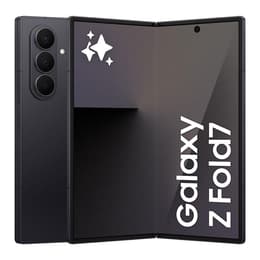
Galaxy Z Fold7
Starting at

Refurbished price:€907.00

Versus €2,236.37 new

See options
iPhone Air
Starting at

Refurbished price:€693.00

Versus €1,339.00 new

See options

Differences at a glance

The Samsung Galaxy Z Fold7 (2025) and the Apple iPhone Air (2025) represent two fundamentally distinct approaches to modern mobile engineering. While the Galaxy Z Fold7 is a book-style foldable device offering a flexible multi-screen layout, the iPhone Air focuses on an ultra-slim slate form factor running on iOS. Both devices highlight entirely different hardware philosophies, targeting distinct user priorities across productivity and everyday usability.

Available Models

Colour

Storage

Scores

Durability

When evaluating long-term utility and support, both devices provide robust longevity backed by multi-year software commitments and durable physical construction.

  • Software longevity and updates: The Galaxy Z Fold7 provides extended operating system upgrades under Android, while the iPhone Air benefits from Apple's long-standing software support cycle on iOS.
  • Build durability: The Galaxy Z Fold7 features reinforced hinge engineering and foldable glass protection, whereas the iPhone Air relies on a rigid titanium frame paired with scratch-resistant glass surfaces.
  • Repairability and lifespan: Both manufacturers offer structured service paths, though users exploring a quality-assured refurbished option can find sustainably restored editions that extend device lifecycles while reducing environmental impact.

Year of Release

2025

2025

Compatible with latest Update

Yes

Yes

OS

Android

iOS

Foldable

Yes

No

Performance

System responsiveness and day-to-day multitasking capabilities differ based on internal hardware configuration and software optimization.

  • Multitasking and memory: The Galaxy Z Fold7 includes ample RAM to handle split-screen applications simultaneously, while the iPhone Air manages background processes efficiently through streamlined iOS resource allocation.
  • Everyday execution: Both devices load demanding mobile applications instantly, run complex software smoothly, and maintain fluid system animations during heavy daily use.
  • Battery behavior: The Galaxy Z Fold7's multi-screen layout requires more frequent charging for power users, whereas the iPhone Air balances its slim profile with energy-efficient components to last through standard daily routines.

Screen quality

Display characteristics vary significantly between a dual-screen foldable workspace and a single expansive slim panel.

  • Display architecture: The Galaxy Z Fold7 utilizes a flexible inner OLED panel that unfolds into a tablet-sized workspace alongside a standard cover display, while the iPhone Air features a single vibrant OLED screen with deep contrast levels.
  • Outdoor visibility and brightness: Both devices reach high peak brightness levels, ensuring clear readability and sharp text clarity under direct sunlight.
  • Refresh rate and smoothness: High refresh rate support on both models delivers fluid scrolling through web pages and responsive touch interactions during gaming or media consumption.

Resolution

1968x2184

2736x1260

Audiovisual

Optics and media capabilities reflect different hardware priorities for photography and sound output.

  • Camera systems: The Galaxy Z Fold7 houses a versatile multi-lens rear array including high-resolution main and optical zoom sensors, whereas the iPhone Air utilizes a streamlined single-lens rear camera setup optimized for everyday snapshots and clarity.
  • Video and low-light performance: Both devices record detailed video clips with stable motion handling, while processing algorithms manage dim lighting environments automatically.
  • Audio output: Media consumption and speaker clarity differ according to internal acoustic chamber designs, with both models offering balanced sound for hands-free calls and casual viewing.

Miscellaneous

Physical dimensions and connectivity standards shape how each device fits into travel and professional routines.

  • Portability and handling: The iPhone Air emphasizes an exceptionally thin profile and light weight for effortless pocketability, whereas the Galaxy Z Fold7 provides a compact folded footprint that expands into a larger tablet form when opened.
  • Connectivity options: Both smartphones support current-generation 5G networks, high-speed Wi-Fi standards, and modern Bluetooth protocols for reliable accessory pairing.
  • Security and interface: Biometric authentication relies on facial recognition or fingerprint scanning depending on the model, facilitating quick and secure device unlocking.

Weight

215 g

165 g

Screen size (in)

8.0

6.5

Network

5G

5G

SIM card

Dual Physical SIM + eSIM

eSIM

Carrier compatibility

Unlocked

Unlocked

Connector

USB-C (USB 3)

USB-C

What the community thinks

User discussions and community feedback indicate that satisfaction with these devices depends heavily on daily workflow habits. Owners of the Galaxy Z Fold7 frequently praise its expansive multitasking workspace and flexible screen layout, though some note that the folded thickness and weight require an adjustment period. Conversely, users of the iPhone Air highlight its remarkably light handling and slim build as major benefits, while pointing out that the single-lens camera and battery capacity are more limited compared to traditional heavy-duty flagships.

Users prioritizing multitasking flexibility, multi-window productivity, and tablet-sized viewing will find the Galaxy Z Fold7 well-suited to their needs. Meanwhile, users prioritizing a lightweight profile, pocket-friendly dimensions, and streamlined daily operation may lean toward the iPhone Air. Choosing a quality-assured refurbished option for either model provides an eco-friendly alternative that supports sustainable technology consumption without compromising on performance standards.








