

Compare models

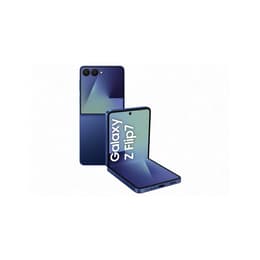
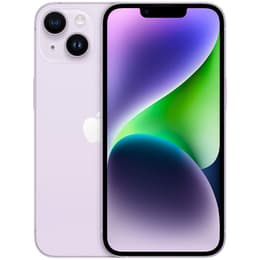
Galaxy Z Flip7 Vs iPhone 14

  • 1-year minimum warranty
  • Free delivery on all orders
  • Free 30-day returns
Galaxy Z Flip7
Starting at

Refurbished price:594.00

Versus €1,328.48 new

See options
iPhone 14
Starting at

Refurbished price:303.00

Versus €759.00 new

See options

Differences at a glance

The Samsung Galaxy Z Flip7 (2025) and the Apple iPhone 14 (2022) represent two entirely different approaches to modern smartphone design, contrasting a contemporary foldable clamshell format with a classic candy-bar structure. While they serve everyday communication and media needs, they differ significantly in form factor, release timeline, and software ecosystems, operating on Android and iOS respectively.

Available Models

Colour

Storage (GB)

Scores

Durability

When evaluating long-term usability, both devices offer robust software support lifespans, though their launch timelines and hardware durability designs differ.

  • Software longevity: The Galaxy Z Flip7 benefits from an extended multi-year update schedule reflecting its newer release year, whereas the iPhone 14 follows Apple's traditional long-term support cycle of roughly five to six years from its launch.
  • Hardware resilience: The iPhone 14 features a rigid glass and aluminum build with ceramic front protection, while the Galaxy Z Flip7 utilizes a flexible inner display and a folding hinge mechanism that requires standard care for foldable screens over extended daily use.
  • Practical lifespan: Both models maintain strong long-term viability, and choosing a quality-assured refurbished option provides a sustainable choice that extends the active life cycle of either device.

Year of Release

2025

2022

Compatible with latest Update

Yes

Yes

OS

Android

iOS

Foldable

Yes

No

Performance

Handling daily tasks, app loading, and multitasking involves different hardware foundations across these two distinct smartphone generations.

  • System responsiveness: The Galaxy Z Flip7 handles demanding multitasking and modern applications smoothly thanks to its current-generation processor and ample memory capacity, while the iPhone 14 relies on a slightly older generation internal architecture that manages daily tasks and media streaming reliably.
  • Battery behavior: The Galaxy Z Flip7 features a larger internal battery capacity designed to power its dual-screen setup through a standard day of mixed use, whereas the iPhone 14 relies on software efficiency to sustain typical daily battery performance.
  • Storage configurations: Both devices offer tiered storage options to accommodate photos, applications, and local media without expandable memory card slots.

Screen quality

Visual experiences differ notably between the flexible, dual-screen setup of the foldable device and the standard bright flat panel of the traditional smartphone.

  • Display technology: The Galaxy Z Flip7 features a large foldable interior OLED screen complemented by an expansive exterior cover display for quick interactions, while the iPhone 14 uses a standard flat OLED panel with deep contrast and vibrant colors.
  • Refresh rate and smoothness: The Galaxy Z Flip7 supports a high refresh rate for fluid scrolling and animations, whereas the iPhone 14 utilizes a standard refresh rate for everyday navigation.
  • Outdoor visibility: Both screens reach high peak brightness levels to maintain clarity and legibility when used under direct sunlight.

Resolution

1080x2520

1170 x 2532

Audiovisual

Capturing memories and consuming media involve distinct lens configurations and audio output profiles on each model.

  • Camera capabilities: The Galaxy Z Flip7 utilizes a versatile dual-lens rear system that benefits from flexible folding angles for hands-free framing, while the iPhone 14 employs a dual-camera layout optimized for reliable point-and-shoot clarity in everyday settings.
  • Video and low light: Both devices record detailed video with image stabilization and handle low-light environments effectively through automated image processing software.
  • Media consumption: Stereo speakers on both models deliver clear sound output for calls, podcasts, and casual video playback.

Front camera

10 megapixels

12 megapixels

Miscellaneous

Practical everyday features, physical dimensions, and connectivity standards shape how each device fits into daily routines.

  • Portability and design: The Galaxy Z Flip7 folds compactly to fit easily into smaller pockets, whereas the iPhone 14 maintains a traditional rigid profile with balanced ergonomics for single-handed use.
  • Authentication: The Galaxy Z Flip7 offers side-mounted fingerprint recognition and facial scanning, while the iPhone 14 relies primarily on secure facial recognition technology.
  • Connectivity: Both models support modern 5G cellular networks, high-speed Wi-Fi standards, and Bluetooth connectivity for wireless accessories.

Weight

188 g

150 g

Screen size (in)

6.9

6.1

Network

5G

5G

SIM card

Physical SIM + eSIM

eSIM

Carrier compatibility

Unlocked

Unlocked

Connector

USB-C

Lightning

What the community thinks

User feedback on public forums highlights distinct preferences for each device based on daily habits and hardware priorities. Owners of the Galaxy Z Flip7 frequently praise the expansive cover screen, compact folded footprint, and multitasking fluidity, though some note that foldable inner screen creases require mindful handling. Conversely, iPhone 14 users often highlight reliable battery consistency, straightforward operating system simplicity, and durable everyday construction, while noting that its traditional design lacks modern visual novelties.

Users prioritizing compact pocketability, multitasking flexibility, and a high refresh rate display will find the Galaxy Z Flip7 well-suited to their workflow. On the other hand, users favoring a traditional rigid build, seamless operating system integration, and straightforward daily reliability may lean toward the iPhone 14. Those evaluating these models can also consider a quality-assured refurbished option as an eco-friendly alternative that supports sustainable technology consumption.