

Galaxy Z Fold5 Vs iPhone 12 mini

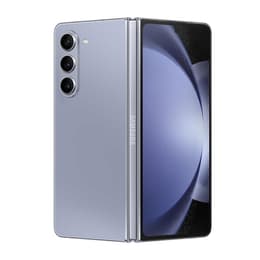
Galaxy Z Fold5
Galaxy Z Fold5
Starting at

Refurbished price:591.00

Versus €1,899.99 new

See options
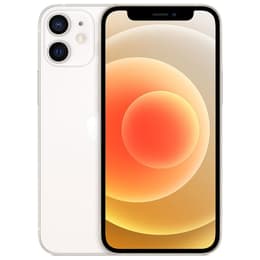
iPhone 12 mini
iPhone 12 mini
Starting at

Refurbished price:146.50

Versus €689.00 new

See options

Ratings

The Samsung Galaxy Z Fold5 (2023) and the iPhone 12 Mini (2020) represent two distinct philosophies in smartphone design: one prioritizing an expansive, foldable display for productivity and immersive media, and the other focusing on a compact form factor for single-handed use and portability. While both devices offer premium smartphone experiences, their core designs lead to significant differences in user interaction, performance, and overall utility. The Galaxy Z Fold5 operates on Android, offering a customizable interface, whereas the iPhone 12 Mini runs on Apple's iOS, known for its streamlined ecosystem.

Scores

Durability

The expected practical lifespan of a smartphone is influenced by its release timeline, software support, and physical durability features. These two devices, released three years apart, offer different longevity prospects.

  • Release Timeline: The Galaxy Z Fold5 was released in August 2023, making it a more recent device compared to the iPhone 12 Mini, which launched in November 2020. This difference in age directly impacts their remaining software support windows.
  • OS Support Duration: Samsung typically provides four major Android OS upgrades and five years of security updates for its flagship devices like the Z Fold5. The iPhone 12 Mini, having launched with iOS 14, is expected to receive iOS updates until around 2027, offering a comparable, if not slightly longer, total software support period from its release date.
  • Durability Features: The Galaxy Z Fold5 features an Armor Aluminum frame and Gorilla Glass Victus 2 on its cover screen and back, along with an IPX8 water resistance rating, meaning it can withstand submersion in water. The iPhone 12 Mini boasts a Ceramic Shield front cover, designed for enhanced drop performance, and an IP68 rating for both water and dust resistance. The foldable nature of the Z Fold5 introduces a unique hinge mechanism and a more delicate inner screen compared to the traditional slab design of the iPhone 12 Mini.

Year of Release

2023

2020

Compatible with latest Update

Yes

Yes

OS

Android

iOS

Foldable

Yes

No

Performance

Performance in smartphones is about how smoothly they handle daily tasks, from launching applications to managing multiple processes simultaneously and running demanding games.

  • Processor Capabilities: The Galaxy Z Fold5 is equipped with a current-generation processor designed for high-performance tasks, enabling smooth operation for demanding applications, advanced multitasking, and graphic-intensive gaming. The iPhone 12 Mini, while featuring a capable processor for its time, offers performance suitable for everyday use and most applications, but it is an older generation chip.
  • Multitasking and Responsiveness: With its significantly larger RAM capacity, the Galaxy Z Fold5 is better suited for extensive multitasking, allowing users to switch between numerous applications without noticeable slowdowns. The iPhone 12 Mini, with less RAM, handles typical multitasking well but may show limitations when many applications are open concurrently.
  • Storage Options: The Galaxy Z Fold5 offers larger base storage options, starting at 256GB and going up to 1TB, providing ample space for extensive media libraries and applications. The iPhone 12 Mini starts with 64GB, with options up to 256GB, which might be a consideration for users with large storage needs.
  • Battery Behavior: The Galaxy Z Fold5, despite its larger, power-hungry displays, generally offers all-day battery life for moderate to heavy use, benefiting from its larger battery capacity and efficient processor. The iPhone 12 Mini's smaller battery capacity means it typically requires more frequent charging, especially for heavy users, often lasting a full day with lighter usage.

Memory (GB)

12 GB

4 GB

Screen quality

The display is a primary interface for smartphone interaction, and these two devices offer vastly different visual experiences due to their design and technology.

  • Display Technology and Size: The Galaxy Z Fold5 features a unique foldable design with a large 7.6-inch Dynamic AMOLED 2X inner display and a 6.2-inch Dynamic AMOLED 2X cover display, both offering vibrant colors and deep blacks. The iPhone 12 Mini has a 5.4-inch Super Retina XDR OLED display, providing a compact yet high-quality viewing experience.
  • Resolution and Clarity: The Z Fold5's inner display has a resolution of 2176 x 1812 pixels, while its cover screen is 2316 x 904 pixels. The iPhone 12 Mini offers a resolution of 2340 x 1080 pixels. Both devices provide sharp and clear visuals for their respective screen sizes.
  • Refresh Rate and Smoothness: Both displays on the Galaxy Z Fold5 feature an adaptive 120Hz refresh rate, contributing to smoother scrolling and more fluid animations. The iPhone 12 Mini has a standard 60Hz refresh rate, which provides a consistent experience but lacks the enhanced fluidity of a higher refresh rate display.
  • Brightness Levels: The Galaxy Z Fold5's main display can reach a peak brightness of 1750 nits, making it highly visible even in bright outdoor conditions. The iPhone 12 Mini's display offers a peak brightness of 1200 nits for HDR content and 625 nits typical, which is also suitable for most lighting environments.

Resolution

1812 x 2176

1080 x 2340

Screen type

Foldable Dynamic AMOLED 2X

Super Retina XDR OLED

Audiovisual

Camera capabilities are a significant factor for many users, and both devices offer competent systems, though with different strengths and features.

  • Rear Camera System: The Galaxy Z Fold5 features a versatile triple-camera setup on the rear, including a 50MP wide-angle lens, a 12MP ultrawide lens, and a 10MP telephoto lens with 3x optical zoom. The iPhone 12 Mini has a dual 12MP camera system, comprising a wide and an ultrawide lens, but lacks a dedicated telephoto lens for optical zoom.
  • Low-Light and Everyday Photography: The Z Fold5's larger sensor and advanced processing contribute to strong performance in various lighting conditions, including improved low-light capture. The iPhone 12 Mini also offers good everyday photography with improved low-light capabilities over its predecessors, including Night Mode on all cameras.
  • Video Recording Quality: The Galaxy Z Fold5 supports video recording up to 8K resolution at 24fps and 4K at 60fps. The iPhone 12 Mini can record 4K video at up to 60fps, with HDR video recording with Dolby Vision. Both offer cinematic video stabilization.
  • Front-Facing Cameras: The Z Fold5 has a 10MP camera on the cover screen and a 4MP under-display camera on the main screen, primarily for video calls. The iPhone 12 Mini features a 12MP TrueDepth front camera, capable of detailed selfies and advanced facial recognition.

Main camera

50 megapixels

12 megapixels

Front camera

4 megapixels

12 megapixels

Miscellaneous

Beyond core performance and display, several practical elements contribute to the overall user experience and device utility.

  • Connectivity Options: Both devices support 5G connectivity, offering faster mobile data speeds where available. The Galaxy Z Fold5 supports Wi-Fi 6E and Bluetooth 5.3, while the iPhone 12 Mini supports Wi-Fi 6 and Bluetooth 5.0.
  • Port Types and Biometrics: The Galaxy Z Fold5 uses a USB-C port for charging and data transfer and features a side-mounted fingerprint sensor for secure unlocking. The iPhone 12 Mini utilizes Apple's proprietary Lightning port and relies on Face ID for biometric authentication.
  • Weight and Dimensions: The Galaxy Z Fold5, due to its foldable design and larger screens, is a heavier device at 253g. When folded, its dimensions are 154.9 x 67.1 x 13.4 mm. The iPhone 12 Mini is significantly lighter at 135g and much more compact, measuring 131.5 x 64.2 x 7.4 mm, making it ideal for one-handed use and pocketability.
  • Build Materials and Durability Features: The Z Fold5 incorporates Armor Aluminum and Gorilla Glass Victus 2, offering robust protection for its external surfaces. The iPhone 12 Mini features a Ceramic Shield front cover, which enhances drop resistance, and an aluminum frame. Both devices have water resistance ratings, with the iPhone 12 Mini also offering dust resistance.

Weight

253 g

135 g

Screen size (in)

7.6

5.4

Network

5G

5G

SIM card

Dual Physical SIM + eSIM

Physical SIM + eSIM

Carrier compatibility

Unlocked

Unlocked

The Samsung Galaxy Z Fold5 and the iPhone 12 Mini cater to fundamentally different user preferences. The Z Fold5 is often praised by users for its innovative foldable design, which provides a large tablet-like screen for enhanced productivity and media consumption, making it a strong contender for those who value screen real estate and multitasking capabilities. Its powerful processor and versatile camera system also receive positive remarks. However, some users note its bulk and the inherent fragility concerns associated with foldable technology.

Conversely, the iPhone 12 Mini is frequently lauded for its exceptionally compact size, making it comfortable for single-handed use and easy to carry. Users appreciate its premium build, capable camera, and the consistent performance delivered by its operating system. Criticisms often revolve around its smaller battery capacity, which can lead to more frequent charging for heavy users, and the smaller screen size which might not be ideal for extensive media viewing or complex tasks.

Users prioritizing a large, adaptable display for work, entertainment, and advanced multitasking will find the Galaxy Z Fold5 well-suited to their needs. Its cutting-edge design offers a unique smartphone experience. On the other hand, individuals who value extreme portability, ease of one-handed operation, and a streamlined user experience within a compact form factor may lean towards the iPhone 12 Mini. Both devices offer distinct advantages, and choosing between them depends on whether a user prioritizes an expansive, flexible screen or a highly pocketable, traditional smartphone experience. For those considering either of these devices, exploring quality-assured refurbished options can provide a sustainable choice.

See all articles

Our recent comparisons