

Galaxy Z Flip5 Vs iPhone 16 Pro

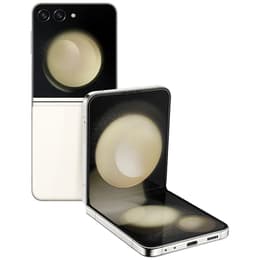
Galaxy Z Flip5
Galaxy Z Flip5
Starting at

Refurbished price:357.00

Versus €1,340.00 new

See options
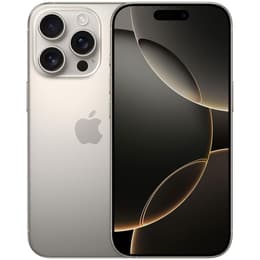
iPhone 16 Pro
iPhone 16 Pro
Starting at

Refurbished price:645.00

Versus €1,239.00 new

See options

Ratings

The Samsung Galaxy Z Flip5, released in August 2023, and the Apple iPhone 16 Pro, launched in September 2024, represent distinct approaches to modern smartphone design. The Z Flip5 offers a unique foldable form factor, emphasizing portability and a compact experience, while the iPhone 16 Pro maintains a traditional slab design, focusing on advanced computational capabilities and a robust ecosystem. Both devices operate on different software platforms, Android for the Z Flip5 and iOS for the iPhone 16 Pro, influencing their user interfaces and app availability.

Scores

Durability

When considering the long-term usability of these devices, their release timelines and software support policies are key differentiators.

  • Software Longevity: The Galaxy Z Flip5 launched with Android 13 and is committed to receiving four generations of Android OS upgrades, extending its support through Android 17, alongside five years of security updates until 2028. The iPhone 16 Pro, released with iOS 18, is expected to receive iOS updates for a typical duration of five to six years, offering a comparable, if not slightly longer, software support window.
  • Repairability: The Galaxy Z Flip5 achieved a repairability score of 7.5 out of 10, a notable improvement over its predecessors, partly due to the inclusion of battery pull tabs that simplify battery replacement. The iPhone 16 Pro also shows significant strides in repairability, earning a score of 7 out of 10, attributed to a dual-entry design for easier access to internal components and enhancements in iOS 18's Repair Assistant.
  • Physical Durability: The Z Flip5 features an IPX8 water resistance rating and Gorilla Glass Victus 2 on its cover screen, with its inner display utilizing Ultra-Thin Glass. User experiences suggest the hinge holds up well in bend tests, though some concerns about hinge protection exist. The iPhone 16 Pro features a durable titanium design and is expected to maintain the IP68 water and dust resistance of previous Pro models, along with Ceramic Shield for its front cover.

Year of Release

2023

2024

Compatible with latest Update

Yes

Yes

Foldable

Yes

No

Performance

The performance of both devices is tailored to their respective operating systems and user expectations, offering smooth operation for various tasks.

  • Processing Power: The Galaxy Z Flip5 is equipped with a current-generation processor designed for Galaxy devices, enabling efficient handling of demanding applications and multitasking. The iPhone 16 Pro features Apple's latest Pro series chip, which provides enhanced CPU and GPU speeds, making it well-suited for intensive tasks like high-performance gaming, complex video editing, and advanced machine learning features.
  • System Responsiveness: Both devices offer a highly responsive user experience. The Z Flip5's processor ensures quick app loading and fluid navigation within its Android environment. The iPhone 16 Pro's optimized hardware and software integration contribute to a consistently smooth and immediate response across all operations, including the execution of Apple Intelligence features.
  • Storage and Multitasking: The Galaxy Z Flip5 comes with 8 GB of RAM and storage options of 256 GB or 512 GB, providing ample space and efficient multitasking capabilities. The iPhone 16 Pro offers a range of storage capacities from 128 GB up to 1 TB, and is expected to feature sufficient RAM to support its advanced processing and multitasking demands.
  • Battery Behavior: The Z Flip5, with its 3700 mAh battery, can provide around 9 to 10 hours of web browsing and up to 32 hours of general usage, with some users reporting a full day of use. The iPhone 16 Pro is designed with larger, more optimized batteries and improved power management, aiming for enhanced battery life, with an estimated 27 hours of video playback.

Memory (GB)

8 GB

8 GB

Screen quality

The display technologies and sizes of these two smartphones cater to different preferences and usage scenarios.

  • Main Display Technology: The Galaxy Z Flip5 features a 6.7-inch Dynamic AMOLED 2X main display with a resolution of 1080x2640 pixels. This panel offers vibrant colors and deep blacks, characteristic of AMOLED technology, and an adaptive refresh rate that can scale from 1 Hz to 120 Hz for smooth scrolling and power efficiency. The iPhone 16 Pro features a 6.3-inch OLED display with a resolution of 2622 x 1206 pixels, also providing rich colors and high contrast, with an adaptive refresh rate ranging from 1 Hz to 120 Hz.
  • Cover Screen Functionality: A key differentiator for the Z Flip5 is its 3.4-inch Super AMOLED cover display, offering a resolution of 720x748 pixels and a 60 Hz refresh rate. This larger external screen allows for more extensive interactions without opening the phone, such as checking notifications, controlling media, and taking selfies with the main cameras. The iPhone 16 Pro does not feature a secondary external display.
  • Brightness and Clarity: Both devices offer displays with high brightness levels suitable for outdoor visibility and clear viewing. The Z Flip5's main display has a peak brightness that ensures content remains legible in various lighting conditions. The iPhone 16 Pro's OLED panel is also designed to deliver excellent clarity and brightness, enhancing the viewing experience for media and general use.
  • Viewing Experience: The Z Flip5's foldable design offers a compact form factor when closed, expanding to a standard smartphone screen for media consumption. The iPhone 16 Pro provides a consistent, expansive viewing area on its single, larger display, which benefits from slimmer bezels compared to its predecessor.

Resolution

1080 x 2640

1206 x 2622

Screen type

Foldable Dynamic AMOLED 2X

LTPO Super Retina XDR OLED

Audiovisual

Both smartphones offer advanced camera systems, though their configurations and specific strengths vary.

  • Rear Camera Systems: The Galaxy Z Flip5 features a dual-camera setup on the rear, consisting of a 12 MP wide-angle primary camera with an f/1.8 aperture and optical image stabilization (OIS), and a 12 MP ultra-wide-angle camera with an f/2.2 aperture and a 123˚ field of view. The iPhone 16 Pro boasts a triple-lens rear camera system. It includes a 48 MP main camera with an f/1.78 aperture, a 48 MP ultra-wide camera with an f/2.2 aperture that also supports macro photography, and a 12 MP telephoto lens offering 5x optical zoom through a tetraprism design.
  • Photography Performance: The Z Flip5's main camera captures lively photos with good dynamic range and pleasing colors in daylight, and performs well in low-light conditions. Its ultra-wide lens maintains color consistency. The iPhone 16 Pro's upgraded main and ultra-wide cameras, along with its 5x telephoto lens, are designed to deliver high-resolution images with improved detail, especially in low-light scenarios, and offer enhanced versatility for various photographic styles.
  • Video Recording Capabilities: The Galaxy Z Flip5 supports 4K video recording at 30 frames per second. The iPhone 16 Pro elevates video capabilities with support for 4K video recording at up to 120 frames per second in Dolby Vision, offering options for high-quality slow-motion and professional-grade video capture.
  • Front Camera and Selfies: The Z Flip5 has a 10 MP front camera, but its larger cover screen allows users to utilize the higher-quality rear cameras for selfies, offering more creative angles and better image quality. The iPhone 16 Pro features a 12 MP front camera, designed for sharp and vibrant images.

Main camera

12 megapixels

48 megapixels

Front camera

10 megapixels

12 megapixels

Miscellaneous

Beyond core performance and display, several practical elements contribute to the overall user experience of these devices.

  • Connectivity: Both smartphones support 5G connectivity for fast mobile data. The Galaxy Z Flip5 includes Wi-Fi 6 (ax) and Bluetooth 5.3. The iPhone 16 Pro features support for the newer Wi-Fi 7 standard, offering potentially faster and more reliable wireless connections, alongside its Bluetooth capabilities.
  • Ports and Biometrics: The Galaxy Z Flip5 utilizes a USB-C port for charging and data transfer. The iPhone 16 Pro also features a USB-C port. Both devices incorporate advanced biometric security, with the Z Flip5 typically using a side-mounted fingerprint sensor and the iPhone 16 Pro relying on Face ID for secure authentication.
  • Physical Design and Handling: The Galaxy Z Flip5, when folded, measures 85.1 x 71.9 x 15.1 mm and weighs 187 g, making it highly compact and pocketable. When unfolded, it measures 165.1 x 71.9 x 6.9 mm. The iPhone 16 Pro has dimensions of 149.6 × 71.5 × 8.25 mm and weighs 199 g, offering a traditional smartphone form factor that is slightly larger and heavier than the folded Z Flip5.
  • Additional Features: The Z Flip5's Flex Mode allows for hands-free usage and unique camera angles. The iPhone 16 Pro introduces a new Camera Control button for quick access to camera features and integrates Apple Intelligence for advanced on-device AI capabilities.

Weight

187 g

199 g

Screen size (in)

6.7 /3.4

6.3

Network

5G

5G

SIM card

Physical SIM + eSIM

eSIM

Carrier compatibility

Unlocked

Unlocked

The Samsung Galaxy Z Flip5 and iPhone 16 Pro cater to different user priorities, each excelling in its own domain. Users frequently praise the Z Flip5 for its innovative foldable design, which offers enhanced portability and a larger, more functional cover screen for quick interactions. Its ability to stand partially folded for hands-free use is also a common highlight. Some users, however, express concerns about the long-term durability of foldable screens and the battery life, especially for heavy usage.

The iPhone 16 Pro is often lauded for its powerful processing capabilities, delivering a consistently smooth and responsive experience across demanding applications and gaming. Its advanced camera system, particularly the upgraded ultra-wide and telephoto lenses, receives positive feedback for image quality and versatility. Common praise also extends to its robust software ecosystem and expected long-term support. While specific criticisms are less established for a recently released model, general feedback on Pro iPhones sometimes points to their weight and size for some users.

Users prioritizing a compact, unique form factor with a highly interactive external display and creative photography options may find the Galaxy Z Flip5 well-suited to their needs. Conversely, users who value a traditional smartphone design with top-tier performance, a highly advanced and versatile camera system, and a long-standing software ecosystem will likely lean towards the iPhone 16 Pro. Both devices offer a premium experience, and for those seeking a more sustainable choice, quality-assured refurbished options for both models are available, providing an eco-friendly alternative.


See all articles

Our recent comparisons