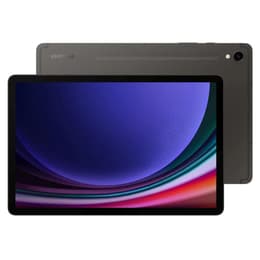
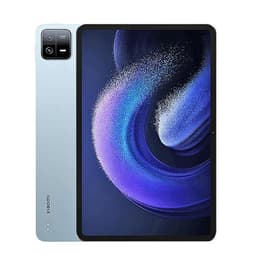


Galaxy Tab S9 (11.0", 2023) Vs Xiaomi Pad 6 (11.0", 2023)

Galaxy Tab S9 (11.0", 2023)
Starting at

Refurbished price:491.00

Versus €1,219.00 new

See options
Xiaomi Pad 6 (11.0", 2023)
Starting at

Refurbished price:235.39

Versus €699.00 new

See options

Ratings

The Samsung Galaxy Tab S9 and the Xiaomi Pad 6, both released in 2023, offer distinct tablet experiences within the Android ecosystem. While both aim to provide versatile platforms for productivity and entertainment, they differentiate themselves through display technology, processing power, and ecosystem integration. The Galaxy Tab S9 runs on Samsung's One UI atop Android, while the Xiaomi Pad 6 features MIUI Pad, also based on Android.

Scores

Durability

When considering the longevity of these tablets, several factors come into play, including software support, physical durability, and repairability. Both devices were released in 2023, meaning they are relatively new to the market.

  • Software Updates: Samsung generally provides a longer commitment to software updates for its flagship devices, including the Galaxy Tab S9, which typically translates to more years of Android version upgrades and security patches. This extended support can contribute to a longer practical lifespan for the device. The Xiaomi Pad 6, while receiving updates, has generated some user discussion regarding the duration and consistency of its software support, with some users expressing concerns about future Android version updates.
  • Physical Durability: The Galaxy Tab S9 features an IP68 rating for water and dust resistance, a notable inclusion for a tablet, offering enhanced protection against environmental elements. The Xiaomi Pad 6 incorporates Corning Gorilla Glass 3 for screen protection and an aluminum back, providing a sturdy build, though it lacks an official IP rating.
  • Repairability: Information on specific repairability scores for both models is not widely available. However, the general design and availability of parts can influence the ease and cost of potential repairs.

Year of Release

2023

2023

Compatible with latest Update

Yes

No

OS

Android

Android

Performance

Performance is a key differentiator, influencing how smoothly applications run, how quickly tasks are completed, and the overall responsiveness of the user experience.

  • Processing Power: The Galaxy Tab S9 is equipped with a current-generation processor optimized for Galaxy devices, which provides robust performance for demanding applications, multitasking, and graphic-intensive games. This allows for smooth operation even with heavy workloads. The Xiaomi Pad 6 utilizes a capable processor that handles everyday tasks, web browsing, and many games with good responsiveness.
  • Multitasking and Responsiveness: Both tablets offer sufficient RAM configurations to support multitasking. The Galaxy Tab S9 typically comes with 8GB or 12GB of RAM, facilitating seamless switching between multiple open applications. The Xiaomi Pad 6 is available with 6GB or 8GB of RAM, which is generally adequate for most users' multitasking needs.
  • Storage Options: Both devices offer various internal storage capacities, typically starting from 128GB, with options for 256GB or more, providing ample space for apps, media, and documents. The Galaxy Tab S9 also supports expandable storage via a microSD card, offering flexibility for users who require additional space.

Memory (GB)

8 GB

6 GB

Processor

Qualcomm SM8550-AC Snapdragon 8 Gen 2

Qualcomm SM8250-AC Snapdragon 870 5G

Screen quality

The display is a primary interface for tablets, and the quality of the screen significantly impacts the viewing and interaction experience.

  • Display Technology: The Galaxy Tab S9 features an 11-inch Dynamic AMOLED 2X display, known for its deep blacks, high contrast, and vibrant color reproduction. This technology provides an immersive viewing experience, particularly for media consumption. The Xiaomi Pad 6 comes with an 11-inch IPS LCD panel, which offers good color accuracy and brightness.
  • Resolution and Refresh Rate: Both tablets offer high resolutions for sharp and clear visuals. The Galaxy Tab S9 has a resolution of 2560 x 1600 pixels with a dynamic refresh rate up to 120Hz, ensuring smooth scrolling and fluid animations. The Xiaomi Pad 6 boasts a slightly higher resolution of 2880 x 1800 pixels and a refresh rate of up to 144Hz, which can result in an even smoother visual experience, especially noticeable in fast-paced content or gaming.
  • Brightness and Outdoor Visibility: The AMOLED display on the Galaxy Tab S9 generally offers excellent brightness and contrast, making it suitable for various lighting conditions, including outdoor use. The Xiaomi Pad 6's LCD panel also provides good brightness levels, with some reports indicating it performs well outdoors.

Resolution

1600 x 2560

1800 x 2880

Screen type

Dynamic AMOLED 2X

IPS LCD

Pixel density

280ppp

310ppp

Audiovisual

While tablets are not typically primary photography devices, their cameras are useful for video calls, document scanning, and occasional photo capture.

  • Rear Camera System: Both the Galaxy Tab S9 and the Xiaomi Pad 6 feature a 13-megapixel main rear camera, capable of capturing clear images in good lighting conditions. The Galaxy Tab S9's camera can also record 4K video at 30 frames per second. The Xiaomi Pad 6 also supports 4K video recording at 30 frames per second.
  • Front Camera for Video Calls: The Galaxy Tab S9 includes a 12-megapixel ultrawide front camera, which is beneficial for video conferencing as it can capture a wider field of view. The Xiaomi Pad 6 has an 8-megapixel front camera, which is suitable for video calls and selfies.
  • Audio Experience: Both tablets are equipped with quad-speaker systems, providing a rich audio experience for media consumption. The Galaxy Tab S9's speakers deliver crisp and clear output. The Xiaomi Pad 6's speakers are noted for being loud and clear, enhancing the entertainment experience.

Miscellaneous

Beyond core specifications, several practical features contribute to the overall usability and versatility of a tablet.

  • Connectivity and Ports: Both tablets support modern Wi-Fi standards for fast wireless internet access. The Galaxy Tab S9 features USB-C 3.2, offering faster data transfer speeds and display output capabilities. The Xiaomi Pad 6 also has a USB-C port, supporting USB 3.2 Gen 1, which allows for external display output.
  • Stylus Support: A significant advantage of the Galaxy Tab S9 is the inclusion of the S Pen in the box, which is also IP68 water and dust resistant. This makes it ready for note-taking, drawing, and precise interaction right out of the box. The Xiaomi Pad 6 supports the Xiaomi Smart Pen (2nd generation), which offers 4096 levels of pressure sensitivity, but it is sold separately.
  • Biometric Security and Design: The Galaxy Tab S9 incorporates an in-display fingerprint sensor for secure and convenient unlocking. The Xiaomi Pad 6 relies on 2D face recognition for unlocking, which is less secure than a fingerprint sensor, and does not include a fingerprint scanner. In terms of design, both tablets feature slim profiles and aluminum frames, contributing to a premium feel.

Weight

129 g

490 g

Screen size (in)

11.0

11.0

Network

Wi-Fi

Wi-Fi

Carrier compatibility

Unlocked

Without SIM Port

Connector

USB Type-C

USB Type-C

User feedback for the Galaxy Tab S9 often praises its vibrant AMOLED display, robust performance, and the versatility offered by the included S Pen and its IP68 rating. Users appreciate its capability for both productivity and high-end entertainment. Some discussions mention the battery life, while solid, might not be as long as some predecessors, potentially due to the power demands of the AMOLED screen.

The Xiaomi Pad 6 receives commendation for its high-resolution, high-refresh-rate LCD screen and strong performance for its class, making it a compelling option for media consumption and general use. Users frequently highlight its solid build quality. Common criticisms or concerns from users often revolve around the absence of a fingerprint sensor and the perceived uncertainty regarding long-term software update support compared to other brands.

Users prioritizing a top-tier display experience, robust performance for demanding tasks, and an included, water-resistant stylus with a strong commitment to software updates may find the Samsung Galaxy Tab S9 well-suited to their needs. Its IP68 rating also makes it a durable choice for various environments. Conversely, users seeking a tablet with a high-refresh-rate screen, good overall performance for everyday use, and a solid build, who are comfortable with potentially shorter software support timelines and the lack of a fingerprint sensor, might lean toward the Xiaomi Pad 6. Both tablets offer compelling features, and considering a quality-assured refurbished option for either can be an eco-friendly alternative for making an informed choice.


See all articles

Our recent comparisons