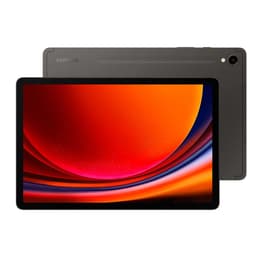
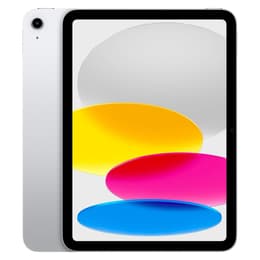


Galaxy Tab S9 (11.0", 2023) Vs iPad 10 (2022, A14 series)

Galaxy Tab S9 (11.0", 2023)
Starting at

Refurbished price:491.00

Versus €1,219.00 new

See options
iPad 10 (2022, A14 series)
Starting at

Refurbished price:281.00

Versus €449.00 new

See options

Ratings

The Samsung Galaxy Tab S9 (2023) and the Apple iPad (10th generation, 2022) are prominent tablets from their respective ecosystems, offering distinct experiences for users. While both provide capable performance for daily tasks, they differentiate themselves through display technology, stylus integration, and operating system environments. The Galaxy Tab S9 runs on Android, offering extensive customisation, whereas the iPad operates on Apple's iPadOS, known for its intuitive interface and strong app ecosystem.

Scores

Durability

When considering the longevity of these devices, several factors come into play, including their release timelines and software support.

  • Release Timeline: The iPad (10th generation) was released in October 2022, making it slightly older than the Galaxy Tab S9, which launched in August 2023. This difference in release date can influence the duration of future software support.
  • Software Longevity: Apple typically provides a long period of iPadOS updates, often extending to five or six years from release. Samsung has committed to providing up to four generations of Android OS upgrades and five years of security updates for its flagship tablets, including the Tab S9. This means the iPad may receive software updates for a slightly longer overall period.
  • Durability Features: The Galaxy Tab S9 features an IP68 rating for dust and water resistance, offering enhanced protection against environmental elements. The iPad (10th generation) does not carry an official IP rating.

Year of Release

2023

2022

Compatible with latest Update

Yes

Yes

OS

Android

iPadOS

Performance

Both tablets deliver smooth performance for a variety of tasks, though they cater to different user expectations in terms of raw power and storage flexibility.

  • Storage and Expansion: Both devices are available with 64GB and 256GB internal storage options. The Galaxy Tab S9 offers the added flexibility of expandable storage via a microSD card, which is not available on the iPad.
  • Battery Performance: The Galaxy Tab S9 is equipped with an 8400 mAh battery, while the iPad (10th generation) features a 28.6 Wh battery, roughly equivalent to 7538 mAh. In typical usage, the Tab S9 generally provides 8-11 hours of mixed use, whereas the iPad 10th Gen typically offers 7-10 hours of web browsing on a single charge.
  • Processing Capabilities: The Galaxy Tab S9 handles demanding applications and intensive multitasking with ease, providing a highly responsive experience for gaming and professional creative work. The iPad (10th generation) delivers smooth performance for everyday tasks, content consumption, and light to moderate gaming, ensuring a fluid user experience.

Memory (GB)

8 GB

4 GB

Screen quality

The visual experience on these tablets is a key differentiator, primarily due to their underlying display technologies.

  • Display Technology: The Galaxy Tab S9 features an 11-inch Dynamic AMOLED 2X display, known for its deep blacks, high contrast, and vibrant color reproduction. The iPad (10th generation) uses a 10.9-inch Liquid Retina IPS LCD display, which offers accurate colors and good viewing angles.
  • Resolution and Clarity: The Tab S9 provides a resolution of 2560 x 1600 pixels, resulting in a pixel density of approximately 274 pixels per inch (ppi). The iPad 10th Gen has a resolution of 2360 x 1640 pixels, with a pixel density of 264 ppi. Both offer sharp visuals for reading and media consumption.
  • Refresh Rate and Brightness: The Galaxy Tab S9 boasts a 120Hz refresh rate, contributing to smoother scrolling and more fluid animations, particularly noticeable in gaming and fast-paced content. The iPad (10th generation) operates at a standard 60Hz refresh rate. For brightness, the iPad 10th Gen typically reaches 500 nits, while the Tab S9 can achieve up to 749 nits when displaying HDR content.

Resolution

1600 x 2560

2360 x 1640

Screen type

Dynamic AMOLED 2X

Liquid Retina display

Pixel density

280ppp

264ppp

Audiovisual

Both tablets are equipped with capable camera systems suitable for video calls and casual photography, with some notable differences in their configurations and features.

  • Rear Camera System: The Galaxy Tab S9 includes a 13-megapixel wide-angle rear camera. The iPad (10th generation) features a 12-megapixel wide-angle rear camera. Both are capable of capturing detailed photos in good lighting conditions.
  • Front Camera and Video Calls: For video conferencing and selfies, the Tab S9 has a 12-megapixel ultrawide front camera. The iPad (10th generation) also features a 12-megapixel ultrawide front camera with Center Stage, which automatically keeps subjects in frame during video calls, and is notably positioned on the longer edge of the device, optimising it for landscape use.
  • Video Recording and Audio: Both tablets support 4K video recording at up to 60 frames per second. The Galaxy Tab S9 features a quad-speaker setup tuned by AKG with Dolby Atmos support, providing a rich audio experience. The iPad (10th generation) offers stereo speakers.

Miscellaneous

Beyond core specifications, several practical elements contribute to the overall user experience and differentiate these two tablets.

  • Connectivity and Ports: Both devices support modern wireless standards, including Wi-Fi 6 and Bluetooth 5.2 or 5.3, and offer optional 5G cellular connectivity. Both utilise a USB-C port for charging and data transfer. The Galaxy Tab S9's USB-C port supports faster USB 3.2 speeds, while the iPad (10th generation) uses USB 2.0 speeds.
  • Stylus and Biometrics: The Galaxy Tab S9 comes with an S Pen included in the box, which is also IP68 water-resistant. The iPad (10th generation) supports the Apple Pencil (1st generation and USB-C), though the 1st generation requires an adapter for charging and pairing. For security, the Tab S9 features an under-display optical fingerprint sensor, while the iPad 10th Gen integrates Touch ID into its power button.
  • Design and Handling: The Galaxy Tab S9 measures 254.3 x 165.8 x 5.9 mm and weighs 498g (Wi-Fi model). The iPad (10th generation) measures 248.6 x 179.5 x 7 mm and weighs 477g (Wi-Fi model). Both feature an aluminum frame and back.

Weight

129 g

477 g

Screen size (in)

11.0

10.9

Network

Wi-Fi

Wi-Fi

Carrier compatibility

Unlocked

Without SIM Port

User feedback indicates that the Galaxy Tab S9 is often praised for its exceptional AMOLED display, powerful performance, and the versatility offered by the included S Pen and its IP68 rating. Some users note that while its battery life is good, it might not be as outstanding as some competitors, potentially due to the power demands of its high-quality screen. The iPad (10th generation) receives positive remarks for its refreshed design, capable performance for general use, and the convenient placement of its front-facing camera for video calls. Criticisms sometimes point to its non-laminated display, which can result in a slight gap between the glass and the panel, and the base storage option of 64GB, which can fill up quickly for some users.

Users prioritizing a premium visual experience with deep blacks and vibrant colors, along with robust performance for demanding applications and an included stylus for creative or professional work, may find the Galaxy Tab S9 to be a more suitable choice. Its expandable storage and water resistance also appeal to those needing more flexibility and durability. Conversely, users who are already integrated into the Apple ecosystem, value a streamlined operating system, and appreciate features like Center Stage for video calls, will likely find the iPad (10th generation) aligns better with their needs. Both devices offer a quality-assured refurbished option, providing an eco-friendly alternative for consumers.


See all articles

Our recent comparisons






