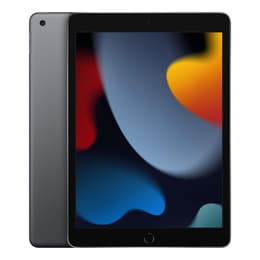
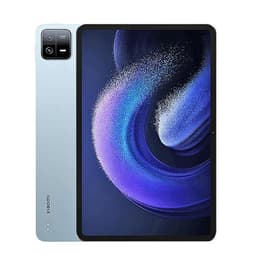


iPad 9 (2021, A13 series) Vs Xiaomi Pad 6 (11.0", 2023)

iPad 9 (2021, A13 series)
Starting at

Refurbished price:178.00

Versus €429.00 new

See options
Xiaomi Pad 6 (11.0", 2023)
Starting at

Refurbished price:235.39

Versus €699.00 new

See options

Ratings

The iPad (9th generation), released in September 2021, and the Xiaomi Pad 6, launched globally in April 2023, are two distinct tablets designed for different user ecosystems. While the iPad operates on Apple's iPadOS, the Xiaomi Pad 6 runs on Android with Xiaomi's MIUI for Pad interface. Key differentiators include their display technologies, processor architectures, and accessory ecosystems, catering to varied user preferences and workflows.

Scores

Durability

When considering the long-term usability of these tablets, several factors contribute to their expected lifespan, including software support and physical durability.

  • Release Timeline and OS Support: The iPad (9th generation) was released in September 2021 and was discontinued in May 2024, meaning its software support cycle is nearing its end compared to newer models. It initially shipped with iPadOS 15 and is upgradable to current iPadOS versions. The Xiaomi Pad 6, released in April 2023, started with Android 13 and MIUI Pad 14, and has already received updates to HyperOS based on Android 14 in 2024, suggesting a longer expected period of software updates ahead.
  • Physical Durability: Both tablets feature an aluminum unibody design, contributing to their structural integrity. The Xiaomi Pad 6 incorporates Corning Gorilla Glass 3 for screen protection, offering a degree of scratch and impact resistance. The iPad (9th generation) uses a glass front, but specific Gorilla Glass versions are not typically highlighted for this model.
  • Repairability and Practical Lifespan: Apple generally provides extensive support for its devices, including parts and service, though the iPad (9th generation) being discontinued may affect the availability of certain components over time. The Xiaomi Pad 6, as a more recent release, is likely to have readily available parts and service for a longer duration. Users looking for an eco-friendly alternative might consider quality-assured refurbished options for either device, extending their practical lifespan.

Year of Release

2021

2023

Compatible with latest Update

Yes

No

OS

iPadOS

Android

Performance

The performance of a tablet is crucial for handling daily tasks, from browsing and media consumption to more demanding applications and multitasking.

  • Processing Power: The iPad (9th generation) is equipped with a processor that handles everyday applications and moderate multitasking smoothly, providing a responsive experience for general use and casual gaming. The Xiaomi Pad 6 features a more powerful processor, which allows for smoother operation with demanding applications, more intensive multitasking, and higher frame rates in graphically rich games.
  • Multitasking and Responsiveness: The iPad (9th generation) comes with 3GB of RAM, which is sufficient for running multiple apps simultaneously, though very heavy multitasking might lead to occasional reloads. The Xiaomi Pad 6 offers configurations with 6GB or 8GB of RAM, providing more headroom for keeping numerous applications open and switching between them without significant delays.
  • Storage and Battery Behavior: Both tablets offer 64GB and 256GB storage options, utilizing fast internal storage for quick app loading and data access. In terms of battery, the iPad (9th generation) is rated for up to 10 hours of web surfing or video playback. The Xiaomi Pad 6, with its larger battery capacity, can provide up to 16 hours of video playback, though real-world usage, especially with its high refresh rate display, can vary.

Memory (GB)

3 GB

6 GB

Screen quality

The display is a primary interaction point for any tablet, and both devices offer distinct visual experiences.

  • Display Technology and Resolution: The iPad (9th generation) features a 10.2-inch Retina IPS LCD with a resolution of 2160 x 1620 pixels, resulting in a pixel density of 264 ppi. This provides clear and sharp images for general viewing. The Xiaomi Pad 6 has a slightly larger 11-inch IPS LCD with a higher resolution of 2880 x 1800 pixels and a pixel density of 309 ppi, offering a more detailed visual experience.
  • Brightness and Color: The iPad (9th generation) offers 500 nits of typical brightness and includes True Tone technology, which adjusts the display's color temperature to match ambient light, making viewing more comfortable. The Xiaomi Pad 6 provides 550 nits of typical brightness and supports Dolby Vision, enhancing color accuracy and contrast for compatible content.
  • Refresh Rate and Smoothness: The iPad (9th generation) operates at a standard 60Hz refresh rate. The Xiaomi Pad 6 stands out with a 144Hz refresh rate, which contributes to noticeably smoother scrolling, more fluid animations, and a more responsive feel during gaming and fast-paced content.

Resolution

2160 x 1620

1800 x 2880

Screen type

Retina display

IPS LCD

Pixel density

264ppp

310ppp

Audiovisual

While tablets are not typically primary photography devices, their cameras are useful for video calls, document scanning, and casual photography.

  • Rear Camera Capabilities: The iPad (9th generation) includes an 8MP wide rear camera with an f/2.4 aperture, capable of recording 1080p HD video at 25 or 30 frames per second. The Xiaomi Pad 6 features a 13MP rear camera with an f/2.2 aperture and PDAF, offering higher resolution stills and the ability to record 4K video at 30 frames per second.
  • Front Camera for Communication: For video calls, the iPad (9th generation) has a 12MP ultra-wide front camera with a 122-degree field of view and Apple's Center Stage feature, which automatically keeps the user in frame during video calls. The Xiaomi Pad 6 comes with an 8MP front camera, suitable for video conferencing and selfies, recording 1080p video at 30 frames per second.
  • Audio for Media and Calls: Both tablets feature stereo speakers, with the Xiaomi Pad 6 boasting quad speakers and Dolby Atmos support for a more immersive audio experience. Both also include dual microphones for clear audio input during calls and recordings.

Miscellaneous

Beyond core specifications, various practical features contribute to the overall user experience and device utility.

  • Connectivity and Ports: The iPad (9th generation) supports Wi-Fi 5 (802.11ac) and Bluetooth 4.2, and includes a Lightning port for charging and data transfer, along with a 3.5mm headphone jack. It also offers an optional cellular model. The Xiaomi Pad 6 supports newer Wi-Fi 6 and Bluetooth 5.2 standards, and features a USB-C port (USB 3.2 Gen1) for faster data transfer and charging. The Xiaomi Pad 6 does not offer a cellular option.
  • Biometric Security and Accessories: The iPad (9th generation) utilizes Touch ID for secure authentication, integrated into its home button. It is compatible with the first-generation Apple Pencil and Apple's Smart Keyboard. The Xiaomi Pad 6 relies on face recognition for unlocking, and supports the Xiaomi Smart Pen (2nd generation) and a dedicated keyboard accessory.
  • Design and Handling: The iPad (9th generation) measures 250.6 x 174.1 x 7.5 mm and weighs around 487g for the Wi-Fi model. The Xiaomi Pad 6 is slightly thinner and similar in weight, at 253.95 x 165.18 x 6.51 mm and 490g, offering a comparable portability experience.

Weight

487 g

490 g

Width

17.41 cm

16,52 cm

Height

25.06 cm

25,4 cm

Depth

0.75 cm

0,65 cm

Screen size (in)

10.2

11.0

Network

Wi-Fi

Wi-Fi

Carrier compatibility

Without SIM Port

Without SIM Port

User feedback for the iPad (9th generation) often highlights its reliable performance for everyday tasks, the robust app ecosystem of iPadOS, and its consistent battery life as strong points. Some users have noted its design, including the bezels and Lightning port, as feeling somewhat dated compared to more recent tablets. The front camera with Center Stage is frequently praised for enhancing video calls.

The Xiaomi Pad 6 generally receives positive remarks for its vibrant 144Hz display, which provides a smooth visual experience, and its capable performance for gaming and productivity. Users also appreciate its quad speakers for media consumption. Common criticisms sometimes point to its battery life, which, despite a large capacity, can be impacted by the high refresh rate display, and the absence of a fingerprint sensor.

For users prioritizing a familiar and expansive app ecosystem with consistent performance for general use, the iPad (9th generation) remains a solid choice, especially for those already invested in Apple's services. Its integration with Apple Pencil (1st gen) and Smart Keyboard makes it suitable for note-taking and light productivity. Conversely, individuals seeking a more modern display with a higher refresh rate, stronger processing power for demanding applications, and the versatility of the Android ecosystem may find the Xiaomi Pad 6 more aligned with their needs. Its USB-C port and Wi-Fi 6 support offer more contemporary connectivity options. Both tablets offer distinct advantages, and considering refurbished options can provide an accessible entry point to either ecosystem, promoting a sustainable choice.


See all articles

Our recent comparisons