

Compare models
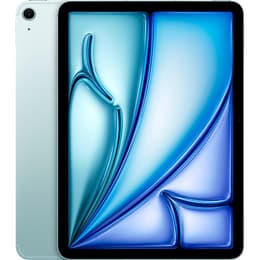
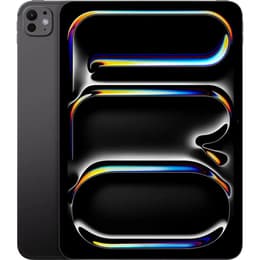
iPad Air 6 (2024, M2 series) Vs iPad Pro (2025, M5 series)
- 1-year minimum warranty
- Free delivery on all orders
- Free 30-day returns
Differences at a glance
The iPad Air 6 (2024) and the iPad Pro (2025) represent two different tiers within Apple's tablet lineup, catering to users with varying demands for capability and design. While both run on iPadOS and deliver smooth daily operation, they differ notably in processing hardware, screen technology, and build profile.
Available Models
Colour
Storage (GB)
Scores
Durability
Both tablets benefit from Apple's long-standing software support windows, though their release years influence their overall longevity timelines in different ways.
- Software support duration: Both models receive regular iPadOS updates, with the newer iPad Pro extending software viability further into the future due to its later release year.
- Expected practical lifespan: Hardware durability is high on both devices, though intensive multitasking and advanced feature execution will remain viable longer on the higher-tier hardware configuration.
- Repairability and build integrity: Each tablet utilizes sealed aluminum enclosures that require professional service for internal component repairs, matching industry norms for modern portable computing.
Year of Release
2024
2025
Compatible with latest Update
Yes
Yes
OS
iPadOS
iPadOS
Performance
System responsiveness and speed capabilities differ to accommodate varying workloads, ranging from everyday media consumption to intensive creative projects.
- Multitasking and memory allocation: The iPad Air handles split-screen applications and routine workflows smoothly with its standard memory capacity, whereas the iPad Pro incorporates expanded memory architecture to sustain heavy professional workloads and demanding creative software simultaneously.
- Processing capability: Everyday tasks like web browsing, document editing, and streaming run fluidly on both devices, while resource-intensive rendering and gaming benefit from the advanced generational processing architecture found in the Pro series.
- Battery behavior: Both models are designed to provide a full day of typical mixed usage, though heavy processing tasks will deplete the energy reserve more rapidly on either device.
Processor
Apple M2
Apple M5
Screen quality
Display characteristics vary significantly between the two models, directly impacting visual fidelity, outdoor usability, and media engagement.
- Display technology: The iPad Air utilizes a standard Liquid Retina panel with accurate color reproduction, while the iPad Pro features an advanced tandem OLED screen that delivers deeper contrast levels and higher peak brightness.
- Refresh rate and fluidity: Motion and scrolling appear standard on the iPad Air display, whereas the iPad Pro incorporates a high-refresh-rate panel that provides smoother visual transitions during navigation and drawing.
- Size configurations: Both product lines offer versatile sizing choices to accommodate users who prefer compact portability or expansive canvas workspace.
Resolution
2360 x 1640
2420 x 1668
True Tone
Yes
Yes
Pro-Motion
No
Yes
Screen type
Liquid Retina display
Ultra Retina XDR display
Sound quality
Speakers
Stereo speakers (landscape)
Four speaker audio
Audiovisual
Imaging and audio hardware are tailored to support casual documentation, video communication, and media playback.
- Camera systems: The iPad Air features a reliable single-lens rear setup suitable for scanning documents and casual photography, while the iPad Pro integrates a more versatile multi-lens configuration alongside advanced depth sensors.
- Front-facing orientation: Both tablets position the selfie camera along the landscape edge for natural video calls, supported by clear microphone arrays for virtual meetings.
- Speaker output: Multi-speaker audio systems on both models deliver clear sound for music and video playback, with the Pro configuration offering a more room-filling acoustic profile.
Miscellaneous
Physical dimensions and connectivity standards shape how each tablet integrates into daily mobile workflows.
- Build profile: The iPad Pro achieves an exceptionally thin and lightweight chassis, whereas the iPad Air maintains a slightly thicker form factor that remains easy to handle.
- Connectivity standards: Both devices support fast wireless networking standards, with select configurations offering cellular connectivity for internet access away from Wi-Fi networks.
- Authentication and security: The iPad Air uses a fingerprint sensor integrated into the top power button, while the iPad Pro relies on facial recognition technology for secure unlocking.
Weight
462 g
444 g
Screen size (in)
11
11
Network
Wi-Fi
Wi-Fi
Carrier compatibility
Without SIM Port
Without SIM Port
Face ID
No
Yes
Touch ID
Yes
No
Connector
USB Type-C
USB Type-C
What the community thinks
Users prioritizing general productivity, web browsing, and media streaming will find the iPad Air 6 (2024) well-suited to their daily requirements. Conversely, users requiring advanced display technology, heavier multitasking headroom, and professional creative tools will lean toward the iPad Pro (2025). Reviewers frequently highlight the Air series for balanced everyday performance, while the Pro model receives praise for its vibrant screen and raw computing capacity.
For those exploring sustainable purchasing alternatives, a quality-assured refurbished option provides a reliable way to acquire either device while minimizing environmental impact. Ultimately, evaluating personal workflow needs will guide the most appropriate selection between these two capable tablets.