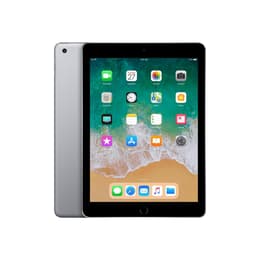
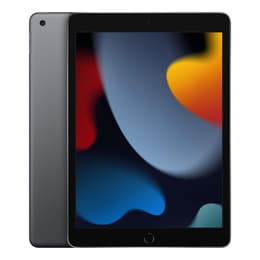


iPad 6 (2018, A10 series) Vs iPad 9 (2021, A13 series)

iPad 6 (2018, A10 series)
Starting at

Refurbished price:82.00

Versus €359.00 new

See options
iPad 9 (2021, A13 series)
Starting at

Refurbished price:178.00

Versus €429.00 new

See options

Ratings

The iPad 2018 (6th Generation), released in March 2018, and the iPad 2021 (9th Generation), launched in September 2021, represent two iterations of Apple's entry-level tablet line. Both devices operate on Apple's iPadOS, offering a familiar user experience. The 2021 model introduces a more capable processor, an enhanced front-facing camera, and a slightly larger display, building upon the foundation set by its predecessor.

Scores

Durability

When considering the longevity of these tablets, several factors come into play, including their release dates and Apple's typical software support cycles.

  • Release Timeline and OS Support: The iPad 2018, released in March 2018, shipped with iOS 11.3 and is upgradable to iPadOS 17.7.10 as of August 2025. It is expected to cease receiving major iPadOS updates around iPadOS 17 or 18, with security updates potentially continuing into 2025 or 2026. The iPad 2021, launched in September 2021 with iPadOS 15, is anticipated to receive major updates until approximately 2027, potentially reaching iPadOS 20, and security updates are likely to continue until 2028-2029.
  • Repairability: Both models received low repairability scores due to the use of adhesive in their construction. However, a notable aspect of both devices is their non-laminated display, which can make replacing a cracked outer glass digitizer less complex than on models with fused displays.
  • Expected Practical Lifespan: The iPad 2021 offers a longer practical lifespan due to its more recent release and extended software and security update support.

Year of Release

2018

2021

Compatible with latest Update

No

Yes

OS

iPadOS

iPadOS

Maximum Operating System supported

iPadOS 17

iPadOS 18

Performance

The performance capabilities of these iPads are primarily driven by their respective processors and available memory, influencing how smoothly they handle various tasks.

  • Processing Power: The iPad 2018 is powered by the A10 Fusion chip and includes 2GB of RAM. This configuration provides sufficient power for everyday activities such as web browsing, streaming media, and light gaming. The iPad 2021 is equipped with a more advanced A13 Bionic chip and features 3GB of RAM. This offers a noticeable improvement in speed and responsiveness, particularly for demanding applications and multitasking.
  • System Responsiveness: While the iPad 2018 handles basic multitasking adequately, the iPad 2021 provides a smoother experience when switching between multiple applications and running more intensive software due to its increased RAM and more powerful processor. Some users of the iPad 9th generation have reported occasional lag with newer iPadOS versions, though a factory reset can sometimes resolve these issues.
  • Battery Behavior: Both iPad models are rated for up to 10 hours of web browsing or video playback when connected to Wi-Fi. In typical use, the iPad 9th generation provides approximately 9 hours and 10 minutes of battery life.

Memory (GB)

2 GB

3 GB

Processor

Apple A10 Fusion

Apple A13 Bionic

Screen quality

Both iPads feature Retina displays, but the newer model offers a slightly larger viewing area and an additional display technology.

  • Display Technology and Clarity: Both devices utilize Retina IPS LCD display technology. The iPad 2018 has a 9.7-inch display with a 2048 x 1536 resolution at 264 pixels per inch (ppi). The iPad 2021 features a 10.2-inch display with a 2160 x 1620 resolution, also at 264 ppi. The iPad 2018's display is not fully laminated and lacks True Tone technology. The iPad 2021 includes True Tone technology, which automatically adjusts the display's color temperature based on the ambient lighting for a more comfortable viewing experience.
  • Brightness and Refresh Rate: Both models offer a typical brightness of 500 nits. Both iPads feature a standard 60Hz refresh rate.
  • Viewing Experience: The iPad 2021 provides a slightly larger screen and the benefit of True Tone, which can enhance viewing comfort in various lighting conditions.

Resolution

2048 x 1536

2160 x 1620

True Tone

No

Yes

Pro-Motion

No

No

Screen type

Retina display

Retina display

Pixel density

264ppp

264ppp

Brightness

500 nits brightness

500 nits brightness

Sound quality

Speakers

Stereo speakers

Stereo speakers

Audiovisual

The camera systems on these iPads cater to different levels of photography and video conferencing needs, with the iPad 2021 offering significant upgrades, particularly for the front camera.

  • Camera System Capabilities: Both the iPad 2018 and iPad 2021 feature an 8MP wide rear camera capable of recording 1080p HD video at 30 frames per second. The front camera is a key differentiator: the iPad 2018 has a 1.2MP FaceTime HD camera that records 720p video, while the iPad 2021 boasts a 12MP Ultra Wide front camera with Center Stage, capable of 1080p video recording.
  • Photography and Video Performance: For everyday photography, the rear cameras offer similar performance. The iPad 2021's 12MP Ultra Wide front camera significantly improves the quality of selfies and video calls. Its Center Stage feature automatically adjusts the camera view to keep the user in the frame during video calls, which is beneficial for virtual meetings and family chats.
  • Audio Output: Both tablets are equipped with stereo speakers. The iPad 2021 also features improved microphones, which can enhance audio clarity during calls and recordings.

Miscellaneous

Beyond core performance and display, several practical elements contribute to the overall user experience of these tablets.

  • Connectivity Options: Both the iPad 2018 and iPad 2021 support Wi-Fi 5 (802.11ac) and Bluetooth 4.2. Both models are available in Wi-Fi-only and Wi-Fi + Cellular configurations.
  • Port Types and Sensors: Both devices retain the Lightning connector for charging and data transfer, as well as a 3.5mm headphone jack. For biometric security, both iPads feature Touch ID.
  • Weight and Dimensions: The iPad 2018 measures 240 x 169.5 x 7.5 mm and weighs 469g for the Wi-Fi model. The iPad 2021 is slightly larger and heavier, with dimensions of 250.6 x 174.1 x 7.5 mm and a weight of 487g for the Wi-Fi model. This slight difference in size is primarily due to the iPad 2021's larger screen. Both support the 1st generation Apple Pencil. The iPad 2021 also supports the Smart Keyboard, which the iPad 2018 does not.

Weight

469 g

487 g

Width

16.95 cm

17.41 cm

Height

24 cm

25.06 cm

Depth

0.75 cm

0.75 cm

Screen size (in)

9.7

10.2

Network

Wi-Fi

Wi-Fi

Carrier compatibility

Without SIM Port

Without SIM Port

Wi-Fi technology

Wi-Fi 6 802.11a/b/g/n/ac

Wi-Fi 6 802.11a/b/g/n/ac

Bluetooth Version

Bluetooth 4.2

Bluetooth 4.2

Face ID

No

No

Touch ID

Yes

Yes

Connector

Lightning connector

Lightning connector

User sentiment for both the iPad 2018 and iPad 2021 generally highlights their respective strengths and limitations. The iPad 2018 is often praised for its reliability for basic tasks such as web browsing, media consumption, and light productivity, making it a functional choice for those seeking a straightforward tablet experience. Its capabilities are considered sufficient for users who do not require the latest features or intensive performance.

Conversely, the iPad 2021 receives commendation for its improved performance, particularly its enhanced front camera with Center Stage, which is a significant advantage for video calls. Its longer software support also contributes to its appeal for users looking for a device with extended longevity. However, some users have noted that the iPad 9th generation can experience occasional lag after certain iPadOS updates, though this can sometimes be addressed with a factory reset. Its design is also sometimes perceived as dated when compared to other, more modern iPad models.

Users prioritizing a device for basic tasks like web browsing, media consumption, and light productivity, who also appreciate the option of Apple Pencil support, may find the iPad 2018 well-suited to their needs. Its established capabilities make it a reliable choice for those seeking a functional tablet without the latest features. Conversely, users who require more robust performance for demanding apps, frequent video calls, or who value a slightly larger and more vibrant display with True Tone technology, will likely lean towards the iPad 2021. For those considering either model, exploring refurbished options can provide an eco-friendly, quality-assured alternative.

See all articles

Our recent comparisons