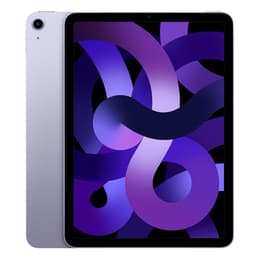



iPad Air 5 (2022, M1 series) Vs Xiaomi Pad 6 (11.0", 2023)

iPad Air 5 (2022, M1 series)
Starting at

Refurbished price:310.00

Versus €799.00 new

See options
Xiaomi Pad 6 (11.0", 2023)
Starting at

Refurbished price:235.39

Versus €699.00 new

See options

Ratings

The iPad Air (2022 M1 Series) and the Xiaomi Pad 6 (2023 11 0) are two distinct tablets, each offering a unique blend of features and ecosystem experiences. Released in 2022, the iPad Air operates on Apple's iPadOS, while the Xiaomi Pad 6, launched in 2023, runs on Android with Xiaomi's MIUI for Pad interface. A primary differentiator lies in their core processing power and display refresh rates, influencing overall user interaction and suitability for various tasks.

Scores

Durability

When considering the long-term usability of these tablets, several factors contribute to their expected practical lifespan, including software support and repairability.

  • Software Longevity: The iPad Air (2022) typically receives iPadOS updates for approximately 5 to 7 years from its release, ensuring access to new features and security patches for an extended period. The Xiaomi Pad 6, released a year later, generally receives 3 to 4 major Android operating system updates and 4 to 5 years of security updates. This difference means the iPad Air may offer a longer period of official software support.
  • Repairability: The iPad Air has historically received low repairability scores, often rated around 2 out of 10 by independent repair experts, primarily due to the extensive use of adhesive and the difficulty in replacing components like the battery. Specific repairability scores for the Xiaomi Pad 6 are not widely available, but some user reports suggest potential concerns regarding the physical integrity of Xiaomi tablets over time.
  • Expected Lifespan: Both devices are built to last with proper care. However, the iPad Air's longer software update cycle generally translates to a more extended period of optimal functionality and compatibility with newer applications.

Year of Release

2022

2023

Compatible with latest Update

Yes

No

OS

iPadOS

Android

Performance

The performance of a tablet is central to its user experience, affecting everything from app responsiveness to handling demanding tasks. Both tablets offer capable performance, though they approach it with different hardware foundations.

  • Processing Power: The iPad Air (2022) is equipped with a powerful processor that enables smooth operation across a wide range of applications, from everyday browsing to intensive creative work like video editing and advanced gaming. This hardware provides substantial headroom for multitasking and future software demands. The Xiaomi Pad 6 features a processor that handles daily tasks and most games effectively, providing a responsive experience for general use and media consumption.
  • Storage and Memory: The iPad Air is available with 64GB or 256GB of internal storage and includes 8GB of RAM. The Xiaomi Pad 6 offers more flexible storage options starting at 128GB, with configurations up to 256GB, and comes with either 6GB or 8GB of RAM. For users who require more base storage, the Xiaomi Pad 6 provides a higher entry point.
  • Battery Performance: The iPad Air typically delivers around 10 hours of battery life during mixed usage, which can vary with intensive applications or high screen brightness. The Xiaomi Pad 6, with its larger battery capacity, often provides a full day of use or more, with some tests indicating over 12 hours of video playback.

Memory (GB)

8 GB

6 GB

Screen quality

The display is a primary interface for tablets, and both the iPad Air and Xiaomi Pad 6 offer high-quality viewing experiences with distinct characteristics.

  • Display Technology and Size: Both tablets feature IPS LCD panels. The iPad Air (2022) has a 10.9-inch Liquid Retina display. The Xiaomi Pad 6 offers a slightly larger 11-inch display.
  • Resolution and Clarity: The iPad Air provides a resolution of 2360 x 1640 pixels, resulting in a pixel density of 264 pixels per inch (ppi). The Xiaomi Pad 6 boasts a higher resolution of 2880 x 1800 pixels, leading to a sharper 309 ppi. This higher pixel density on the Xiaomi Pad 6 can result in finer detail.
  • Brightness and Refresh Rate: The iPad Air's display reaches a typical brightness of 500 nits and operates at a standard 60Hz refresh rate. The Xiaomi Pad 6 offers a slightly brighter display at 550 nits and features a significantly higher 144Hz refresh rate, which contributes to smoother scrolling and more fluid motion, particularly noticeable in fast-paced content or gaming.

Resolution

2360 x 1640

1800 x 2880

Screen type

Liquid Retina display

IPS LCD

Pixel density

264ppp

310ppp

Audiovisual

While tablets are not typically primary photography devices, their camera systems are important for video calls, document scanning, and occasional photo capture. Both tablets include capable cameras for these purposes.

  • Rear Camera System: The iPad Air (2022) features a 12-megapixel wide camera on the rear, capable of recording video at up to 4K resolution at 60 frames per second. The Xiaomi Pad 6 is equipped with a 13-megapixel wide rear camera, which supports video recording up to 4K at 30 frames per second.
  • Front Camera and Video Conferencing: For front-facing interactions, the iPad Air includes a 12-megapixel ultrawide camera with Center Stage, a feature that keeps the user automatically framed during video calls. The Xiaomi Pad 6 has an 8-megapixel front camera.
  • Audio Experience: The iPad Air provides stereo speakers and dual microphones. The Xiaomi Pad 6 enhances the audio experience with a quad-speaker setup that supports Dolby Atmos, and a 4-microphone array designed for directional sound pickup, which can be beneficial for clear communication in various environments.

Miscellaneous

Beyond core performance and display, practical features like connectivity, ports, and physical design contribute to the overall user experience of a tablet.

  • Connectivity and Ports: Both tablets support Wi-Fi 6 for fast wireless internet. The iPad Air (2022) also offers an optional 5G cellular model and uses Bluetooth 5.0. The Xiaomi Pad 6 is a Wi-Fi-only device and features Bluetooth 5.2. Both devices utilize a USB-C port for charging and data transfer, with the iPad Air's port offering higher bandwidth (USB 3.2 Gen 2) compared to the Xiaomi Pad 6's (USB 3.2 Gen 1).
  • Security and Biometrics: The iPad Air incorporates Touch ID, a fingerprint sensor integrated into the power button, for secure authentication. The Xiaomi Pad 6 relies on traditional PIN/pattern/face unlock methods and does not include a fingerprint sensor.
  • Design and Handling: The iPad Air measures 247.6 x 178.5 x 6.1 mm and weighs approximately 461 grams for the Wi-Fi model. The Xiaomi Pad 6 is slightly larger and heavier at 253.95 x 165.18 x 6.51 mm and 490 grams. Both tablets feature an aluminum unibody construction, contributing to a solid feel.

Weight

461 g

490 g

Width

17.85 cm

16,52 cm

Height

24.76 cm

25,4 cm

Depth

0.61 cm

0,65 cm

Screen size (in)

10.9

11.0

Network

Wi-Fi

Wi-Fi

Carrier compatibility

Without SIM Port

Without SIM Port

User feedback for the iPad Air (2022) frequently highlights its robust performance, vibrant display, and the extensive app ecosystem available through iPadOS. Many users appreciate its long-term software support and its capability for demanding tasks like creative work and advanced gaming. Common criticisms sometimes point to its 60Hz display, which some find less fluid than higher refresh rate screens, and occasional concerns about battery life under heavy use.

The Xiaomi Pad 6 generally receives praise for its sharp, high-refresh-rate display, capable performance for its segment, and solid battery endurance. Users often commend its value proposition and suitability for media consumption and general productivity. However, some common concerns revolve around its shorter software update commitment compared to the iPad Air and the absence of a fingerprint sensor for quick biometric authentication.

Users prioritizing a tablet with a longer software support lifespan, a highly optimized app ecosystem for creative and professional applications, and robust processing power for intensive tasks may find the iPad Air (2022) well-suited to their needs. Conversely, individuals who value a smoother visual experience with a high refresh rate display, a larger base storage option, and a strong battery life for media consumption and everyday tasks might lean towards the Xiaomi Pad 6. Both tablets offer quality-assured refurbished options, providing an eco-friendly alternative for those seeking to make informed and sustainable choices.


See all articles

Our recent comparisons