

Galaxy Tab S8 Ultra (14.6", 2022) Vs Xiaomi Pad 6 (11.0", 2023)

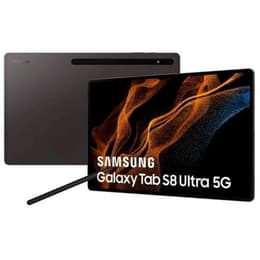
Galaxy Tab S8 Ultra (14.6", 2022)
Starting at

Refurbished price:622.00

Versus €1,249.00 new

See options
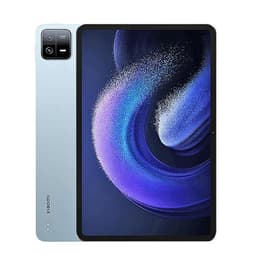
Xiaomi Pad 6 (11.0", 2023)
Starting at

Refurbished price:235.39

Versus €699.00 new

See options

Ratings

The Samsung Galaxy Tab S8 Ultra, released in February 2022, and the Xiaomi Pad 6, launched in April 2023, represent distinct approaches to the Android tablet experience. While both offer robust performance for various tasks, they differ significantly in size, display technology, and their intended user base. The Galaxy Tab S8 Ultra emphasizes a large, premium display and a comprehensive ecosystem, whereas the Xiaomi Pad 6 focuses on delivering a balanced experience in a more compact form factor.

Scores

Durability

When considering the longevity of these tablets, several factors come into play, including their release timelines, software support, and overall build quality.

  • Software Updates: Samsung generally provides a longer software support window for its flagship devices. The Galaxy Tab S8 Ultra, being an S-series tablet, is expected to receive four generations of Android OS updates and five years of security updates from its release date. Xiaomi has recently extended its support policy, with some newer devices receiving up to four major OS updates and six years of security updates. However, for the Xiaomi Pad 6, users have noted concerns regarding the stability of HyperOS updates and the potential for shorter update cycles compared to Samsung.
  • Build Materials: The Galaxy Tab S8 Ultra features an Armor Aluminum build, contributing to its thin yet sturdy profile. The Xiaomi Pad 6 utilizes an aluminum frame and back, offering a solid feel. Both tablets are designed for durability in daily use.
  • Practical Lifespan: Given Samsung's longer commitment to software updates, the Galaxy Tab S8 Ultra may offer a slightly extended practical lifespan in terms of receiving the latest Android features and security patches. However, both devices are built to last, and their physical longevity will largely depend on user care.

Year of Release

2022

2023

Compatible with latest Update

Yes

No

OS

Android

Android

Performance

The performance of a tablet is crucial for handling demanding applications, multitasking, and ensuring a smooth user experience. Both the Galaxy Tab S8 Ultra and the Xiaomi Pad 6 offer capable hardware, but with different levels of power.

  • Processing Power: The Galaxy Tab S8 Ultra is equipped with a powerful current-generation processor, allowing it to handle intensive applications, complex multitasking, and graphic-heavy games with ease. The Xiaomi Pad 6 features a capable processor that delivers smooth performance for everyday tasks, media consumption, and many popular games, though it may not match the peak performance of the S8 Ultra for the most demanding workloads.
  • Multitasking and RAM: The Galaxy Tab S8 Ultra offers higher RAM configurations, up to 16GB, which significantly benefits users who frequently switch between numerous applications or work with large files. The Xiaomi Pad 6 comes with up to 8GB of RAM, which is sufficient for most multitasking scenarios, but users with very heavy usage might notice differences.
  • Battery Behavior: The Galaxy Tab S8 Ultra houses a large 11,200 mAh battery, designed to power its expansive display and powerful components. The Xiaomi Pad 6 has an 8,840 mAh battery, which, combined with its smaller screen and efficient processor, provides substantial usage time. Actual battery life for both devices will vary based on usage patterns, such as screen brightness, application use, and connectivity.

Memory (GB)

8 GB

6 GB

Processor

Qualcomm SM8450 Snapdragon 8 Gen 1

Qualcomm SM8250-AC Snapdragon 870 5G

Screen quality

The display is a primary interaction point for any tablet, and these two devices offer distinct visual experiences due to their different panel technologies and sizes.

  • Display Technology and Size: The Galaxy Tab S8 Ultra features a massive 14.6-inch Super AMOLED display, known for its deep blacks, vibrant colors, and excellent contrast. This large screen size is particularly well-suited for immersive media consumption and productivity tasks requiring ample screen real estate. The Xiaomi Pad 6 comes with an 11-inch IPS LCD display, offering good color accuracy and wide viewing angles. Its smaller size makes it more portable and easier to handle with one hand.
  • Resolution and Clarity: Both tablets offer high resolutions, with the Tab S8 Ultra at 2960 x 1848 pixels and the Xiaomi Pad 6 at 2880 x 1800 pixels. This results in sharp text and detailed images on both devices, though the larger screen of the S8 Ultra means a slightly lower pixel density compared to the Pad 6.
  • Refresh Rate and Brightness: Both tablets feature a high refresh rate for smooth scrolling and responsive interactions; the Tab S8 Ultra has a 120Hz refresh rate, while the Xiaomi Pad 6 offers an even higher 144Hz refresh rate. The Super AMOLED panel of the S8 Ultra generally provides higher peak brightness, making it more comfortable for outdoor use or in brightly lit environments.

Resolution

1848 x 2960

1800 x 2880

Screen type

Super AMOLED

IPS LCD

Pixel density

240ppp

310ppp

Audiovisual

While tablets are not typically primary photography devices, their cameras are useful for video calls, scanning documents, and occasional photo capture. The camera systems on these two tablets cater to different needs.

  • Rear Camera System: The Galaxy Tab S8 Ultra includes a dual-camera setup on the rear, featuring a 13MP wide lens and a 6MP ultrawide lens, providing more versatility for capturing different scenes. The Xiaomi Pad 6 has a single 13MP rear camera, suitable for general photography and document scanning.
  • Front Camera System: For video conferencing and selfies, the Galaxy Tab S8 Ultra stands out with its dual 12MP front cameras, including a wide and an ultrawide lens, which can be beneficial for group calls. The Xiaomi Pad 6 features an 8MP front camera, which is adequate for video calls and casual self-portraits.
  • Video Recording and Audio: Both tablets are capable of recording 4K video at 30fps with their main rear cameras. The Galaxy Tab S8 Ultra features three microphones for clearer audio capture during calls and recordings, along with quad stereo speakers tuned by AKG with Dolby Atmos support for an immersive audio experience. The Xiaomi Pad 6 also offers quad speakers with Dolby Atmos, providing good sound quality for media consumption.

Miscellaneous

Beyond the core specifications, several practical elements contribute to the overall user experience and differentiate these two tablets.

  • Connectivity Options: The Galaxy Tab S8 Ultra supports Wi-Fi 6E and Bluetooth 5.2, with an optional 5G variant for mobile connectivity. The Xiaomi Pad 6 supports Wi-Fi 6 and Bluetooth 5.2. Both offer modern wireless standards for fast and reliable connections.
  • Ports and Biometrics: Both tablets feature a USB-C port for charging and data transfer. The Galaxy Tab S8 Ultra includes an in-display fingerprint sensor for secure unlocking. The Xiaomi Pad 6 integrates its fingerprint sensor into the power button.
  • Dimensions and Handling: The Galaxy Tab S8 Ultra is a larger and heavier device, measuring 326.4 x 208.6 x 5.5 mm and weighing around 726g (Wi-Fi model), which makes it less portable but offers a more expansive workspace. The Xiaomi Pad 6 is more compact and lighter at 253.95 x 165.18 x 6.51 mm and 490g, making it easier to hold for extended periods and carry on the go. The Galaxy Tab S8 Ultra also includes the S Pen in the box, enhancing its productivity features.

Weight

726 g

490 g

Screen size (in)

14.6

11.0

Network

Wi-Fi + 5G

Wi-Fi

Carrier compatibility

Unlocked

Without SIM Port

Connector

USB Type-C

USB Type-C

User sentiment for the Galaxy Tab S8 Ultra often highlights its expansive Super AMOLED display as a major draw, with many appreciating it for media consumption and productivity, effectively serving as a portable theater or a secondary monitor. The included S Pen and robust multitasking capabilities are also frequently praised, making it a strong contender for creative professionals and students. Some users, however, find its large size and weight to be a consideration for portability.

The Xiaomi Pad 6 is generally well-regarded for its balanced performance, smooth display, and solid build quality, especially considering its overall package. Users often commend its suitability for multimedia and general use. Criticisms sometimes revolve around the software experience, particularly with HyperOS updates, which some users have reported as buggy or less optimized. The software update longevity has also been a point of discussion, though Xiaomi has recently aimed to extend its support.

Users prioritizing a large, vibrant display for immersive media, drawing, or extensive multitasking with an included stylus may prefer the Galaxy Tab S8 Ultra. Its longer software support also offers peace of mind for extended use. Conversely, users seeking a more compact, lighter tablet for general use, media consumption, and a smooth high-refresh-rate experience may find the Xiaomi Pad 6 to be a suitable option. Both tablets are available as quality-assured refurbished options, providing an eco-friendly alternative for consumers.


See all articles

Our recent comparisons