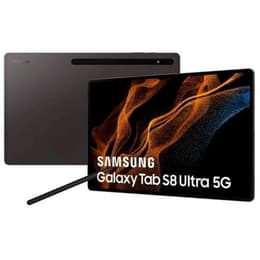
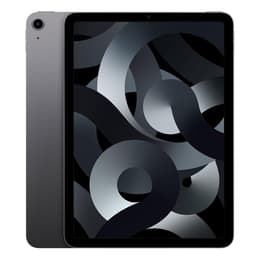

Galaxy Tab S8 Ultra (14.6", 2022) Vs iPad Air 5 (2022, M1 series)

Galaxy Tab S8 Ultra (14.6", 2022)
Starting at

Refurbished price:604.00

Versus €1,249.00 new

See options
iPad Air 5 (2022, M1 series)
Starting at

Refurbished price:310.00

Versus €799.00 new

See options

Ratings

The Samsung Galaxy Tab S8 Ultra and the Apple iPad Air (M1, 5th generation) both launched in 2022, offering distinct tablet experiences. While the Galaxy Tab S8 Ultra runs on Android and features a significantly larger display, the iPad Air operates on iPadOS and is powered by Apple's M1 chip. These differences cater to varying user preferences, particularly concerning screen size, operating system ecosystem, and performance characteristics.

Scores

Durability

When considering the longevity of these devices, both tablets offer robust build quality and software support, though their ecosystems approach updates differently.

  • Release Timeline: The Galaxy Tab S8 Ultra was unveiled in February 2022, with availability starting in late February 2022. The iPad Air (M1) was announced in March 2022 and became available shortly after.
  • OS Support Duration: Samsung has committed to providing four Android OS upgrades and five years of security updates for the Galaxy Tab S8 series, suggesting support may extend until 2027. Apple typically provides several years of iPadOS updates, often exceeding five years, which generally translates to a longer software lifespan for the iPad Air.
  • Expected Practical Lifespan: Both devices are built to last, with aluminum frames and durable glass. The practical lifespan for either tablet will largely depend on individual usage patterns and the demand for the latest software features.

Year of Release

2022

2022

Compatible with latest Update

Yes

Yes

OS

Android

iPadOS

Performance

Both tablets deliver strong performance for a wide range of tasks, but they achieve this through different hardware and software optimizations.

  • Processor Capabilities: The Galaxy Tab S8 Ultra is equipped with a high-performance processor designed for demanding Android applications and multitasking. The iPad Air features a desktop-class chip, enabling smooth operation for intensive creative applications and complex workflows.
  • Overall System Responsiveness: Users can expect fluid navigation and quick app loading on both devices. The iPad Air's chip provides substantial power for tasks like video editing and graphic design, often exceeding the needs of typical tablet users. The Galaxy Tab S8 Ultra handles demanding Android games and productivity suites with ease.
  • Battery Behavior: The Galaxy Tab S8 Ultra, with its larger physical size, houses a substantial battery, which generally provides ample power for a full day of varied use. The iPad Air is known for its power efficiency, offering extended usage times for web browsing and video playback.
  • Storage Options: The Galaxy Tab S8 Ultra is available with 128GB, 256GB, and 512GB storage options. The iPad Air comes with 64GB or 256GB storage configurations.

Memory (GB)

8 GB

8 GB

Screen quality

The visual experience on these tablets is a key differentiator, primarily due to their display technologies and sizes.

  • Display Technology and Size: The Galaxy Tab S8 Ultra boasts a large 14.6-inch Super AMOLED display, offering deep blacks, high contrast, and vibrant colors. The iPad Air features a 10.9-inch Liquid Retina IPS LCD, known for its color accuracy and wide viewing angles.
  • Resolution and Clarity: Both tablets provide sharp and clear visuals suitable for reading, browsing, and media consumption. The Galaxy Tab S8 Ultra's higher resolution on its larger screen maintains pixel density.
  • Refresh Rate and Brightness: The Galaxy Tab S8 Ultra offers a 120Hz refresh rate, contributing to smoother scrolling and more responsive interactions. The iPad Air has a standard 60Hz refresh rate. Both displays offer good brightness levels for indoor and outdoor use, with the iPad Air reaching up to 500 nits.

Resolution

1848 x 2960

2360 x 1640

Screen type

Super AMOLED

Liquid Retina display

Pixel density

240ppp

264ppp

Audiovisual

Tablet cameras are often utilized for video calls and document scanning, and both devices offer capable systems for these purposes.

  • Camera System Capabilities: The Galaxy Tab S8 Ultra features a dual front camera setup (12MP wide and 12MP ultrawide) and a dual rear camera system (13MP wide and 6MP ultrawide). The iPad Air has a 12MP ultrawide front camera with Center Stage and a 12MP wide rear camera.
  • Low-light and Everyday Photography: Both tablets perform well in adequate lighting conditions for casual photos and video. The Galaxy Tab S8 Ultra's dual front cameras are particularly suited for wide-angle video conferencing. The iPad Air's Center Stage feature automatically keeps subjects in frame during video calls.
  • Video Recording Quality: Both devices are capable of recording high-quality video, suitable for sharing and casual content creation.
  • Speaker Output: The Galaxy Tab S8 Ultra includes quad speakers with Dolby Atmos support, providing a rich audio experience for media consumption. The iPad Air features dual stereo speakers, offering clear audio for video calls and entertainment.

Miscellaneous

Beyond core specifications, several practical features contribute to the overall user experience of these tablets.

  • Connectivity Options: Both tablets support modern Wi-Fi standards and offer optional 5G connectivity for fast mobile data access.
  • Port Types: Both the Galaxy Tab S8 Ultra and the iPad Air utilize a USB-C port for charging and connecting accessories. The iPad Air's USB-C port supports faster data transfer speeds compared to its predecessor.
  • Stylus Support: The Galaxy Tab S8 Ultra comes with the S Pen included, offering a natural writing and drawing experience. The iPad Air supports the Apple Pencil 2nd generation, which is sold separately.
  • Biometric Authentication: The Galaxy Tab S8 Ultra features an in-display fingerprint sensor. The iPad Air integrates Touch ID into its top button for secure unlocking.
  • Weight and Dimensions: The Galaxy Tab S8 Ultra is a larger and heavier device, measuring 326.4 x 208.6 x 5.5 mm and weighing 726g (Wi-Fi model), making it more suitable for stationary use or as a desktop replacement. The iPad Air is more compact and lighter at 247.6 x 178.5 x 6.1 mm and 461g (Wi-Fi model), enhancing its portability.

Weight

726 g

461 g

Screen size (in)

14.6

10.9

Network

Wi-Fi + 5G

Wi-Fi

Carrier compatibility

Unlocked

Without SIM Port

User feedback often highlights the Galaxy Tab S8 Ultra's expansive display as a major advantage for immersive media consumption and extensive multitasking, particularly with its DeX desktop-like environment. Some users appreciate the included S Pen and the flexibility of the Android ecosystem. Criticisms sometimes point to its sheer size, which can make it less portable for some, and the Android tablet app ecosystem, while improving, may not always match the optimization found on iPadOS for certain professional applications.

Conversely, the iPad Air (M1) is frequently praised for its powerful performance, attributed to the M1 chip, which allows it to handle demanding tasks with ease. Users value its balanced size, making it highly portable yet still offering a substantial screen for productivity and creativity. Common observations include its strong integration within the Apple ecosystem and the robust selection of optimized applications. Some users note that the base storage option might be limiting for those who store many large files, and the 60Hz display, while good, is not as fluid as higher refresh rate screens found on some other tablets.

Users prioritizing a very large screen for media, drawing, or a desktop-like Android experience with an included stylus may find the Galaxy Tab S8 Ultra well-suited to their needs. Those who value a highly portable tablet with exceptional processing power for creative work, a vast app ecosystem, and seamless integration with other Apple devices may lean toward the iPad Air. Both devices represent strong options in the tablet market, and considering a quality-assured refurbished option can be a sustainable choice for either model.


See all articles

Our recent comparisons