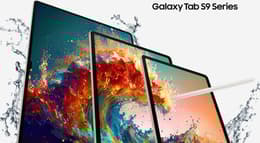

Galaxy Tab S8 Ultra (14.6", 2022) Vs iPad 9 (2021, A13 series)

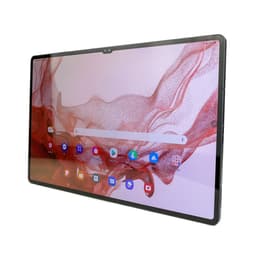
Galaxy Tab S8 Ultra (14.6", 2022)
Starting at

Refurbished price:604.00

Versus €1,249.00 new

See options
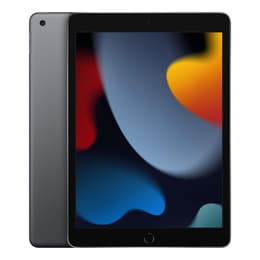
iPad 9 (2021, A13 series)
Starting at

Refurbished price:178.00

Versus €429.00 new

See options

Ratings

The Samsung Galaxy Tab S8 Ultra, released in February 2022, and the Apple iPad (9th Generation), released in September 2021, are two distinct tablet offerings. While both provide a portable computing experience, they cater to different user preferences through their operating systems and hardware designs. The Tab S8 Ultra runs on Android, featuring a significantly larger and more advanced display, whereas the iPad operates on iPadOS, offering a more compact form factor and a streamlined ecosystem.

Scores

Durability

Evaluating the practical lifespan of these tablets involves considering their release dates and the manufacturers' software support policies.

  • Release Timeline: The iPad (9th Gen) was released in September 2021, making it slightly older than the Galaxy Tab S8 Ultra, which launched in February 2022. This difference of a few months can impact the total duration of software support.
  • OS Support Duration: Samsung typically provides four major Android OS updates and five years of security updates for its flagship tablets, meaning the Tab S8 Ultra is expected to receive OS updates until around 2026 and security updates until 2027. The iPad (9th Gen) is anticipated to receive major iPadOS updates until approximately September 2027, with app compatibility potentially extending into 2028 or 2029.
  • Practical Lifespan: Both devices are built with durable materials, featuring aluminum frames. The practical lifespan for both can extend beyond official software support, especially for users who do not require the absolute latest software features or security patches, or for those considering a quality-assured refurbished option.

Year of Release

2022

2021

Compatible with latest Update

Yes

Yes

OS

Android

iPadOS

Performance

The performance of a tablet is crucial for multitasking, app responsiveness, and handling demanding tasks.

  • Storage Options: The Galaxy Tab S8 Ultra offers a wider range of internal storage configurations, from 128GB up to 512GB, with the added flexibility of expandable storage via a microSD card. The iPad (9th Gen) comes with 64GB or 256GB of internal storage, without an option for expansion.
  • Battery Behavior: The Galaxy Tab S8 Ultra features a larger 11,200 mAh battery, which generally provides good battery life, with users reporting around 10 hours of video playback. The iPad (9th Gen) has an 8,557 mAh battery, and users typically experience around 10 hours of mixed usage, including video streaming.
  • Processor Capabilities: The Galaxy Tab S8 Ultra is equipped with a current-generation processor that handles demanding applications and multitasking smoothly, making it suitable for professional work and gaming. The iPad (9th Gen) utilizes a capable processor that ensures smooth performance for everyday tasks, multitasking, and casual gaming, though it may not match the raw power of the Tab S8 Ultra for highly intensive applications.

Memory (GB)

8 GB

3 GB

Screen quality

The visual experience is a primary differentiator between these two tablets, largely due to their display technologies and sizes.

  • Display Technology: The Galaxy Tab S8 Ultra boasts a 14.6-inch Super AMOLED display, known for its deep blacks, vibrant colors, and high contrast. The iPad (9th Gen) features a 10.2-inch Retina IPS LCD display, which offers good color accuracy and brightness.
  • Resolution and Clarity: The Tab S8 Ultra has a resolution of 2960 x 1848 pixels, providing a sharp and detailed image across its large screen. The iPad (9th Gen) has a resolution of 2160 x 1620 pixels, resulting in a clear display for its size.
  • Refresh Rate and Smoothness: The Galaxy Tab S8 Ultra offers a 120Hz refresh rate, contributing to smoother scrolling and a more fluid user interface experience. The iPad (9th Gen) has a standard 60Hz refresh rate.

Resolution

1848 x 2960

2160 x 1620

Screen type

Super AMOLED

Retina display

Pixel density

240ppp

264ppp

Audiovisual

While tablets are not typically primary photography devices, their camera systems are important for video calls and occasional captures.

  • Camera System Capabilities: The Galaxy Tab S8 Ultra features a dual rear camera setup (13MP wide and 6MP ultrawide) and dual front cameras (12MP wide and 12MP ultrawide). The iPad (9th Gen) has an 8MP wide rear camera and a 12MP ultrawide front camera with Center Stage.
  • Photography Performance: The Tab S8 Ultra's cameras are considered good for a tablet, particularly its front cameras for video calls, offering detailed and vibrant shots in good lighting. The iPad (9th Gen)'s rear camera is suitable for basic use in good light, but its front camera is notably improved for video calls.
  • Video Recording Quality: Both tablets are capable of recording 4K video with their main cameras. The Tab S8 Ultra's front cameras can also shoot 4K video. The iPad (9th Gen)'s front camera shoots 1080p video, and its rear camera records HD video at 1080p.

Miscellaneous

Beyond core specifications, several practical elements contribute to the overall user experience.

  • Connectivity Options: The Galaxy Tab S8 Ultra supports Wi-Fi 6E and Bluetooth 5.2, with an optional 5G cellular model for faster wireless connectivity. The iPad (9th Gen) supports Wi-Fi 5 and Bluetooth 4.2, with an optional LTE cellular model.
  • Port Types: The Tab S8 Ultra uses a USB-C 3.2 port for charging and data transfer. The iPad (9th Gen) retains the Lightning port, which is compatible with older accessories.
  • Weight and Dimensions: The Galaxy Tab S8 Ultra is a larger and heavier device, weighing around 726g (Wi-Fi) and measuring 5.5mm thin, which can make one-handed use challenging. The iPad (9th Gen) is more compact and lighter at around 487g (Wi-Fi) and 7.5mm thick, making it easier to handle.

Weight

726 g

487 g

Screen size (in)

14.6

10.2

Network

Wi-Fi + 5G

Wi-Fi

Carrier compatibility

Unlocked

Without SIM Port

User feedback for the Galaxy Tab S8 Ultra frequently praises its expansive and vibrant Super AMOLED display, which is often highlighted as a key feature for media consumption and productivity. Its powerful performance and the inclusion of the S Pen are also commonly appreciated. However, some users find its large size and weight to be a drawback for portability and comfortable one-handed use. The iPad (9th Gen) receives consistent praise for its reliable performance for everyday tasks, its bright Retina display, and its overall ease of use within the Apple ecosystem. Users often highlight its solid battery life and the continued presence of a headphone jack and Touch ID as positive aspects. Criticisms sometimes point to its older design with larger bezels and the Lightning port instead of USB-C.

Users prioritizing a large, high-quality display for media, drawing, or extensive multitasking with a stylus included will find the Samsung Galaxy Tab S8 Ultra well-suited to their needs. Its expansive screen and powerful internals make it a strong contender for those who value screen real estate and Android's flexibility. Conversely, users seeking a more compact, lightweight tablet for general use, educational purposes, or integration into an existing Apple ecosystem may lean towards the iPad (9th Gen). It offers a dependable experience for browsing, streaming, and light productivity. Both devices are available as quality-assured refurbished options, providing an eco-friendly alternative for consumers.


See all articles

Our recent comparisons