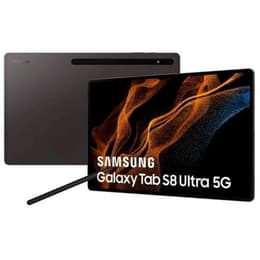
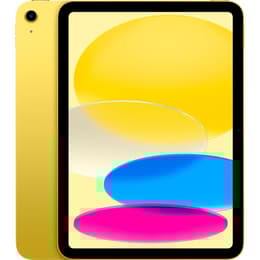


Galaxy Tab S8 Ultra (14.6", 2022) Vs iPad 11 (2025, A16 series)

Galaxy Tab S8 Ultra (14.6", 2022)
Starting at

Refurbished price:604.00

Versus €1,249.00 new

See options
iPad 11 (2025, A16 series)
Starting at

Refurbished price:359.00

Versus €399.00 new

See options

Ratings

The Samsung Galaxy Tab S8 Ultra, released in 2022, and the hypothetical iPad 2025 A16 Series represent distinct approaches to the tablet experience. While the Tab S8 Ultra offers a large-screen Android tablet with a focus on multimedia and productivity, the iPad 2025 A16 Series, as a future iteration of Apple's standard iPad line, is expected to deliver a refined iPadOS experience with enhanced performance. These devices cater to different user preferences, primarily through their operating systems and hardware philosophies.

Scores

Durability

When considering the longevity of these tablets, several factors come into play, including their release timelines, software support, and repairability.

  • Release Timeline and Software Support: The Galaxy Tab S8 Ultra, launched in early 2022, has received commitments for four years of Android OS updates and five years of security updates, with support potentially ending around 2027. The iPad 2025 A16 Series, being a newer, hypothetical model, would likely benefit from Apple's typically longer software support cycle, potentially extending well beyond the Tab S8 Ultra's lifespan.
  • Software Longevity Expectations: Users of the Tab S8 Ultra can expect continued functionality for several years beyond official updates, as many applications remain compatible with older Android versions. However, the iPad's ecosystem generally maintains app compatibility and feature updates for a more extended period, offering a longer practical lifespan for users who prioritize the latest software features.
  • Repairability: Historically, iPads have been noted for their challenging repairability due to extensive use of adhesive and complex internal layouts. While specific repairability scores for the hypothetical 2025 iPad are unavailable, Apple's design philosophy often prioritizes thinness and rigidity, which can impact ease of repair. The Galaxy Tab S8 Ultra's repairability is generally considered moderate, with some components being more accessible than others.

Year of Release

2022

2025

Compatible with latest Update

Yes

Yes

OS

Android

iPadOS

Performance

The performance of these tablets is driven by their respective processors and optimized operating systems, influencing how they handle demanding tasks and everyday usage.

  • Processor Capabilities: The Galaxy Tab S8 Ultra is powered by a current-generation processor from its release year, enabling it to handle demanding applications and multitasking smoothly. The hypothetical iPad 2025 A16 Series would feature Apple's A16 Bionic chip, known for its strong single-core performance and efficiency in mobile applications. This suggests the iPad would offer robust performance for a wide range of tasks, from casual browsing to more intensive creative work.
  • Multitasking and Responsiveness: The Tab S8 Ultra, with its generous RAM options (8GB, 12GB, 16GB), provides ample capacity for running multiple applications simultaneously, making it suitable for productivity and creative workflows. The iPad 2025 A16 Series, running iPadOS, is designed for efficient multitasking, with the A16 chip ensuring smooth transitions and responsive performance even with several apps open.
  • Storage Options and Battery Behavior: Both devices offer various storage configurations to suit different user needs. The Tab S8 Ultra's large battery capacity (11,200 mAh) provides substantial power, with user reports indicating around 6-10 hours of screen-on time depending on usage. The iPad 2025 A16 Series, optimized for power efficiency, is expected to deliver all-day battery life for typical usage, aligning with Apple's focus on balancing performance with endurance.

Memory (GB)

8 GB

6 GB

Screen quality

The visual experience on these tablets is a key differentiator, with each device offering distinct display technologies and characteristics.

  • Display Technology and Size: The Galaxy Tab S8 Ultra features a large 14.6-inch Super AMOLED display, providing deep blacks, vibrant colors, and excellent contrast. This expansive screen is a central feature, offering significant screen real estate for various activities. The hypothetical iPad 2025 A16 Series, as a standard iPad, would likely feature a Liquid Retina (LCD) display, possibly around 10.9 to 11 inches, offering good color accuracy and brightness.
  • Resolution and Clarity: The Tab S8 Ultra's display boasts a resolution of 2960 x 1848 pixels, resulting in sharp and detailed visuals across its large surface. The iPad 2025 A16 Series would offer a resolution appropriate for its screen size, ensuring clarity for text and images, though likely not matching the pixel density of the Tab S8 Ultra's larger, higher-resolution AMOLED panel.
  • Refresh Rate and Brightness: The Tab S8 Ultra supports a 120Hz refresh rate, contributing to smooth scrolling and fluid animations. Its AMOLED panel also provides good brightness levels for various lighting conditions. A standard iPad typically features a 60Hz refresh rate, which is suitable for most tasks, and offers adequate brightness for indoor and outdoor use.

Resolution

1848 x 2960

2360 x 1640

Screen type

Super AMOLED

Liquid Retina display

Pixel density

240ppp

264ppp

Audiovisual

The camera systems on tablets are often optimized for video calls and document scanning, with both devices offering capabilities suited for these common uses.

  • Camera System Capabilities: The Galaxy Tab S8 Ultra features a dual-camera setup on both the front and rear. The rear includes a 13MP wide and a 6MP ultrawide lens, while the front has dual 12MP cameras (wide and ultrawide), which are particularly useful for video conferencing. The hypothetical iPad 2025 A16 Series would likely continue Apple's trend of providing a capable single rear camera and a high-quality front-facing camera, often positioned for landscape video calls.
  • Photography and Video Performance: The Tab S8 Ultra's cameras are generally considered good for a tablet, capable of recording 4K video at 30fps, with the front cameras excelling in video call quality. While not designed to replace a smartphone camera, they perform well in adequate lighting. The iPad 2025 A16 Series, with its A16 Bionic chip, would offer advanced image processing, potentially leading to improved photo and video quality, especially in everyday scenarios.
  • Audio Experience: The Galaxy Tab S8 Ultra is equipped with quad stereo speakers tuned by AKG and supports Dolby Atmos, providing a rich audio experience for media consumption. The iPad 2025 A16 Series would also feature stereo speakers, offering clear audio for video calls, music, and movies, consistent with Apple's audio quality standards.

Miscellaneous

Beyond core specifications, several practical elements contribute to the overall user experience and suitability for different lifestyles.

  • Connectivity Options: Both tablets offer modern connectivity. The Galaxy Tab S8 Ultra supports Wi-Fi 6E and Bluetooth 5.2, with optional 5G connectivity. The hypothetical iPad 2025 A16 Series would also feature advanced Wi-Fi and Bluetooth standards, likely including Wi-Fi 6 or 6E and Bluetooth 5.2 or newer, with cellular models supporting 5G.
  • Port Types and Accessories: The Tab S8 Ultra includes a USB-C 3.2 port and comes with the S Pen stylus, enhancing its utility for drawing and note-taking. The iPad 2025 A16 Series would feature a USB-C port and support the Apple Pencil (sold separately), offering a similar digital pen experience.
  • Physical Design and Biometrics: The Tab S8 Ultra is notably thin at 5.5mm and weighs around 726-728g, featuring an aluminum build and an under-display fingerprint sensor. The iPad 2025 A16 Series would likely maintain the sleek design language of the standard iPad, with a Touch ID fingerprint sensor integrated into the power button. Its dimensions and weight would be more compact than the Tab S8 Ultra due to its smaller screen size.

Weight

726 g

477 g

Screen size (in)

14.6

11

Network

Wi-Fi + 5G

Wi-Fi

Carrier compatibility

Unlocked

Without SIM Port

The Samsung Galaxy Tab S8 Ultra and the hypothetical iPad 2025 A16 Series cater to distinct user needs, each excelling in different areas based on their design and operating system.

Users frequently praise the Galaxy Tab S8 Ultra for its expansive and vibrant Super AMOLED display, which provides an immersive experience for media consumption and multitasking. Its included S Pen and robust Android multitasking capabilities are also often highlighted as significant advantages for productivity and creative work. Some common criticisms revolve around its sheer size, which can make it less portable for some, and occasional concerns about battery life under heavy usage, though this can vary.

For the iPad 2025 A16 Series, based on the evolution of the standard iPad line, users would likely appreciate its seamless integration within the Apple ecosystem, consistent performance for a wide range of applications, and typically longer software support. The A16 Bionic chip would ensure smooth operation and efficient handling of tasks. Potential criticisms for a standard iPad often include the separate purchase of accessories like the Apple Pencil and a display technology that, while excellent, may not offer the same contrast as an OLED panel.

Users prioritizing a large, high-quality display for entertainment, extensive multitasking on Android, and an included stylus may find the Galaxy Tab S8 Ultra well-suited to their needs. Conversely, users who value a more compact form factor, the streamlined iPadOS experience, long-term software updates, and strong ecosystem integration may lean toward the iPad 2025 A16 Series. Both devices offer compelling experiences, and for those considering a quality-assured refurbished option, both models can be found, providing an eco-friendly alternative for making an informed choice.


See all articles

Our recent comparisons