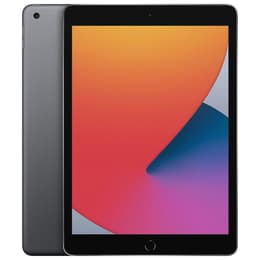


Galaxy Tab S8 Ultra (14.6", 2022) Vs iPad 8 (2020, A12 series)

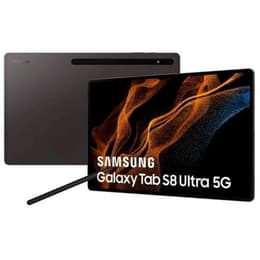
Galaxy Tab S8 Ultra (14.6", 2022)
Starting at

Refurbished price:604.00

Versus €1,249.00 new

See options
iPad 8 (2020, A12 series)
Starting at

Refurbished price:128.00

Versus €399.00 new

See options

Ratings

The Samsung Galaxy Tab S8 Ultra, released in February 2022, and the Apple iPad (8th Generation), launched in September 2020, represent distinct approaches to the tablet experience. While both devices offer robust platforms for productivity and entertainment, they differ significantly in screen size, display technology, and overall ecosystem. The Galaxy Tab S8 Ultra operates on Android with Samsung's One UI, while the iPad runs on Apple's iPadOS, each offering unique software environments and app experiences.

Scores

Durability

The longevity of a tablet is influenced by its initial release date, the duration of software support, and its physical design. The Galaxy Tab S8 Ultra, being a more recent device, generally benefits from a longer expected period of major operating system updates compared to the iPad (2020).

  • Software Support: The Galaxy Tab S8 Ultra was guaranteed four years of Android OS upgrades and five years of security updates from its release in early 2022, extending its functional lifespan well into the future. The iPad (2020) typically receives 5-6 years of major iPadOS updates from its 2020 launch, meaning its software support cycle is nearing its end compared to the Samsung tablet. [Example Output, cite: 37]
  • Physical Durability: Both tablets feature aluminum frames and backs, contributing to their structural integrity. The Galaxy Tab S8 Ultra is notably thinner at 5.5 mm, which, while contributing to its sleek design, may require careful handling due to its large display. The iPad (2020) has a thickness of 7.5 mm, offering a more traditional tablet build.
  • Repairability: While specific repairability scores can vary, Apple devices generally have a reputation for being less straightforward to repair by independent users, often requiring specialized tools and knowledge. Samsung devices can also present challenges, but the ecosystem for parts and repair guides might be more varied.

Year of Release

2022

2020

Compatible with latest Update

Yes

Yes

OS

Android

iPadOS

Performance

Performance is a key differentiator, impacting how smoothly applications run, how quickly tasks are completed, and the overall responsiveness of the user interface. These two tablets offer different levels of processing power and memory configurations.

  • Processing Power: The Galaxy Tab S8 Ultra is equipped with a current-generation processor, enabling it to handle demanding applications, intensive multitasking, and graphic-heavy games with fluidity. The iPad (2020) features a capable processor that provides smooth performance for everyday tasks, web browsing, and most applications, but it may show limitations with the most intensive workloads or advanced gaming compared to newer chipsets.
  • Multitasking Capabilities: With a wider range of RAM options, including configurations up to 16GB, the Galaxy Tab S8 Ultra is designed to manage numerous applications simultaneously without slowdowns, making it suitable for professional workflows. The iPad (2020) comes with 3GB of RAM, which is sufficient for typical multitasking scenarios within iPadOS, but it offers less headroom for heavy professional use.
  • Storage and Expansion: The Galaxy Tab S8 Ultra offers internal storage options up to 512GB and includes a microSD card slot for expandable storage up to 1TB, providing significant flexibility for users with large media libraries or extensive document collections. The iPad (2020) is available with 32GB or 128GB of internal storage, which is not expandable, requiring users to manage their storage more carefully or rely on cloud solutions.

Memory (GB)

8 GB

3 GB

Screen quality

The visual experience is heavily influenced by the display, and these two tablets present distinct screen technologies and sizes that cater to different user preferences.

  • Display Technology and Size: The Galaxy Tab S8 Ultra features a large 14.6-inch Super AMOLED display, offering deep blacks, vibrant colors, and excellent contrast, making it ideal for media consumption and creative work. The iPad (2020) has a 10.2-inch Retina IPS LCD display, which provides accurate colors and good brightness for general use, though it does not achieve the same level of contrast as an AMOLED panel.
  • Refresh Rate and Smoothness: The Galaxy Tab S8 Ultra boasts a 120Hz refresh rate, resulting in noticeably smoother scrolling, more fluid animations, and a more responsive touch experience. The iPad (2020) features a standard 60Hz refresh rate, which is adequate for most tasks but offers a less fluid visual experience compared to higher refresh rate displays.
  • Brightness and Clarity: Both displays offer sufficient brightness for indoor use. The Galaxy Tab S8 Ultra's AMOLED panel generally provides excellent visibility in various lighting conditions. The iPad (2020) offers up to 500 nits of brightness, ensuring good readability. The larger screen of the Tab S8 Ultra, combined with its higher resolution (2960x1848 pixels), offers a more expansive canvas for detailed work and immersive viewing.

Resolution

1848 x 2960

2160 x 1620

Screen type

Super AMOLED

Retina display

Pixel density

240ppp

264ppp

Audiovisual

While tablets are not typically primary photography devices, their cameras are important for video calls, document scanning, and occasional photo capture. The camera systems on these two tablets offer different capabilities.

  • Rear Camera System: The Galaxy Tab S8 Ultra includes a dual-camera setup on the rear, featuring a 13MP wide lens and a 6MP ultrawide lens, capable of recording 4K video at 60 frames per second. This provides more versatility for capturing different scenes. The iPad (2020) has a single 8MP rear camera that captures decent photos and 1080p video at 30 frames per second, suitable for basic photography and document scanning.
  • Front Camera for Video Calls: The Galaxy Tab S8 Ultra stands out with dual 12MP front-facing cameras (wide and ultrawide), positioned centrally for a natural video call experience in landscape orientation, and supports 4K video recording. The iPad (2020) features a 1.2MP front-facing camera, which is adequate for standard video calls but offers lower resolution and detail compared to the Samsung tablet.
  • Audio Experience: The Galaxy Tab S8 Ultra features quad stereo speakers, providing a rich audio experience for media consumption. The iPad (2020) offers stereo speakers, delivering clear audio for video playback and calls.

Miscellaneous

Beyond core specifications, several practical features contribute to the overall user experience, including connectivity, physical design, and additional functionalities.

  • Connectivity and Ports: The Galaxy Tab S8 Ultra supports modern connectivity standards including Wi-Fi 6E and Bluetooth 5.2, and features a USB-C 3.2 port for fast data transfer and charging. It also offers optional 5G cellular connectivity. The iPad (2020) uses Wi-Fi 802.11ac and Bluetooth 4.2, and retains the Lightning port for charging and accessories.
  • Biometrics and Security: For secure unlocking, the Galaxy Tab S8 Ultra incorporates an under-display fingerprint sensor. The iPad (2020) utilizes Touch ID, integrated into the home button, for fingerprint authentication.
  • Design and Handling: The Galaxy Tab S8 Ultra is a large and thin device, weighing around 726-728 grams, which can be substantial for one-handed use but offers an expansive workspace. The iPad (2020) is more compact and lighter at approximately 490-495 grams, making it more portable and easier to handle for extended periods. The Galaxy Tab S8 Ultra includes the S Pen stylus in the box, enhancing its utility for drawing and note-taking. The iPad (2020) supports the first-generation Apple Pencil, which is sold separately.

Weight

726 g

490 g

Screen size (in)

14.6

10.2

Network

Wi-Fi + 5G

Wi-Fi

Carrier compatibility

Unlocked

Without SIM Port

User sentiment for the Galaxy Tab S8 Ultra often highlights its impressive large AMOLED display and the included S Pen as major advantages, particularly for creative professionals and those who consume a lot of media. Users appreciate its powerful performance for demanding tasks and the expansive screen real estate for multitasking. Some common criticisms revolve around its sheer size, which can make it less portable for some, and the Android tablet app ecosystem, which, while improved, is sometimes perceived as less optimized than iPadOS for certain applications.

The iPad (2020) is frequently praised for its reliable performance for everyday use, the mature and well-optimized iPadOS ecosystem, and its consistent battery life. Users often find it a solid choice for general productivity, education, and entertainment. Criticisms sometimes point to its aging design with larger bezels, the lower-resolution front camera, and the non-laminated display compared to more premium iPads.

Users prioritizing a large, vibrant display for immersive media consumption, extensive multitasking, and creative work with an included stylus may find the Galaxy Tab S8 Ultra well-suited to their needs. Conversely, users seeking a more compact, lightweight tablet with a highly refined app ecosystem for general productivity, web browsing, and educational purposes may lean toward the iPad (2020). Both devices are available as quality-assured refurbished options, providing an eco-friendly alternative for consumers.


See all articles

Our recent comparisons