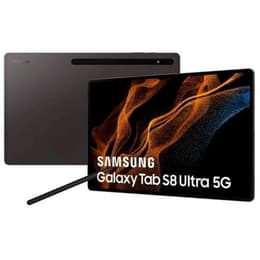
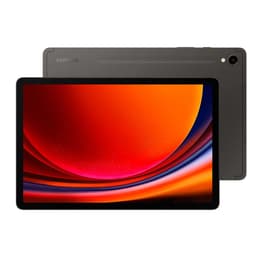


Galaxy Tab S8 Ultra (14.6", 2022) Vs Galaxy Tab S9 (11.0", 2023)

Galaxy Tab S8 Ultra (14.6", 2022)
Starting at

Refurbished price:604.00

Versus €1,249.00 new

See options
Galaxy Tab S9 (11.0", 2023)
Starting at

Refurbished price:491.00

Versus €1,219.00 new

See options

Ratings

The Samsung Galaxy Tab S8 Ultra, released in 2022, and the Samsung Galaxy Tab S9, launched in 2023, represent distinct offerings within Samsung's premium tablet lineup. While both are Android-based devices designed for productivity and entertainment, their primary differentiators lie in their physical dimensions and the generational advancements in their internal components. The Tab S8 Ultra emphasizes a large display experience, whereas the Tab S9 offers a more compact form factor with updated specifications.

Scores

Durability

When considering the longevity of these tablets, both offer robust software support, though their release timelines provide a natural difference in their expected practical lifespan.

  • Release Timeline: The Galaxy Tab S8 Ultra was released in February 2022, while the Galaxy Tab S9 followed in August 2023. This means the Tab S9 benefits from a later starting point for software updates. [1, 9, 15, 27]
  • OS Support: Samsung typically provides four generations of Android OS upgrades and five years of security updates for its flagship tablets. The Tab S8 Ultra, launching with Android 12, is expected to receive updates until around 2027. The Tab S9, starting with Android 13, will consequently receive support for a year longer, extending its usable life. [17, 27]
  • Durability Features: The Galaxy Tab S9 introduces an IP68 rating for dust and water resistance, a feature not present in the Tab S8 Ultra. This provides an added layer of protection against environmental elements for the newer model. [1, 16, 17, 20, 30, 33, 38]

Year of Release

2022

2023

Compatible with latest Update

Yes

Yes

OS

Android

Android

Performance

Both tablets are equipped with powerful processors designed to handle demanding tasks, but the generational difference in their chipsets translates to varying levels of raw performance and efficiency.

  • Processing Power: The Galaxy Tab S9 features a newer generation processor compared to the Tab S8 Ultra. This results in improved CPU and GPU performance, leading to faster app loading, smoother multitasking, and enhanced graphics for gaming and creative applications. [3, 4, 6, 11, 12, 16, 17, 20, 28, 30, 33]
  • Multitasking and Responsiveness: While both devices offer ample RAM configurations (up to 16GB for the S8 Ultra and 12GB for the S9), the Tab S9's more efficient processor contributes to a slightly more fluid overall system responsiveness, particularly when juggling numerous applications or engaging in intensive workflows. [7, 9, 10, 11, 15, 18, 20, 22, 36, 38]
  • Battery Behavior: The Tab S8 Ultra houses a larger 11,200 mAh battery, while the Tab S9 has an 8,400 mAh battery. Despite the S8 Ultra's larger capacity, its significantly larger display can lead to comparable or even slightly shorter battery life in some usage scenarios compared to the more efficient Tab S9. Users report the Tab S8 Ultra typically offers around 9-10 hours of screen-on time, whereas the Tab S9 can achieve around 11 hours for video playback, though heavy use might require more frequent charging for both. [2, 4, 28, 29, 34, 38, 39, 40, 41]

Memory (GB)

8 GB

8 GB

Processor

Qualcomm SM8450 Snapdragon 8 Gen 1

Qualcomm SM8550-AC Snapdragon 8 Gen 2

Screen quality

The display is a central feature for both tablets, offering vibrant visuals, but they differ significantly in size and subtle advancements in panel technology.

  • Display Technology and Clarity: Both tablets feature AMOLED display technology, known for deep blacks and vibrant colors. The Tab S8 Ultra uses a Super AMOLED panel, while the Tab S9 upgrades to a Dynamic AMOLED 2X display, offering enhanced color accuracy and brightness. Both provide a sharp viewing experience with high resolutions (2960x1848 for S8 Ultra, 2560x1600 for S9). [1, 4, 5, 8, 9, 11, 15, 16, 18, 19, 20, 28, 30, 31, 32, 33, 38]
  • Size and Viewing Experience: The Galaxy Tab S8 Ultra boasts a substantial 14.6-inch display, providing an expansive canvas ideal for immersive media consumption, detailed creative work, or extensive multitasking with multiple windows. The Galaxy Tab S9, with its 11.0-inch display, offers a more portable and manageable viewing experience, suitable for users who prioritize ease of handling and transport. [3, 5, 8, 9, 11, 12, 15, 18, 19, 20, 24, 28, 29, 31, 32, 34, 38]
  • Refresh Rate and Brightness: Both tablets feature a 120Hz refresh rate, ensuring smooth scrolling and fluid animations. The Dynamic AMOLED 2X panel on the Tab S9 generally offers improved outdoor visibility and peak brightness compared to its predecessor. [1, 4, 5, 6, 8, 11, 16, 18, 20, 28, 30, 31, 38]

Resolution

1848 x 2960

1600 x 2560

Screen type

Super AMOLED

Dynamic AMOLED 2X

Pixel density

240ppp

280ppp

Audiovisual

While tablets are not typically primary photography devices, both the Galaxy Tab S8 Ultra and Tab S9 offer capable camera systems for video calls, document scanning, and casual photography.

  • Camera System Configuration: The Tab S8 Ultra features a dual-camera setup on both the rear (13MP wide + 6MP ultra-wide) and front (dual 12MP wide + 12MP ultra-wide). The Tab S9 has a single 13MP rear camera and a 12MP ultra-wide front camera. [3, 7, 8, 10, 13, 15, 16, 20, 21, 24, 30, 35, 36, 38]
  • Photography and Video Quality: Both tablets are capable of recording video at 4K resolution. The Tab S8 Ultra's dual front cameras, including an ultra-wide lens, are particularly well-suited for high-quality video conferencing, allowing for wider group shots or more dynamic framing. The Tab S9's single front ultra-wide camera also performs well for video calls. [8, 11, 13, 21, 22, 26, 32, 35, 36, 38]
  • Audio Experience: Both models are equipped with quad speakers tuned by AKG with Dolby Atmos support, providing a rich and immersive audio experience for media consumption. Microphone quality on both is suitable for clear voice capture during calls and recordings. [30, 34, 36]

Miscellaneous

Beyond core performance and display, several practical features and design elements differentiate these two Samsung tablets, impacting daily usability and portability.

  • Connectivity and Ports: Both tablets support modern connectivity standards, including Wi-Fi 6E and 5G (optional models), ensuring fast wireless performance. They both feature a USB Type-C 3.2 port for data transfer and charging. The Tab S9 features Bluetooth 5.3, a slight upgrade from the Tab S8 Ultra's Bluetooth 5.2. [3, 5, 6, 11, 15, 16, 18, 20, 22, 25, 26, 30, 36]
  • Physical Design and Handling: The Tab S8 Ultra is a larger and heavier device, measuring 326.4 x 208.6 x 5.5 mm and weighing around 726-728g. Its thin profile for its size is notable, but its overall dimensions make it less portable. The Tab S9 is significantly more compact and lighter at 254.3 x 165.8 x 5.9 mm and approximately 498-500g, making it easier to hold for extended periods and more convenient for travel. [3, 5, 6, 8, 10, 11, 15, 16, 18, 20, 24, 25, 26, 27, 31, 36, 43]
  • Biometric Security: Both tablets incorporate an in-display fingerprint sensor for secure unlocking. The Tab S8 Ultra also features a notch on its display to house its dual front cameras, a design choice that some users may find noticeable. [1, 7, 23, 30, 32, 35, 36, 38]

Weight

726 g

129 g

Screen size (in)

14.6

11.0

Network

Wi-Fi + 5G

Wi-Fi

Carrier compatibility

Unlocked

Unlocked

Connector

USB Type-C

USB Type-C

The Samsung Galaxy Tab S8 Ultra and Galaxy Tab S9 cater to different user needs, primarily distinguished by their size and the incremental improvements of a newer generation. Users often praise the Tab S8 Ultra for its expansive 14.6-inch display, which provides an unparalleled canvas for creative work, media consumption, and multitasking. Its dual front cameras are frequently highlighted for excellent video call quality. However, some users find its large size and weight make it less portable and occasionally unwieldy. The battery life, while substantial in capacity, is sometimes noted as average given the demands of its large screen. [2, 13, 29, 32, 34, 36, 40]

The Galaxy Tab S9, on the other hand, receives commendation for its more compact 11-inch form factor, making it highly portable and comfortable for on-the-go use. Its upgraded Dynamic AMOLED 2X display and newer processor are often cited as significant improvements, offering vibrant visuals and smooth performance. The inclusion of an IP68 rating for dust and water resistance is also a welcome addition for many users. Some heavy users, however, report that while the battery life is solid, it might not consistently last a full day with intensive tasks. [4, 17, 28, 38, 39]

Users prioritizing a vast screen for immersive experiences, detailed design work, or extensive multi-window productivity may find the Galaxy Tab S8 Ultra well-suited to their requirements. Conversely, those who value portability, a slightly more refined display, and the added durability of water resistance will likely lean towards the Galaxy Tab S9. Both devices offer a premium Android tablet experience, and for those seeking an eco-friendly alternative, quality-assured refurbished options are available for both models, providing a sustainable choice for technology. The decision ultimately depends on whether a larger, older flagship or a smaller, newer model with enhanced durability aligns better with individual usage patterns.

See all articles

Our recent comparisons







