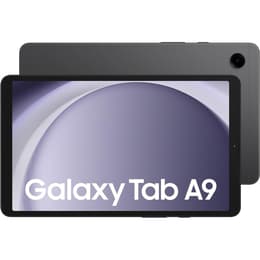
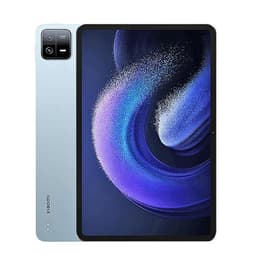


Galaxy Tab A9 (8.7", 2023) Vs Xiaomi Pad 6 (11.0", 2023)

Galaxy Tab A9 (8.7", 2023)
Starting at

Refurbished price:153.00

Versus €255.86 new

See options
Xiaomi Pad 6 (11.0", 2023)
Starting at

Refurbished price:235.39

Versus €699.00 new

See options

Ratings

The Samsung Galaxy Tab A9 and the Xiaomi Pad 6, both released in 2023, represent distinct approaches to the Android tablet experience. While the Galaxy Tab A9 (8.7-inch) focuses on portability and essential functionality, the Xiaomi Pad 6 (11-inch) offers a larger display and more robust performance capabilities. Both devices run on the Android operating system, providing access to a wide ecosystem of applications and services.

Scores

Durability

The longevity of a tablet is influenced by its build quality, software support, and ease of repair. These two tablets offer different expectations in these areas.

  • Software Support: The Samsung Galaxy Tab A9 launched with Android 13 and is expected to receive three major Android OS upgrades, extending its feature set and compatibility up to Android 16. It is also slated to receive four years of security patches, providing updates until 2027. In contrast, the Xiaomi Pad 6, also launched with Android 13, is anticipated to receive one major Android update and three years of security maintenance. Some reports suggest that Android 14 (HyperOS 2) might be its final major OS update, which could impact its long-term software relevance.
  • Physical Durability: Both tablets feature a metal body construction, contributing to a solid in-hand feel and general resilience against daily wear. The Xiaomi Pad 6 incorporates Corning Gorilla Glass 3 for screen protection.
  • Repairability: While both devices can be repaired, the Xiaomi Pad 6's display is noted as being particularly thin and difficult to disassemble for DIY repairs, often requiring specialized equipment. The Galaxy Tab A9 also involves careful disassembly for repairs, with components like the battery and screen being replaceable by skilled technicians.

Year of Release

2023

2023

Compatible with latest Update

Yes

No

OS

Android

Android

Performance

Performance is a key differentiator, impacting how smoothly applications run and how effectively the tablet handles demanding tasks.

  • Processing Power: The Xiaomi Pad 6 is equipped with a more capable processor, allowing it to handle graphically intensive games, 4K video editing, and complex multitasking scenarios with greater fluidity. Users will experience quicker app loading times and a more responsive overall system. The Galaxy Tab A9, while competent for its segment, offers performance suitable for everyday tasks such as web browsing, social media, and light gaming, but may exhibit some patience during more demanding operations.
  • Multitasking and Responsiveness: The Xiaomi Pad 6's processing power and available RAM configurations (up to 8GB) contribute to a smoother multitasking experience, allowing users to switch between multiple applications without significant slowdowns. The Galaxy Tab A9 also offers up to 8GB of RAM, which aids in managing several apps simultaneously, though its overall system responsiveness for heavy workloads is less pronounced.
  • Storage and Battery Behavior: The Xiaomi Pad 6 features a larger 8840 mAh battery, providing extended usage times, with some users reporting several days of casual use or 8-10 hours of screen-on time during heavy activity. It also supports 33W fast charging, with an adapter often included. The Galaxy Tab A9 has a 5100 mAh battery, offering respectable endurance for its compact size, typically lasting over 12 hours in mixed usage scenarios. Charging is at 15W, and an adapter is not always supplied. The Xiaomi Pad 6 does not support expandable storage, while the Galaxy Tab A9 offers microSD card expansion up to 1TB.

Memory (GB)

4 GB

6 GB

Processor

Mediatek Helio G99

Qualcomm SM8250-AC Snapdragon 870 5G

Screen quality

The display is a primary interface for tablets, and these two models present different visual experiences.

  • Display Technology and Size: Both tablets feature LCD panels. The Xiaomi Pad 6 boasts a larger 11-inch display, providing an expansive canvas for media consumption and productivity. The Galaxy Tab A9 offers a more compact 8.7-inch screen, prioritizing portability and single-handed use.
  • Resolution and Clarity: The Xiaomi Pad 6 delivers a sharper visual experience with a 2880 x 1800 pixel resolution and a pixel density of 309 ppi. This results in crisp text and detailed images. The Galaxy Tab A9 has a resolution of 1340 x 800 pixels, with a pixel density of 179 ppi, which is adequate for general viewing but less sharp than its counterpart.
  • Refresh Rate and Brightness: The Xiaomi Pad 6 features an adaptive 144Hz refresh rate, contributing to smoother scrolling and more fluid animations. It also offers a typical brightness of 550 nits, with support for HDR10 and Dolby Vision, enhancing the viewing experience for compatible content. The Galaxy Tab A9 has a standard 60Hz refresh rate and a brightness level of around 459 nits, which is sufficient for indoor use but may be less visible in bright outdoor conditions.

Resolution

800 x 1340

1800 x 2880

Screen type

TFT LCD

IPS LCD

Pixel density

180ppp

310ppp

Audiovisual

Tablet cameras are often used for video calls and document scanning, and these devices offer varying capabilities.

  • Rear Camera System: The Xiaomi Pad 6 is equipped with a 13MP rear camera with PDAF (Phase Detection Autofocus), capable of recording video at 4K resolution at 30 frames per second. This allows for more detailed photos and higher-quality video capture. The Galaxy Tab A9 features an 8MP rear camera with autofocus, which is suitable for scanning documents and casual photography in well-lit environments.
  • Front Camera and Video Calling: For video calls, the Xiaomi Pad 6 includes an 8MP ultrawide front camera with a feature called FocusFrame, which automatically tracks and centers the user during calls. The Galaxy Tab A9 has a 2MP front camera, which is functional for video calls in good lighting conditions.
  • Audio Experience: The Xiaomi Pad 6 provides an immersive audio experience with its quad speakers and Dolby Atmos support. The Galaxy Tab A9 features stereo speakers, offering a decent sound output for media consumption.

Miscellaneous

Beyond core specifications, several practical features contribute to the overall user experience of these tablets.

  • Connectivity and Ports: The Xiaomi Pad 6 supports Wi-Fi 6 and features a USB-C 3.2 port, offering faster data transfer speeds. It does not include a headphone jack or cellular connectivity. The Galaxy Tab A9 supports Wi-Fi 802.11 and Bluetooth 5.3, with a USB-C port. LTE and 5G variants are available for the Galaxy Tab A9, providing mobile data connectivity.
  • Biometric Security and Navigation: The Galaxy Tab A9 offers face recognition for unlocking, though it uses a 2D method. The Xiaomi Pad 6 also features face unlock via its selfie camera but lacks a fingerprint sensor, which some users may prefer for security and convenience. Neither device includes GPS in their Wi-Fi-only variants.
  • Physical Attributes: The Galaxy Tab A9 is a more compact and lighter device, weighing 332g (Wi-Fi model) and measuring 211 x 124.7 x 8 mm, making it easier to hold in one hand and transport. The Xiaomi Pad 6 is larger and heavier at 490g and 253.95 x 165.18 x 6.51 mm, which is typical for an 11-inch tablet.

Weight

332 g

490 g

Width

21,1 cm

16,52 cm

Height

12,47 cm

25,4 cm

Depth

0,8 cm

0,65 cm

Screen size (in)

8.7

11.0

Network

Wi-Fi

Wi-Fi

Carrier compatibility

Without SIM Port

Without SIM Port

Connector

USB Type-C

USB Type-C

Choosing between the Samsung Galaxy Tab A9 and the Xiaomi Pad 6 involves weighing priorities between portability, display quality, and raw performance. User feedback often highlights the Xiaomi Pad 6's excellent display, powerful performance, and strong battery life as significant advantages, making it well-suited for demanding applications, gaming, and immersive media consumption. However, common criticisms include the absence of expandable storage, the lack of a fingerprint sensor, and potentially shorter software update longevity compared to some competitors.

The Galaxy Tab A9 is frequently praised for its compact size, making it highly portable and comfortable for extended handheld use. Its expandable storage is a notable benefit for users with large media libraries or who prefer to keep many files locally. However, users often note its less powerful processor, standard 60Hz display, and more basic camera setup as areas where it doesn't match the Xiaomi Pad 6.

Users prioritizing a larger, high-resolution, and high-refresh-rate display for entertainment, along with robust performance for gaming and multitasking, will likely find the Xiaomi Pad 6 to be a more suitable option. Conversely, individuals who value a more compact form factor, expandable storage, and a tablet primarily for casual browsing, reading, and light media consumption may lean towards the Galaxy Tab A9. Both tablets offer a quality-assured refurbished option, providing an eco-friendly alternative for consumers seeking to make informed and sustainable choices.


See all articles

Our recent comparisons






