

iPad Air 5 (2022, M1 series) Vs Lenovo Tab M10 Gen 3 (10.1", 2022)

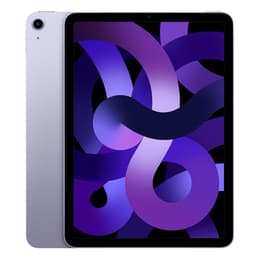
iPad Air 5 (2022, M1 series)
Starting at

Refurbished price:310.00

Versus €799.00 new

See options
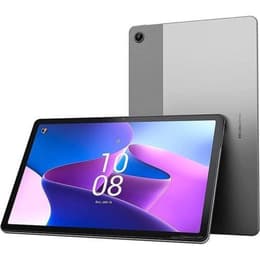
Lenovo Tab M10 Gen 3 (10.1", 2022)
Starting at

Refurbished price:141.48

Versus €299.99 new

See options

Ratings

The iPad Air (2022) M1 Series and the Lenovo Tab M10 Gen 3 (2022) 10.1 are both tablets released in 2022, yet they cater to distinct user needs and expectations. While the iPad Air is positioned as a powerful and versatile device within the Apple ecosystem, the Lenovo Tab M10 Gen 3 offers a more budget-friendly Android experience for everyday tasks. The primary differentiators lie in their processing power, display quality, and overall software ecosystems.

Scores

Durability

When considering the longevity of these two tablets, several factors come into play, including their release timelines, operating system support, and build quality.

  • Software Support: The iPad Air (2022) benefits from Apple's typically longer software support, often receiving major iPadOS updates for 5-7 years and security updates for up to 8-10 years from its release. In contrast, the Lenovo Tab M10 Gen 3, running Android, generally receives fewer major OS updates, often around 2-3 years, with security patches extending for a couple more years. This means the iPad Air is likely to remain compatible with the latest apps and features for a significantly longer period.
  • Build Quality: The iPad Air features an aluminum unibody construction, contributing to a more rigid and premium feel. The Lenovo Tab M10 Gen 3 typically uses a metal back with a plastic frame, offering a solid but less premium construction. Both devices are designed for daily use, but the iPad Air's materials may offer slightly better long-term resilience to wear and tear.
  • Practical Lifespan: The powerful M1 chip in the iPad Air ensures it can handle demanding applications and multitasking for many years, maintaining its relevance for productivity and creative tasks. The Lenovo Tab M10 Gen 3, with its more modest processor, is well-suited for casual use, media consumption, and light productivity, but its performance may become a limiting factor for more intensive tasks sooner than the iPad Air.

Year of Release

2022

2022

Compatible with latest Update

Yes

No

OS

iPadOS

Android

Performance

The performance capabilities of these two tablets present a significant contrast, largely due to their differing internal hardware and operating systems.

  • Processing Power: The iPad Air (2022) is equipped with a high-performance chip, delivering desktop-class speed and efficiency. This allows it to handle demanding applications, complex multitasking, and graphics-intensive games with ease, providing a smooth and responsive user experience. The Lenovo Tab M10 Gen 3 features a processor designed for everyday tasks, capably managing web browsing, video streaming, and light applications. However, it may exhibit slower performance when running multiple apps simultaneously or engaging in more intensive activities.
  • Multitasking and Responsiveness: With its substantial amount of unified memory, the iPad Air excels at keeping numerous applications open and switching between them fluidly without noticeable slowdowns. The Lenovo Tab M10 Gen 3, with less memory, is suitable for basic multitasking but may experience some delays or app reloads when managing several active applications.
  • Storage Options: The iPad Air offers internal storage options starting at 64GB and going up to 256GB, providing ample space for apps, media, and documents. The Lenovo Tab M10 Gen 3 is available with 32GB, 64GB, or 128GB of internal storage, with the option for expansion via a microSD card, which can be beneficial for users with large media libraries.

Memory (GB)

8 GB

3 GB

Screen quality

The visual experience on these tablets is shaped by their display technologies, resolutions, and brightness levels.

  • Display Technology and Clarity: The iPad Air (2022) features a 10.9-inch Liquid Retina IPS LCD with a resolution of 2360 x 1640 pixels, offering sharp images and text. It also supports wide color (P3) and True Tone technology for accurate and adaptive color representation. The Lenovo Tab M10 Gen 3 has a 10.1-inch IPS LCD with a resolution of 1920 x 1200 pixels, providing clear visuals suitable for media consumption and general use.
  • Brightness and Outdoor Visibility: The iPad Air's display reaches up to 500 nits of brightness, making it comfortable to view in various lighting conditions, including outdoors. The Lenovo Tab M10 Gen 3 has a typical brightness of 320 nits, which is adequate for indoor use but may be less visible in bright outdoor environments.
  • Screen Size and Viewing Experience: The iPad Air's slightly larger 10.9-inch display, combined with its higher resolution and color accuracy, offers a more immersive viewing experience for movies, photos, and detailed work. The 10.1-inch screen of the Lenovo Tab M10 Gen 3 provides a good size for casual browsing and video watching.

Resolution

2360 x 1640

1200 x 1920

Screen type

Liquid Retina display

IPS LCD

Pixel density

264ppp

230ppp

Audiovisual

The camera systems on these two tablets are designed for different levels of photographic and video capabilities.

  • Rear Camera Performance: The iPad Air (2022) is equipped with a 12MP wide rear camera that can capture detailed photos and record 4K video. This camera performs well in various lighting conditions and offers features like Smart HDR 3. The Lenovo Tab M10 Gen 3 includes an 8MP autofocus rear camera, suitable for casual photography and scanning documents. Its video recording capabilities are generally limited to 1080p.
  • Front Camera and Video Calls: For video conferencing and selfies, the iPad Air features a 12MP ultrawide front camera with Center Stage, which automatically adjusts to keep the user in frame during video calls. The Lenovo Tab M10 Gen 3 has a 5MP fixed-focus front camera, which is sufficient for standard video calls.
  • Audio Quality: The iPad Air provides landscape stereo speakers, offering a rich audio experience for media consumption. It also features studio-quality microphones for clear audio input. The Lenovo Tab M10 Gen 3 has dual speakers with Dolby Atmos support, enhancing the audio for entertainment.

Miscellaneous

Beyond core specifications, several practical elements differentiate these two tablets in terms of connectivity, physical design, and accessory support.

  • Connectivity: The iPad Air (2022) supports Wi-Fi 6 for faster wireless internet speeds and offers optional 5G cellular connectivity for high-speed mobile data. The Lenovo Tab M10 Gen 3 supports Wi-Fi 5 (802.11ac) and offers optional LTE for mobile data access.
  • Ports and Biometrics: The iPad Air features a USB-C port that supports faster data transfer speeds (USB 3.1 Gen 2), allowing for quick connections to external devices and monitors. It also integrates Touch ID into the power button for secure and convenient authentication. The Lenovo Tab M10 Gen 3 has a USB-C port (USB 2.0) and retains a 3.5mm headphone jack. It typically relies on software-based security like face unlock.
  • Dimensions and Weight: Both tablets are similar in weight, around 460g. The iPad Air is slightly thinner at 6.1mm, while the Lenovo Tab M10 Gen 3 is 8.5mm thick. These dimensions contribute to comfortable handling for both devices.
  • Accessory Ecosystem: The iPad Air has a robust accessory ecosystem, including support for the Apple Pencil (2nd generation) for precise drawing and note-taking, and the Magic Keyboard or Smart Keyboard Folio for a laptop-like typing experience. The Lenovo Tab M10 Gen 3 does not have a comparable integrated accessory ecosystem, though it can connect to universal Bluetooth peripherals.

Weight

461 g

460 g

Screen size (in)

10.9

10.1

Network

Wi-Fi

Wi-Fi

Carrier compatibility

Without SIM Port

Unlocked

User feedback for the iPad Air (2022) M1 Series frequently highlights its exceptional performance, vibrant display, and the versatility offered by the iPadOS ecosystem and its dedicated accessories. Users praise its capability for demanding tasks like video editing, graphic design, and advanced gaming, often noting that the M1 chip provides more power than many users require. Some common observations include the desire for more base storage than 64GB and the absence of a higher refresh rate display found in Pro models.

The Lenovo Tab M10 Gen 3 (2022) 10.1 is generally well-regarded by users for its suitability as a media consumption device and for casual web browsing. Its display is often cited as good for watching videos, and the inclusion of dual speakers with Dolby Atmos is appreciated for entertainment. Criticisms often revolve around its performance limitations for intensive multitasking or gaming, and the relatively shorter software update lifespan compared to more premium tablets.

Users prioritizing high performance, a rich app ecosystem, advanced creative capabilities, and long-term software support will find the iPad Air (2022) M1 Series well-suited to their needs. It is an ideal choice for students, professionals, or anyone requiring a powerful and versatile portable computing device. Conversely, users seeking a tablet primarily for casual web browsing, video streaming, light gaming, and basic productivity will find the Lenovo Tab M10 Gen 3 to be a capable option. It serves well as a family tablet or a secondary device for entertainment. For those considering either device, exploring quality-assured refurbished options can provide an eco-friendly alternative.


See all articles

Our recent comparisons