

Galaxy Tab A9 (8.7", 2023) Vs iPad Air 5 (2022, M1 series)

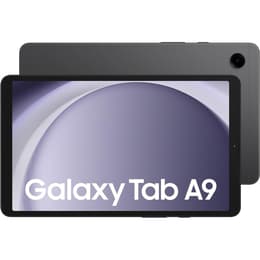
Galaxy Tab A9 (8.7", 2023)
Starting at

Refurbished price:153.00

Versus €255.86 new

See options
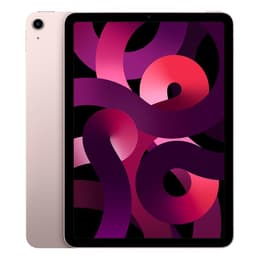
iPad Air 5 (2022, M1 series)
Starting at

Refurbished price:310.00

Versus €799.00 new

See options

Ratings

The Samsung Galaxy Tab A9 (2023) and the Apple iPad Air (2022 M1 Series) are two distinct tablets designed for different user needs and experiences. While the Galaxy Tab A9, released in October 2023, offers a compact and accessible Android experience, the iPad Air, launched in March 2022, provides a more powerful and versatile platform running on iPadOS. Their primary differentiators lie in their performance capabilities, display quality, and ecosystem integration.

Scores

Durability

The longevity of a tablet is influenced by its release timeline, software support, and overall build quality.

  • Release Timeline and Age: The Galaxy Tab A9 was released in October 2023, making it a relatively new Android tablet. The iPad Air (M1) was released earlier, in March 2022.
  • OS Support Duration: Samsung has committed to providing three major Android OS upgrades and four years of security patches for the Galaxy Tab A9, extending its software support until approximately 2027. The iPad Air, running on Apple's iPadOS, typically receives software updates for a longer duration, often 5-7 years or more from its release, suggesting extended access to new features and security enhancements.
  • Practical Lifespan: Both devices are built to last several years with proper care. The iPad Air's more robust internal components and longer software support generally contribute to a longer practical lifespan for demanding tasks.

Year of Release

2023

2022

Compatible with latest Update

Yes

Yes

OS

Android

iPadOS

Performance

Performance is a key area where these two tablets diverge significantly, impacting their suitability for various tasks.

  • Processing Capabilities: The Galaxy Tab A9 is equipped with a processor that efficiently handles daily tasks such as web browsing, video streaming, and light gaming. The iPad Air features a more powerful processor, enabling smoother multitasking, demanding applications, and graphic-intensive games.
  • Multitasking and Responsiveness: The Galaxy Tab A9, especially with higher RAM configurations, can manage multiple applications, though the iPad Air generally offers a more fluid experience when switching between apps or using split-screen mode due to its advanced processing power.
  • Battery Behavior: The Galaxy Tab A9 includes a 5100 mAh battery, suitable for a compact device and lasting for about a day of browsing and video watching. The iPad Air houses a 28.6 Wh battery (approximately 7600 mAh), providing ample power for extended use, though some users report average battery life.

Memory (GB)

4 GB

8 GB

Screen quality

The visual experience on these tablets differs considerably due to their display technologies and specifications.

  • Display Technology and Size: The Galaxy Tab A9 features an 8.7-inch LCD screen, offering a compact form factor. The iPad Air comes with a larger 10.9-inch Liquid Retina IPS display.
  • Resolution and Clarity: The Tab A9 has a resolution of 1340 x 800 pixels, which some users note can result in less sharp text and visuals, particularly for smaller fonts, with a pixel density of 179 PPI. The iPad Air offers a higher resolution of 2360 x 1640 pixels, delivering 264 PPI, which results in clearer and more detailed visuals.
  • Brightness and Refresh Rate: The Tab A9 operates at a standard 60Hz refresh rate and can reach a peak brightness of around 486-570 nits. The iPad Air also features a 60Hz refresh rate but offers 500 nits of brightness, along with True Tone and P3 wide color support for more accurate colors.

Resolution

800 x 1340

2360 x 1640

Screen type

TFT LCD

Liquid Retina display

Pixel density

180ppp

264ppp

Audiovisual

The camera systems on both tablets cater to different expectations for tablet photography and video conferencing.

  • Camera System Capabilities: The Galaxy Tab A9 features an 8MP rear camera with autofocus and a 2MP front-facing camera. The iPad Air has a 12MP rear camera and a 12MP ultra-wide front-facing camera.
  • Photography and Video Quality: The Tab A9's cameras are suitable for basic document scanning and video calls, but selfies may appear soft due to the low resolution. The iPad Air's cameras offer better image quality for both photos and 4K video recording, with the front camera supporting Center Stage for improved video calls.
  • Audio Experience: The Galaxy Tab A9 includes stereo speakers. The iPad Air features landscape stereo speakers, providing a more immersive audio experience for media consumption.

Miscellaneous

Beyond core specifications, several practical elements contribute to the overall user experience of these tablets.

  • Connectivity Options: The Galaxy Tab A9 supports Wi-Fi 5 (802.11 a/b/g/n/ac) and Bluetooth 5.3, with optional LTE. The iPad Air supports Wi-Fi 6 and Bluetooth 5.0, with optional 5G connectivity.
  • Port Types and Sensors: Both tablets feature a USB-C port, with the iPad Air's offering faster data transfer speeds. The Galaxy Tab A9 includes a 3.5mm headphone jack, which is absent on the iPad Air. The iPad Air features Touch ID integrated into the power button for secure authentication, while the Tab A9 lacks a fingerprint reader.
  • Build Materials and Handling: The Galaxy Tab A9 has a mostly metal body, weighing 332g (Wi-Fi model) and measuring 8mm thick, making it compact and easy to hold with one hand. The iPad Air features an aluminum unibody design, weighing around 460g and measuring 6.1mm thick, offering a premium feel.

Weight

332 g

461 g

Width

21,1 cm

17.85 cm

Height

12,47 cm

24.76 cm

Depth

0,8 cm

0.61 cm

Screen size (in)

8.7

10.9

Network

Wi-Fi

Wi-Fi

Carrier compatibility

Without SIM Port

Without SIM Port

Users often praise the Galaxy Tab A9 for its compact size and solid build quality, especially considering its accessible nature. It is frequently noted as a good option for casual use, media consumption, and as a portable entertainment device. However, some users express concerns about its lower screen resolution and the performance for more demanding applications.

The iPad Air (M1) consistently receives positive feedback for its powerful performance, making it suitable for creative tasks, gaming, and multitasking. Its display quality and ecosystem integration are also frequently highlighted as strong points. Criticisms sometimes include the base storage option and the 60Hz refresh rate compared to some higher-end tablets.

Users prioritizing a highly portable tablet for everyday tasks like browsing, video playback, and light productivity may find the Galaxy Tab A9 well-suited to their needs. Those who require significant processing power for creative work, advanced gaming, or a more robust multitasking experience will likely lean toward the iPad Air. Both devices offer a pathway to tablet ownership, and considering a quality-assured refurbished option can be an eco-friendly alternative for either model.

See all articles

Our recent comparisons