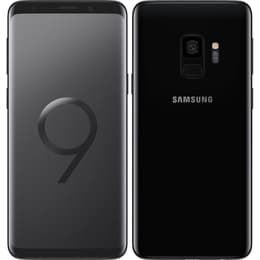
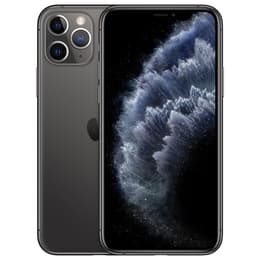


Galaxy S9 Vs iPhone 11 Pro

Galaxy S9
Galaxy S9
Starting at

Refurbished price:131.41

Versus €499.00 new

See options
iPhone 11 Pro
iPhone 11 Pro
Starting at

Refurbished price:173.00

Versus €809.00 new

See options

Ratings

The Samsung Galaxy S9, released in early 2018, and the iPhone 11 Pro, launched in late 2019, represent flagship smartphones from their respective manufacturers. While both devices offer a premium experience, they belong to different eras of mobile technology and operate on distinct ecosystems: Android and iOS. The primary differences between these two devices lie in their camera versatility and software longevity, with the iPhone 11 Pro offering a more comprehensive photography suite and extended software support, while the Galaxy S9 provides a traditional hardware experience with features like expandable storage and a headphone jack.

Scores

Durability

When evaluating the longevity of these two smartphones, their release dates and subsequent software support play a crucial role in determining their remaining functional lifespan and compatibility.

  • Release Timeline and OS Support: The Samsung Galaxy S9 was released in March 2018 and received its last major Android update to Android 10 (One UI 2.5). Official security updates for the Galaxy S9 ended in April 2022. In contrast, the iPhone 11 Pro, released in September 2019, benefits from Apple's typically longer software support cycle, continuing to receive the latest versions of iOS, ensuring access to new features and security patches for a longer duration.
  • Repairability: Both devices feature glass-heavy designs, making them susceptible to damage from drops. The Galaxy S9 received a low repairability score of 4 out of 10 from iFixit, primarily due to the extensive use of adhesive and the difficulty in accessing internal components, particularly the display and battery. The iPhone 11 Pro, while also featuring a glass and stainless steel construction, generally has a more robust third-party repair ecosystem, though specific repair scores were not readily available in the provided information.
  • Practical Lifespan: Users can expect the iPhone 11 Pro to remain relevant for a longer period due to its ongoing software support and access to newer applications. The Galaxy S9 is better suited for users who do not require the latest application versions or advanced security features for their daily tasks, as its official software support has concluded.

Year of Release

2018

2019

Compatible with latest Update

No

Yes

OS

Android

iOS

Foldable

No

No

Performance

The performance of a smartphone is largely dictated by its internal processing capabilities and how efficiently it manages tasks and power.

  • Processor Capabilities: The Samsung Galaxy S9 is powered by either the Snapdragon 845 or Exynos 9810 processor, depending on the region. This processor handles everyday applications and multitasking smoothly, but it is an older generation chip. The iPhone 11 Pro features Apple's A13 Bionic chip, which was considered a leading mobile processor at its release, offering significant performance gains for demanding applications, gaming, and complex computational tasks.
  • Memory and Storage: Both devices come with 4GB of RAM. The Galaxy S9 offers storage options up to 256GB and includes a microSD card slot for expandable storage up to 400GB, a feature not present in the iPhone 11 Pro. The iPhone 11 Pro is available with internal storage options of 64GB, 256GB, or 512GB.
  • Battery Behavior: The Galaxy S9 has a 3000 mAh battery. The iPhone 11 Pro has a 3046 mAh battery. Due to the more efficient A13 Bionic chip and iOS optimizations, the iPhone 11 Pro generally offers better battery endurance for typical daily use compared to the Galaxy S9, especially with its newer components.

Memory (GB)

4 GB

4 GB

Screen quality

The visual experience on a smartphone is heavily influenced by its display technology, resolution, and brightness levels.

  • Display Technology and Resolution: The Samsung Galaxy S9 features a 5.8-inch Super AMOLED display with a resolution of 2960x1440 pixels, resulting in a pixel density of 568 PPI. The iPhone 11 Pro comes with a 5.8-inch Super Retina XDR OLED display, offering a resolution of 2436x1125 pixels and a pixel density of 458 PPI. Both OLED panels deliver deep blacks and vibrant colors.
  • Brightness and Clarity: The iPhone 11 Pro's Super Retina XDR display offers a typical maximum brightness of 800 nits, with a peak HDR brightness of 1200 nits, making it highly visible even in bright outdoor conditions and excellent for HDR content. The Galaxy S9's Super AMOLED display also provides good brightness and clarity, though it generally does not reach the same peak brightness levels as the iPhone 11 Pro for HDR content.
  • Viewing Experience: Both devices provide a clear and immersive viewing experience for media consumption and daily tasks. The iPhone 11 Pro's display also includes True Tone technology, which automatically adjusts the screen's color temperature to match ambient lighting, reducing eye strain.

Resolution

1440 x 2960

1125 x 2436

Screen type

Super AMOLED

Super Retina XDR OLED

Audiovisual

Camera capabilities are a significant factor for many users, and these two devices offer distinct approaches to mobile photography.

  • Rear Camera System: The Samsung Galaxy S9 features a single 12MP rear camera with a unique variable aperture (f/1.5-f/2.4) that adjusts to lighting conditions, along with optical image stabilization (OIS). The iPhone 11 Pro boasts a triple 12MP camera system, including a wide (f/1.8), ultra-wide (f/2.4), and telephoto (f/2.0) lens, all with OIS on the wide and telephoto lenses. This provides greater versatility for different shooting scenarios.
  • Photography Features: The iPhone 11 Pro introduced Night mode, significantly improving low-light photography, and Deep Fusion for enhanced detail in various lighting conditions. The Galaxy S9's variable aperture was innovative for its time, allowing for better low-light performance than many contemporaries, but it lacks the dedicated Night mode processing of the iPhone 11 Pro. Both offer portrait modes.
  • Video Recording and Front Camera: Both phones support 4K video recording up to 60 frames per second. The Galaxy S9 has an 8MP front camera, while the iPhone 11 Pro features a 12MP TrueDepth front camera that also supports 4K video recording and slow-motion selfies.
  • Audio: The Galaxy S9 features stereo speakers and retains a 3.5mm headphone jack. The iPhone 11 Pro also has stereo speakers but relies on its Lightning port for wired audio accessories, as it does not include a headphone jack.

Main camera

12 megapixels

12 megapixels

Front camera

8 megapixels

12 megapixels

Miscellaneous

Beyond core features, several practical elements contribute to the overall user experience and device utility.

  • Connectivity: Both devices support 4G LTE for cellular data. The iPhone 11 Pro supports Gigabit-class LTE with 4x4 MIMO and Wi-Fi 6, offering potentially faster and more stable wireless connections. The Galaxy S9 supports 4G LTE CAT18 and standard Wi-Fi. Neither device supports 5G connectivity.
  • Ports and Sensors: The Galaxy S9 includes a USB-C port for charging and data transfer, a 3.5mm headphone jack, and features a rear-mounted fingerprint sensor and an iris scanner for biometric authentication. The iPhone 11 Pro uses Apple's proprietary Lightning port and relies solely on Face ID (facial recognition) for biometric security.
  • Design and Handling: The Galaxy S9 weighs 163g, while the iPhone 11 Pro is slightly heavier at 188g. Both devices feature a glass front and back, with the Galaxy S9 using an aluminum frame and the iPhone 11 Pro utilizing a stainless steel frame, which can offer a more premium feel and potentially greater rigidity.

Weight

163 g

188 g

Screen size (in)

5.8

5.8

Network

4G

4G

SIM card

Physical SIM

Physical SIM + eSIM

Carrier compatibility

Unlocked

Unlocked

Connector

USB-C + Jack 3.5mm

Lightning

Choosing between the Samsung Galaxy S9 and the iPhone 11 Pro involves balancing the desire for modern features and extended software support against the preference for traditional hardware conveniences.

User consensus on community forums often highlights the Galaxy S9 for its ergonomic design and the inclusion of a headphone jack and expandable storage, which remain highly valued by many users. Its Super AMOLED display was also praised for its quality at the time of its release. However, common criticisms revolve around its shorter software support lifespan and the camera's performance in comparison to newer flagships, particularly in low-light conditions without a dedicated Night mode.

Conversely, the iPhone 11 Pro is frequently praised for its exceptional camera versatility, especially with the introduction of the ultra-wide lens and Night mode, and its powerful processor that ensures smooth performance for years. Users appreciate its consistent software updates and the overall polished iOS experience. Some common concerns might include the absence of a headphone jack and expandable storage, which are standard on many Android devices.

Users prioritizing a device with ongoing software updates, a highly capable and versatile camera system, and robust performance for demanding applications will find the iPhone 11 Pro well-suited to their needs. Its longer support cycle makes it a more future-proof option. On the other hand, users who value traditional smartphone features like a 3.5mm headphone jack and expandable storage, and who are comfortable with an older software experience, might still find the Galaxy S9 appealing. Both devices are available as quality-assured refurbished options, providing an eco-friendly alternative for consumers.


See all articles

Our recent comparisons





