

Xiaomi Redmi Note 13 Pro+ Vs Xiaomi Redmi Note 14 4G

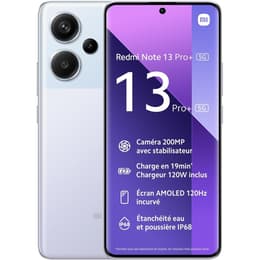
Xiaomi Redmi Note 13 Pro+
Starting at

Refurbished price:198.00

Versus €449.00 new

See options
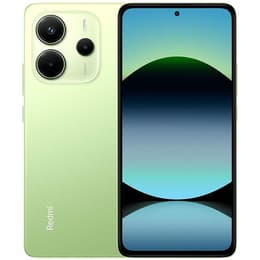
Xiaomi Redmi Note 14 4G
Starting at

Refurbished price:155.00

Versus €259.00 new

See options

Ratings

The Xiaomi Redmi Note 13 Pro+ and the Xiaomi Redmi Note 14 4G are both smartphones from Xiaomi's popular Redmi Note series, released in consecutive years. The Redmi Note 13 Pro+, launched in late 2023, offers advanced features like 5G connectivity and a high-resolution main camera. The Redmi Note 14 4G, released in late 2024, focuses on a larger battery and a more recent Android version out of the box, though it foregoes 5G capabilities. Both devices run on Xiaomi's HyperOS, providing a consistent software experience.

Scores

Durability

When considering the long-term usability of these devices, several factors come into play, including their release timelines, software support, and physical resilience.

  • Release Timeline: The Redmi Note 13 Pro+ was introduced in late 2023, while the Redmi Note 14 4G followed in late 2024. This means the Redmi Note 14 4G benefits from a slightly longer expected period of software updates and security patches from its initial release.
  • Software Longevity: The Redmi Note 13 Pro+ launched with Android 13, upgradable to Android 14, while the Redmi Note 14 4G shipped with Android 14 and Xiaomi's HyperOS. Both devices are expected to receive several years of OS and security updates, but the Note 14 4G's newer launch date and initial Android version give it a marginal advantage in overall software support duration. Users of the Redmi Note 14 4G have reported some delays in receiving HyperOS updates, which could impact the perceived longevity of its software experience.
  • Physical Durability: The Redmi Note 13 Pro+ features Corning Gorilla Glass Victus for display protection and boasts an IP68 rating for significant dust and water resistance, indicating a high level of protection against environmental elements. In contrast, the Redmi Note 14 4G comes with Corning Gorilla Glass 5 and an IP54 rating, offering protection against dust and splashes, but not full submersion. For users prioritizing robust physical resilience, the Redmi Note 13 Pro+ offers a more durable build.

Year of Release

2023

2025

OS

Android

Android

Foldable

No

No

Performance

The performance of these smartphones is influenced by their internal components, affecting how smoothly they handle daily tasks and demanding applications.

  • Processing Power: The Redmi Note 13 Pro+ is equipped with a processor designed for efficient multitasking and gaming, allowing for smooth navigation and responsive app usage. It handles demanding apps and graphic-intensive games with fluidity, maintaining stable performance during extended use. The Redmi Note 14 4G features a processor that provides reliable performance for everyday activities, including browsing, social media, and light gaming. While capable, some users have noted occasional stuttering or lag, particularly with more intensive applications or after prolonged use.
  • Multitasking and Storage: Both devices offer ample RAM configurations, with the Redmi Note 13 Pro+ providing up to 12GB and the Redmi Note 14 4G up to 8GB, ensuring efficient app switching and background process management. The Redmi Note 13 Pro+ utilizes UFS 3.1 storage, contributing to faster app loading and data transfer speeds. The Redmi Note 14 4G offers expandable storage via a hybrid microSD slot, which can be beneficial for users requiring additional space for media and files.
  • Battery Behavior: The Redmi Note 13 Pro+ includes a 5000mAh battery with 120W fast charging, allowing for very rapid recharges. The Redmi Note 14 4G comes with a larger 5500mAh battery and supports 33W fast charging, providing extended usage times between charges. Users prioritizing quick power-ups might lean towards the Note 13 Pro+, while those seeking longer endurance might prefer the Note 14 4G.

Memory (GB)

12 GB

6 GB

Screen quality

Both smartphones offer vibrant displays, but there are distinctions in their technology and viewing experiences.

  • Display Technology and Clarity: Both the Redmi Note 13 Pro+ and Redmi Note 14 4G feature 6.67-inch AMOLED displays, known for deep blacks and vibrant colors. The Redmi Note 13 Pro+ boasts a higher 1.5K resolution (2712 x 1220 pixels) with a pixel density of 446 PPI, resulting in exceptionally sharp text and detailed images. The Redmi Note 14 4G offers a Full HD+ resolution (1080 x 2400 pixels) with a pixel density of approximately 395 PPI, which still provides a clear and enjoyable viewing experience for most content.
  • Brightness and Refresh Rate: Both devices feature a 120Hz refresh rate, ensuring smooth scrolling and fluid animations. They also offer high peak brightness levels, with the Redmi Note 13 Pro+ reaching 1800 nits and the Redmi Note 14 4G also reaching 1800 nits (some sources indicate 2100 nits peak), making them both highly visible even in bright outdoor conditions.
  • Design and Protection: The Redmi Note 13 Pro+ features a curved display, which contributes to a sleek aesthetic and can enhance the feel of gestures. It is protected by Corning Gorilla Glass Victus. The Redmi Note 14 4G has a flat display protected by Corning Gorilla Glass 5.

Resolution

1220 x 2712

1080x2400

Screen type

AMOLED

AMOLED

Audiovisual

The camera systems on these phones offer different capabilities for capturing photos and videos.

  • Rear Camera System: The Redmi Note 13 Pro+ features a triple camera setup with a 200MP main sensor with optical image stabilization (OIS), an 8MP ultrawide lens, and a 2MP macro lens. This main sensor is capable of 4x lossless zoom and 4K video recording at 24fps. The Redmi Note 14 4G also has a triple camera system, primarily relying on a 108MP main sensor, accompanied by 2MP macro and 2MP depth sensors. Notably, the ultrawide camera found on many previous Redmi Note models has been removed from the Note 14 4G. The Note 14 4G does not support 4K video recording.
  • Photography Performance: The 200MP main camera on the Redmi Note 13 Pro+ delivers detailed images, performing well in various lighting conditions, though low-light performance can be inconsistent. The 8MP ultrawide camera offers versatility, but the 2MP macro camera is considered less useful by some users. The 108MP main camera of the Redmi Note 14 4G also captures sharp and colorful images in good lighting. However, its digital zoom beyond 2x can show a loss of detail, and the absence of an ultrawide lens limits its photographic range.
  • Front Camera and Audio: For selfies, the Redmi Note 13 Pro+ has a 16MP front camera, while the Redmi Note 14 4G features a 20MP front camera. Both phones include stereo speakers, with the Redmi Note 14 4G specifically mentioning Dolby Atmos support for an enhanced audio experience.

Miscellaneous

Beyond core performance, several practical features differentiate these two devices in daily use.

  • Connectivity and Ports: The Redmi Note 13 Pro+ supports 5G connectivity, offering faster mobile data speeds where available. The Redmi Note 14 4G is limited to 4G LTE, which may be a consideration for users in areas with robust 5G infrastructure or those who prioritize future-proofing their connectivity. Both devices include Wi-Fi and Bluetooth for wireless connections. The Redmi Note 13 Pro+ uses a USB Type-C port and lacks a 3.5mm headphone jack and microSD card slot. The Redmi Note 14 4G also features a USB Type-C port, but importantly, it retains a 3.5mm headphone jack and offers expandable storage via a hybrid microSD slot.
  • Security and Sensors: Both smartphones incorporate an in-display fingerprint sensor for secure unlocking. The Redmi Note 14 4G also includes AI Face Unlock. The Redmi Note 14 4G features an IR Blaster, allowing it to function as a universal remote control for compatible home appliances.
  • Design and Handling: The Redmi Note 13 Pro+ has a slightly more compact design with a weight of around 187g and dimensions of 161.4 x 74.2 x 8.9 mm. Its curved display contributes to a comfortable in-hand feel. The Redmi Note 14 4G is slightly heavier at 196.5g and measures 163.25 x 76.55 x 8.16 mm. Its flat-sided design is a common modern aesthetic.

Weight

204 g

196 g

Screen size (in)

6.67

6.67

Network

5G

4G

SIM card

Dual Physical SIM

Physical SIM + eSIM

Carrier compatibility

Unlocked

Unlocked

The Xiaomi Redmi Note 13 Pro+ and Redmi Note 14 4G cater to slightly different user priorities, reflecting their respective release strategies and feature sets. Users generally praise the Redmi Note 13 Pro+ for its premium design, vibrant 1.5K AMOLED display, powerful main camera with OIS, and exceptionally fast 120W charging. Its IP68 rating and Gorilla Glass Victus also contribute to a perception of higher durability. However, some criticisms include the presence of bloatware, inconsistent low-light camera performance, and the lack of a headphone jack or expandable storage.

The Redmi Note 14 4G is often commended for its larger 5500mAh battery, the inclusion of a 3.5mm headphone jack, and expandable storage, which are practical benefits for many users. Its 108MP main camera is also noted for delivering solid results in good lighting. Conversely, common concerns for the Redmi Note 14 4G include the removal of the ultrawide camera, the absence of 5G connectivity, and user reports of software bugs and delayed updates. Some users have also expressed disappointment with its performance compared to its predecessor or other devices in its segment.

Users prioritizing cutting-edge display clarity, a more robust build, 5G connectivity, and rapid charging will find the Redmi Note 13 Pro+ well-suited to their needs. Conversely, users who value extended battery life, the flexibility of a headphone jack, and expandable storage, and for whom 4G connectivity is sufficient, may lean towards the Redmi Note 14 4G. Both devices offer a quality-assured refurbished option, providing an eco-friendly alternative for consumers looking to make an informed and sustainable choice.


See all articles

Our recent comparisons