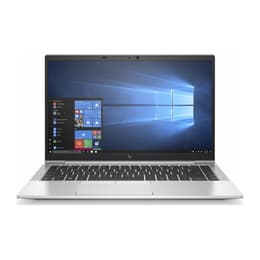


Dell Latitude 7300 13" Vs HP EliteBook 840 G7 14"

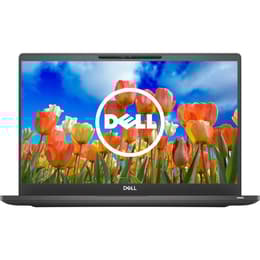
Dell Latitude 7300 13"
Starting at

Refurbished price:310.00

Versus €692.16 new

See options
HP EliteBook 840 G7 14"
Starting at

Refurbished price:300.00

Versus €2,172.37 new

See options

Ratings

The Dell Latitude 7300 13 (released in 2019) and the HP EliteBook 840 G7 14 (released in 2020) are both business-oriented laptops designed for productivity and portability. While they share a focus on professional use, the EliteBook 840 G7 offers a slightly larger display and more recent internal components, leading to differences in performance and display capabilities. Both devices operate on the Windows operating system, providing a familiar software environment for most users.

Scores

Durability

When considering the long-term usability of these laptops, several factors come into play, including their release timelines, operating system support, and physical construction.

  • Release Timeline: The Dell Latitude 7300 was introduced in 2019, making it slightly older than the HP EliteBook 840 G7, which launched in 2020. This difference in release year means the EliteBook may receive software updates and security patches for a slightly longer duration.
  • Software Longevity: Both laptops run on the Windows operating system, which typically receives long-term support from Microsoft. However, the newer hardware in the EliteBook 840 G7 may be better optimized for future Windows versions and feature updates, potentially extending its practical lifespan for demanding software.
  • Build Quality: Both models are constructed with durable materials, with the Latitude 7300 offering options for aluminum or carbon fiber chassis, and the EliteBook 840 G7 featuring an aluminum body. These designs contribute to their resilience against daily wear and tear, suggesting a robust physical lifespan for both devices.

Year of Release

2019

2019

OS

Windows 11

Windows 11

Performance

The performance of these business laptops is crucial for handling daily tasks, multitasking, and demanding applications. Their internal configurations dictate how smoothly they operate under various workloads.

  • Processing Power: The HP EliteBook 840 G7 typically features 10th-generation Intel Core processors, while the Dell Latitude 7300 is equipped with 8th-generation Intel Core processors. This generational difference means the EliteBook generally offers more responsive performance for everyday computing, faster application loading, and smoother multitasking.
  • Memory and Storage: Both laptops come with solid-state drive (SSD) storage, ensuring quick boot times and rapid data access. The EliteBook 840 G7 supports up to 64GB of DDR4 RAM, whereas the Latitude 7300 supports up to 32GB. For users who frequently run many applications simultaneously or work with large datasets, the EliteBook's higher RAM capacity can provide a noticeable advantage in maintaining system fluidity.
  • Battery Behavior: The Dell Latitude 7300, particularly with its low-power display options, is noted for its strong battery life, often providing 8-10 hours of use on a single charge, with some tests showing even longer durations. The HP EliteBook 840 G7 also offers good battery endurance, with reported figures ranging from 8 to over 19 hours depending on the configuration and usage. Both are designed to last through a typical workday, with the EliteBook also supporting fast charging via its USB-C ports.

Memory (GB)

16 GB

8 GB

Processor

Core i7 - Gen 8 (U)

Core i5 - Gen 10 (U)

Graphic card

Integrated Graphics

Integrated Graphics

Screen quality

The display is a primary interface for any laptop, and the quality of the screen significantly impacts the user experience, especially for tasks involving detailed work or media consumption.

  • Display Technology and Resolution: Both the Dell Latitude 7300 and the HP EliteBook 840 G7 feature Full HD (1920x1080) IPS displays, providing clear visuals and good viewing angles. The Latitude 7300 has a 13.3-inch screen, offering a compact viewing area, while the EliteBook 840 G7 provides a slightly larger 14-inch display.
  • Brightness and Clarity: The Latitude 7300 typically offers brightness levels up to 300 nits, with some configurations featuring a 'super low power' panel designed for efficiency. The EliteBook 840 G7, however, has options for brighter screens, including 400-nit panels and even up to 1000-nit options with HP's Sure View Reflect privacy technology, which can be beneficial for outdoor use or in brightly lit environments.
  • Color Reproduction and Features: Both displays are generally suitable for productivity tasks. The EliteBook 840 G7's higher-end display options can offer better color gamut coverage (up to 100% sRGB), which is advantageous for tasks requiring accurate color representation. Some EliteBook panels also do not use Pulse Width Modulation (PWM) for brightness adjustment, which can reduce eye strain for some users.

Resolution

1920 x 1080

1920 x 1080

Screen type

IPS

LCD

Audiovisual

For modern professional and personal use, the quality of a laptop's audio-visual components, including its camera, microphone, and speakers, is increasingly important for virtual meetings and media consumption.

  • Webcam and Privacy: Both laptops typically include a 720p HD webcam, suitable for standard video conferencing. The HP EliteBook 840 G7 often features a physical privacy shutter for the webcam, offering an added layer of security. Both models may also offer optional infrared (IR) cameras for facial recognition via Windows Hello.
  • Microphone Quality: Both devices integrate microphones designed for clear voice capture during calls. The EliteBook 840 G7 often includes a multi-array microphone system and HP Audio Control for noise cancellation, enhancing clarity in various environments.
  • Speaker Output: The HP EliteBook 840 G7 features speakers tuned by Bang & Olufsen, providing loud audio with good stereo separation, though some users note weak bass. The Dell Latitude 7300 is also noted for its above-average audio output. For general media consumption and conference calls, both offer adequate sound, but the EliteBook may provide a more refined audio experience.

Miscellaneous

Beyond core performance and display, several practical elements contribute to the overall user experience, including connectivity, port selection, security features, and physical design.

  • Connectivity Options: The HP EliteBook 840 G7 comes standard with Wi-Fi 6 (802.11ax) and Bluetooth 5.0, offering faster and more reliable wireless connections. The Dell Latitude 7300 typically includes Wi-Fi 5 (802.11ac) and Bluetooth 5.0, with Wi-Fi 6 available as an optional upgrade. Both also offer optional LTE connectivity for mobile broadband.
  • Port Selection: The EliteBook 840 G7 provides a comprehensive selection, including two Thunderbolt 3 (USB-C) ports, two USB-A 3.1 Gen 1 ports, an HDMI 1.4b port, and a headphone/microphone combo jack. The Latitude 7300 also offers a good array of ports, including one Thunderbolt 3 (USB-C) port, two USB-A 3.1 Gen 1 ports, HDMI 1.4, a universal audio jack, and a microSD card reader. The EliteBook's dual Thunderbolt 3 ports offer more versatility for connecting high-speed peripherals or multiple external displays.
  • Security and Design: Both laptops incorporate enterprise-grade security features. The EliteBook 840 G7 often includes a fingerprint reader and optional IR camera for facial recognition, along with HP's security suite. The Latitude 7300 also offers optional fingerprint readers and IR cameras. In terms of physical design, the EliteBook 840 G7 is a 14-inch laptop starting at around 1.33 kg (2.95 lbs), while the Latitude 7300 is a more compact 13.3-inch device starting at 1.24 kg (2.75 lbs).

Weight

3000 g

1500 g

Screen size

13

14

User feedback for both the Dell Latitude 7300 13 and the HP EliteBook 840 G7 14 generally highlights their strengths as reliable business machines. For the Latitude 7300, common praise points include its robust build quality, comfortable keyboard, and impressive battery life, especially with the low-power display options. Some users note that while it's a solid all-rounder, it doesn't always stand out in every single category compared to its competitors, and the base display options might not be as bright as some alternatives. The EliteBook 840 G7 is frequently lauded for its premium build, strong performance from its 10th-gen processors, and excellent battery life in many configurations. Its comprehensive port selection, including dual Thunderbolt 3 ports, and advanced security features like the webcam privacy shutter and optional Sure View display, are also well-received. Criticisms sometimes point to the base display's brightness being modest and the fan noise being noticeable under load.

Users prioritizing a slightly more compact and lighter device with excellent battery life for general productivity and a comfortable typing experience may find the Dell Latitude 7300 13 well-suited to their needs. Those who require more processing power, a larger and potentially brighter display, more advanced connectivity with dual Thunderbolt 3 ports, and enhanced security features might lean toward the HP EliteBook 840 G7 14. Both laptops are solid choices for professionals and students, and considering a quality-assured refurbished option for either model can be an eco-friendly alternative to purchasing new.

See all articles

Our recent comparisons