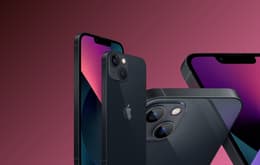


iPhone 11 Pro Vs iPhone 13 mini

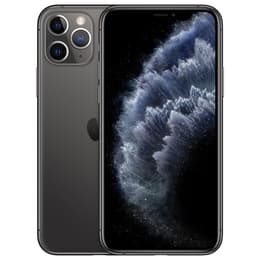
iPhone 11 Pro
iPhone 11 Pro
Starting at

Refurbished price:181.00

Versus €809.00 new

See options
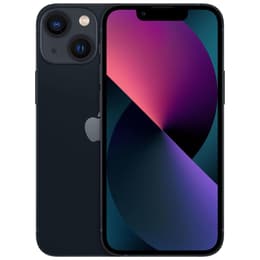
iPhone 13 mini
iPhone 13 mini
Starting at

Refurbished price:230.25

Versus €829.00 new

See options

Ratings

The iPhone 11 Pro, released in September 2019, and the iPhone 13 Mini, launched in September 2021, represent different approaches to Apple's smartphone design. While the 11 Pro offered a premium experience in a standard size for its era, the 13 Mini introduced a compact form factor with more recent internal advancements. Both devices run on Apple's iOS operating system, providing a consistent user experience, but they differ significantly in their physical dimensions and the underlying technology that drives their performance and features.

Scores

Durability

When considering the long-term usability of these devices, their release timelines and subsequent software support are key factors.

  • Release and Support: The iPhone 11 Pro, released in 2019, is currently running iOS 26, which is anticipated to be its final major operating system update, limiting its future software longevity. In contrast, the iPhone 13 Mini, launched in 2021, is also compatible with iOS 26 and is expected to receive updates through at least 2027, offering a longer period of software support.
  • Durability Features: The iPhone 11 Pro features a glass and stainless steel construction and is rated IP68 for water and dust resistance, allowing submersion up to 4 meters for 30 minutes. The iPhone 13 Mini also has an IP68 rating, but for a greater depth of 6 meters for 30 minutes, and incorporates a Ceramic Shield front cover for enhanced drop protection.
  • Repairability: The iPhone 11 Pro received an iFixit repairability score of 6 out of 10, indicating a moderate ease of repair. The iPhone 13 Mini initially had a lower repairability score, but it was later adjusted to 6 out of 10 with an iOS update that addressed certain repair challenges, bringing it in line with many other recent iPhones.

Year of Release

2019

2021

Compatible with latest Update

Yes

Yes

OS

iOS

iOS

Foldable

No

No

Performance

The performance of a smartphone is crucial for daily tasks, from launching applications to handling demanding multimedia. Both devices offer capable performance for their respective generations.

  • Processing Power: The iPhone 11 Pro is equipped with a processor that, at its release, delivered swift application loading and smooth multitasking, even outperforming many contemporary non-Apple devices. The iPhone 13 Mini, being two years newer, features a more advanced processor that provides a noticeable boost in speed and responsiveness, particularly with newer applications and graphically intensive tasks.
  • Multitasking and Storage: Both models come with 4GB of RAM, which supports efficient multitasking for typical user scenarios. The iPhone 11 Pro offered storage options starting at 64GB, while the iPhone 13 Mini starts with a more generous 128GB, providing more space for apps, photos, and videos right out of the box.
  • Battery Performance: The iPhone 11 Pro, with its larger physical size, houses a 3046 mAh battery, generally providing a full day of moderate use, with some users reporting around 6-10 hours of active screen time. The iPhone 13 Mini, despite its smaller 2438 mAh battery, benefits from a more power-efficient processor, allowing it to achieve comparable or even slightly better real-world battery life for moderate users, often lasting 8-9 hours of active screen time. However, heavy users of the 13 Mini might find themselves needing a mid-day recharge.

Memory (GB)

4 GB

4 GB

Screen quality

The visual experience is a primary interaction point for any smartphone, and both the iPhone 11 Pro and 13 Mini feature high-quality displays.

  • Display Technology: Both devices utilize Super Retina XDR OLED displays, which are known for their deep blacks, vibrant colors, and excellent contrast ratios. This technology ensures a rich and immersive viewing experience for various content.
  • Size and Resolution: The iPhone 11 Pro features a 5.8-inch display with a resolution of 2436x1125 pixels at 458 pixels per inch (ppi). The iPhone 13 Mini, designed for a more compact experience, has a 5.4-inch display with a resolution of 2340x1080 pixels at a slightly higher 476 ppi, resulting in a very sharp image despite its smaller size.
  • Brightness and Clarity: Both models offer a typical maximum brightness of 800 nits and can reach up to 1200 nits for HDR content, ensuring good visibility in various lighting conditions, including bright outdoor environments.

Resolution

1125 x 2436

1080 x 2340

Screen type

Super Retina XDR OLED

Super Retina XDR OLED

Audiovisual

Camera capabilities are a significant consideration for many users, and both iPhones offer advanced photographic and videographic features.

  • Rear Camera System: The iPhone 11 Pro features a versatile triple 12MP camera system, including Ultra Wide, Wide, and Telephoto lenses, providing flexibility for different shooting scenarios. The iPhone 13 Mini comes with a dual 12MP camera system, comprising Wide and Ultra Wide lenses.
  • Photography Enhancements: The 11 Pro includes dual optical image stabilization for its Wide and Telephoto lenses and introduced Night mode for improved low-light photography. The 13 Mini enhances low-light performance further with a larger sensor on its Main camera and incorporates sensor-shift optical image stabilization, a feature previously exclusive to the Pro Max line. It also introduces Photographic Styles and Smart HDR 4.
  • Video Recording: Both phones are capable of high-quality video recording. The iPhone 13 Mini introduces Cinematic mode, which allows for depth-of-field effects and automatic focus transitions in videos, offering more creative control for videographers.

Main camera

12 megapixels

12 megapixels

Front camera

12 megapixels

12 megapixels

Miscellaneous

Beyond core features, several practical elements contribute to the overall user experience and daily convenience.

  • Connectivity: The iPhone 11 Pro supports 4G LTE, Wi-Fi 6 (802.11ax), and Bluetooth 5.0. The iPhone 13 Mini offers more advanced connectivity with 5G support, alongside Wi-Fi 6 and Bluetooth 5.0, providing faster cellular data speeds where available.
  • Physical Design and Handling: The iPhone 11 Pro measures 144 x 71.4 x 8.1 mm and weighs 188g, offering a comfortable grip for many users. The iPhone 13 Mini is significantly more compact and lighter at 131.5 x 64.2 x 7.65 mm and 141g, making it ideal for one-handed use and pocketability.
  • Ports and Biometrics: Both devices feature a Lightning port for charging and data transfer. For biometric security, both rely on Face ID for secure authentication. Neither model includes a traditional headphone jack.

Weight

188 g

140 g

Screen size (in)

5.8

5.4

Network

4G

5G

SIM card

Physical SIM + eSIM

Physical SIM + eSIM

Carrier compatibility

Unlocked

Unlocked

Connector

Lightning

Lightning

The iPhone 11 Pro and iPhone 13 Mini cater to different user preferences, reflecting Apple's evolving design philosophy over their respective release years. User sentiment for the iPhone 11 Pro often praises its robust build quality, capable triple-camera system, and solid performance that has held up well over time. Criticisms sometimes point to its older processor compared to newer models and the eventual end of major software updates.

The iPhone 13 Mini, on the other hand, is frequently lauded for its unique compact size, which is a significant draw for users seeking a highly portable device without sacrificing modern performance. Its advanced camera features, including sensor-shift OIS and Cinematic mode, are also common praise points. The primary concern often raised by users of the 13 Mini is its battery life, which, while improved over its predecessor, may still require careful management for heavy usage.

Users prioritizing a larger display and a telephoto camera lens may find the iPhone 11 Pro well-suited to their needs, especially if they value a slightly more substantial feel in hand. Conversely, users who prioritize a highly compact form factor, extended software support, and the latest advancements in computational photography and video features will likely lean towards the iPhone 13 Mini. Both devices offer a quality-assured refurbished option, providing a sustainable choice for consumers looking to extend the life cycle of electronic products.


See all articles

Our recent comparisons