

Galaxy S22 5G Vs iPhone 14

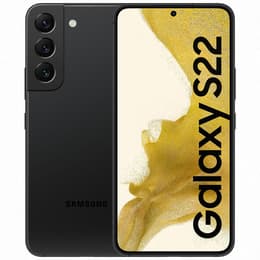
Galaxy S22 5G
Galaxy S22 5G
Starting at

Refurbished price:174.00

Versus €851.00 new

See options
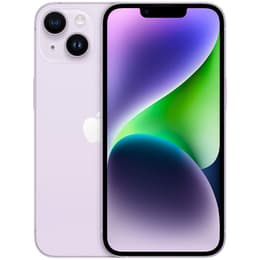
iPhone 14
iPhone 14
Starting at

Refurbished price:287.25

Versus €759.00 new

See options

Ratings

The Samsung Galaxy S22 5G, released in February 2022, and the Apple iPhone 14, launched in September 2022, are both compact flagship smartphones. While both devices offer premium experiences, they differ in their operating systems, camera philosophies, and display technologies, catering to distinct user preferences.

Scores

Durability

When considering the long-term usability of these devices, their release timelines and software support are key factors.

  • Release Timeline: The Galaxy S22 5G was released in February 2022, preceding the iPhone 14's September 2022 launch. This means the iPhone 14 benefits from a slightly newer hardware foundation and a later starting point for its software support cycle.
  • OS Support: The Galaxy S22 5G launched with Android 12 and is upgradable to Android 14, with Samsung typically providing several years of major OS updates and security patches [42]. The iPhone 14 launched with iOS 16 and generally receives iOS updates for five to six years from its release date, potentially offering a longer period of active software support [5, 17, 23].
  • Repairability: The iPhone 14 initially received a positive repairability assessment due to an internal redesign making back glass replacement more accessible. However, this score was later downgraded due to software limitations and parts pairing requirements for unauthorized repairs [6, 7, 9, 14, 18]. The Galaxy S22 5G features a robust build with Gorilla Glass Victus+ on both the front and back, and an aluminum frame, contributing to its physical durability [24].

Year of Release

2022

2022

Compatible with latest Update

Yes

Yes

OS

Android

iOS

Foldable

No

No

Performance

Both devices offer robust performance for daily tasks, though they approach processing power from different ecosystems.

  • Everyday Responsiveness: The iPhone 14, powered by a capable processor, delivers smooth app loading, fluid multitasking, and responsive navigation, handling demanding applications and games effectively [16, 29]. The Galaxy S22 5G, equipped with a high-performance processor, also provides a responsive user experience, adept at managing multiple applications and graphically intensive tasks without significant slowdowns [24].
  • Storage and Memory: The iPhone 14 is available with 6GB of RAM and storage options of 128GB, 256GB, or 512GB [5, 16, 26]. The Galaxy S22 5G comes with 8GB of RAM and offers 128GB or 256GB storage configurations [24]. Neither device supports expandable storage via a memory card slot [16, 24].
  • Battery Behavior: The iPhone 14 typically provides a full day of use for many users, with some tests showing around 9.5 hours of web browsing over 5G [20]. The Galaxy S22 5G, with a slightly larger battery capacity, has received mixed user feedback regarding its battery life, with some heavy users finding it may require a midday charge, especially with features like a high refresh rate display enabled [21, 37, 43, 44].

Memory (GB)

8 GB

6 GB

Screen quality

The visual experience on both smartphones is vibrant and clear, though they utilize different display characteristics.

  • Display Technology and Clarity: The iPhone 14 features a 6.1-inch Super Retina XDR OLED display, offering deep blacks, high contrast, and vibrant colors with a resolution of 2532 by 1170 pixels at 460 pixels per inch (ppi) [2, 4, 34]. The Galaxy S22 5G also has a 6.1-inch display, utilizing a Dynamic AMOLED 2X panel with a resolution of 1080 x 2340 pixels at approximately 425 ppi, known for its vividness and clarity [24, 32, 41].
  • Brightness and Outdoor Visibility: The iPhone 14's display reaches 800 nits of typical maximum brightness and up to 1200 nits for HDR content, ensuring good visibility in various lighting conditions [2, 4, 34]. The Galaxy S22 5G can achieve a peak brightness of 1300 nits, which aids in outdoor readability [24].
  • Refresh Rate: The Galaxy S22 5G features a 120Hz adaptive refresh rate, providing smoother scrolling and more fluid animations [24, 41]. The iPhone 14 maintains a standard 60Hz refresh rate [34].

Resolution

1080 x 2340

1170 x 2532

Screen type

Dynamic AMOLED 2X

Super Retina XDR OLED

Audiovisual

Both devices offer advanced camera systems designed to capture high-quality photos and videos, each with distinct strengths.

  • Rear Camera Systems: The iPhone 14 features a dual-camera system with a 12MP main sensor (f/1.5 with sensor-shift optical image stabilization) and a 12MP ultra-wide sensor (f/2.4 with a 120-degree field of view) [2, 4, 10, 23]. The Galaxy S22 5G boasts a triple-camera setup, including a 50MP wide-angle primary camera (f/1.8 with OIS), a 12MP ultra-wide camera (f/2.2), and a 10MP telephoto lens (f/2.4 with 3x optical zoom and OIS) [12, 22, 24].
  • Photography Performance: The iPhone 14 excels in low-light photography and offers features like Photonic Engine and Deep Fusion for enhanced image processing [2, 4, 11]. The Galaxy S22 5G's larger main sensor and telephoto lens provide versatility, with strong performance in various lighting conditions and the benefit of optical zoom [12, 22].
  • Video Capabilities: The iPhone 14 supports 4K Dolby Vision HDR video recording at up to 60 frames per second, along with Cinematic mode for depth-of-field effects and Action mode for stabilized footage [2, 4, 11, 23]. The Galaxy S22 5G can record 8K video at 24 frames per second and 4K video at 30 or 60 frames per second, offering robust video stabilization [19, 22, 24, 25].
  • Front Camera and Audio: Both devices feature capable front-facing cameras, with the iPhone 14 offering a 12MP sensor with autofocus and the Galaxy S22 5G a 10MP sensor [2, 10, 24]. Both include stereo speakers for media consumption and call quality, but neither has a 3.5mm headphone jack [23, 24].

Main camera

50 megapixels

12 megapixels

Front camera

10 megapixels

12 megapixels

Miscellaneous

Beyond core features, several practical elements differentiate the user experience of these smartphones.

  • Connectivity and Ports: Both the iPhone 14 and Galaxy S22 5G support 5G cellular connectivity and Wi-Fi 6 for fast wireless internet [23, 24]. The iPhone 14 uses a Lightning port for charging and data transfer, while the Galaxy S22 5G features a USB-C port [23, 24]. The iPhone 14 also includes Emergency SOS via satellite for critical situations in areas without cellular service [5, 8].
  • Biometric Security: The iPhone 14 relies on Face ID for secure facial recognition [23]. The Galaxy S22 5G offers an ultrasonic in-screen fingerprint sensor and 2D face unlock for biometric authentication [13].
  • Design and Handling: The iPhone 14 measures 146.7 x 71.5 x 7.8 mm and weighs 172 grams, featuring a Ceramic Shield front and an aluminum frame [2, 4, 23]. The Galaxy S22 5G is slightly more compact and lighter at 146 x 70.6 x 7.6 mm and 167/168 grams, with a Gorilla Glass Victus+ front and back, and an aluminum frame [24, 32, 41]. Both devices offer IP68 water and dust resistance, with the iPhone 14 rated for up to 6 meters for 30 minutes, and the Galaxy S22 5G for up to 1.5 meters for 30 minutes [4, 23, 24].

Weight

195 g

172 g

Screen size (in)

6.1

6.1

Network

5G

5G

SIM card

Physical SIM + eSIM

Physical SIM + eSIM

Carrier compatibility

Unlocked

Unlocked

Connector

USB-C + Jack 3.5mm

Lightning

User feedback for the iPhone 14 often praises its consistent performance, reliable camera system, and the seamless integration within the iOS ecosystem. Some users have noted concerns regarding battery degradation over time [38, 39]. For the Galaxy S22 5G, users frequently highlight its vibrant display, versatile camera with optical zoom, and the customization options offered by Android. A common criticism has been its battery life, which some users find to be less robust for heavy usage throughout a full day [21, 37, 43, 44].

Users prioritizing a consistent software experience, strong video capabilities, and a slightly longer software update cycle may find the iPhone 14 well-suited to their needs. Those who value a high refresh rate display, a more versatile camera system with optical zoom, and the flexibility of the Android operating system may lean toward the Galaxy S22 5G. Both devices represent solid choices in the compact smartphone segment. For those seeking an eco-friendly alternative, considering a quality-assured refurbished option for either model can provide a sustainable choice without compromising on performance.
See all articles

Our recent comparisons





