

Compare models
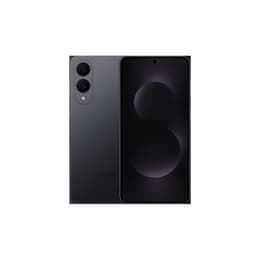
Galaxy S25 Edge Vs Google Pixel 9
- 1-year minimum warranty
- Free delivery on all orders
- Free 30-day returns
Differences at a glance
The Samsung Galaxy S25 Edge (2025) and Google Pixel 9 (2024) are flagship smartphones representing distinct approaches to design, daily software functionality, and hardware philosophy. While both devices run on the Android operating system and target users seeking high-end mobile experiences, they diverge significantly in physical profile and software integration. The Galaxy S25 Edge focuses on an ultra-slim chassis and expansive display, whereas the Google Pixel 9 emphasizes rounded ergonomics and deep artificial intelligence utility.
Available Models
Colour
Storage
Scores
Durability
Durability and long-term viability depend on release timelines, physical construction, and manufacturer software support commitments for each hardware platform.
- Software support longevity: Both manufacturers provide multi-year operating system and security updates, helping both devices remain secure and functional over several years of standard use.
- Build and physical protection: The Galaxy S25 Edge utilizes a thin titanium-reinforced body covered in durable glass, while the Google Pixel 9 employs an aluminum frame paired with scratch-resistant glass panels.
- Expected lifespan: Solid internal construction and robust daily build quality mean both phones easily sustain multi-year ownership cycles under normal conditions.
Year of Release
2025
2024
Compatible with latest Update
Yes
Yes
OS
Android
Android
Foldable
No
No
Performance
System capabilities and everyday responsiveness vary based on hardware optimization, memory allocation, and thermal behavior during continuous usage.
- Multitasking and storage: Both models feature ample system memory to keep multiple apps open simultaneously, with storage configurations tailored to extensive media libraries and application data.
- App execution and system speed: Everyday tasks, demanding applications, and navigation run smoothly and responsively without noticeable lag or stutter.
- Battery behavior: Battery capacities vary slightly, with power efficiency optimizations ensuring both devices generally sustain a full day of typical mixed usage before requiring a recharge.
Screen quality
Visual output relies on distinct display panels that deliver crisp text, rich colors, and smooth motion handling for daily media consumption.
- Display technology and clarity: Both models utilize vibrant OLED panels providing deep black levels, high contrast ratios, and sharp resolutions that render fine details clearly.
- Outdoor visibility: High peak brightness capabilities ensure that screens remain legible and clear even under direct sunlight or bright ambient lighting.
- Motion smoothness: High refresh rate support ensures fluid scrolling through web pages, social feeds, and system menus.
Resolution
1440 x 3120
1080 x 2424
Audiovisual
Optics and media capture systems cater to everyday photography and video recording through distinct hardware and software processing pipelines.
- Photography performance: Both primary camera configurations capture sharp, balanced images with accurate color reproduction across daylight and challenging low-light environments.
- Video recording: High-resolution video capture features dependable stabilization to minimize hand jitter during movement.
- Audio and media output: Integrated stereo speakers deliver clear dialogue and balanced sound output for hands-free calls and casual media streaming.
Miscellaneous
Practical everyday handling factors, connectivity standards, and physical dimensions shape how each smartphone integrates into daily routines.
- Connectivity and ports: Both devices support modern 5G networks, fast Wi-Fi standards, and Bluetooth pairing, utilizing reversible USB-C ports for charging and data transfer.
- Security and sensors: Fast biometric authentication is handled via responsive in-display fingerprint sensors and secure facial recognition features.
- Physical dimensions and handling: The Galaxy S25 Edge prioritizes an exceptionally thin profile for effortless pocketability, while the Google Pixel 9 opts for a more contoured, tactile grip.
Weight
163 g
198 g
Screen size (in)
6.7
6.3
Network
5G
5G
SIM card
Physical SIM + eSIM
Physical SIM + eSIM
Carrier compatibility
Unlocked
Unlocked
Connector
USB-C
USB-C
What the community thinks
User feedback from online communities highlights distinct preferences for each device based on everyday priorities. Owners of the Galaxy S25 Edge frequently praise its exceptionally slim profile, lightweight feel, and expansive display. Conversely, Google Pixel 9 users commonly emphasize appreciation for its clean software interface, integrated assistant capabilities, and comfortable ergonomics. Frequent discussions note that while the Samsung model appeals to those seeking a sleek, thin form factor, the Google alternative resonates with users prioritizing streamlined software features.
Users prioritizing an ultra-thin design and wide viewing canvas will find the Galaxy S25 Edge well-suited to their needs, while users prioritizing streamlined software tools and tactile rounded ergonomics may prefer the Google Pixel 9. Choosing a quality-assured refurbished option through Back Market provides an eco-friendly alternative for acquiring either model while supporting sustainable electronics consumption. Ultimately, the decision rests on whether physical slimness or software-driven convenience aligns more closely with your daily routine.









