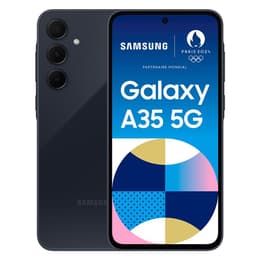
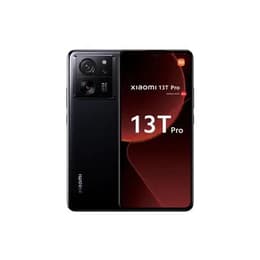


Galaxy A35 Vs Xiaomi 13T Pro

Galaxy A35
Galaxy A35
Starting at

Refurbished price:206.00

Versus €431.43 new

See options
Xiaomi 13T Pro
Xiaomi 13T Pro
Starting at

Refurbished price:241.00

Versus €900.00 new

See options

Ratings

The Samsung Galaxy A35 and the Xiaomi 13T Pro are two Android smartphones that cater to different user priorities, released in March 2024 and September 2023, respectively. While both devices offer robust Android experiences, they differentiate themselves primarily through their performance capabilities, camera systems, and display technologies. The Galaxy A35 focuses on a balanced mid-range experience with strong software support, whereas the Xiaomi 13T Pro aims for a more performance-oriented profile with advanced camera features and rapid charging.

Scores

Durability

When considering the long-term usability of a smartphone, factors like software support, physical durability, and ease of repair play a significant role.

  • Release Timeline: The Xiaomi 13T Pro was released in September 2023, making it slightly older than the Samsung Galaxy A35, which launched in March 2024 [3, 5, 12, 19]. This difference in release date means the Galaxy A35 will generally receive software updates for a slightly longer period from its launch.
  • Software Longevity: Both devices offer a commitment to four generations of Android OS updates and five years of security patches [8, 14, 17, 29, 30, 38]. The Galaxy A35 launched with Android 14, ensuring updates up to Android 18, with security patches until 2029 [8]. The Xiaomi 13T Pro, initially on Android 13, is expected to receive updates up to Android 17, with security patches also extending for five years from its release [3, 14, 17, 38].
  • Repairability & Durability: The Samsung Galaxy A35 has an official repairability score of 8.4 out of 10 from Samsung, with independent reviews also giving it high marks (8.5 or 8.25 out of 10), noting good component availability and ease of battery replacement [1, 6, 7, 10, 11]. It features IP67 dust and water resistance and Gorilla Glass Victus+ for screen protection [2, 15]. The Xiaomi 13T Pro comes with an IP68 rating for dust and water resistance and Corning Gorilla Glass 5 on its display [3, 5, 40]. While specific repairability scores for the Xiaomi 13T Pro are less widely available, its IP68 rating indicates a higher level of protection against dust and water ingress compared to the A35's IP67 rating [3, 5, 40].

Year of Release

2024

2023

Compatible with latest Update

Yes

Yes

OS

Android

Android

Foldable

No

No

Performance

The performance of a smartphone is crucial for daily tasks, from browsing to demanding applications and gaming.

  • Processing Power: The Xiaomi 13T Pro is equipped with a more powerful processor, which translates to flagship-grade performance and stability, handling demanding apps and multitasking smoothly [27, 35]. The Galaxy A35, while capable for everyday use, may experience occasional lag when launching heavier applications and can show frame drops during graphically intensive gaming sessions at high settings [23, 26].
  • Memory and Storage: The Xiaomi 13T Pro offers higher RAM configurations, up to 16GB, and faster UFS 4.0 storage, contributing to its overall responsiveness and efficiency in handling multiple applications simultaneously [3, 9, 19]. The Galaxy A35 typically comes with 6GB or 8GB of RAM and UFS 2.1 storage, which is sufficient for most users but less performant for power users [2, 12, 16].
  • Battery Behavior: Both devices feature a 5000mAh battery capacity, generally providing a full day of use for most users [2, 5, 23, 25, 27, 28, 32]. However, the Xiaomi 13T Pro stands out with its 120W wired fast charging, capable of fully charging the device in approximately 19 minutes [3, 5, 17, 19, 35]. The Galaxy A35 supports 25W fast charging, taking around 1 hour and 27 minutes for a full charge, and does not offer wireless charging [2, 23, 25, 28].

Memory (GB)

6 GB

12 GB

Screen quality

The display is a primary interface for smartphone interaction, and both devices offer vibrant viewing experiences with distinct characteristics.

  • Display Technology and Resolution: Both the Galaxy A35 and Xiaomi 13T Pro feature AMOLED displays, known for deep blacks and vibrant colors [3, 15, 26]. The Galaxy A35 has a 6.6-inch FHD+ (2340x1080) display [2, 4, 21]. The Xiaomi 13T Pro offers a slightly larger 6.67-inch display with a higher 1.5K resolution (1220x2712), providing a sharper visual experience [3, 5, 9, 17, 19].
  • Refresh Rate and Smoothness: The Galaxy A35 features a 120Hz refresh rate, contributing to smooth scrolling and a responsive feel [2, 15, 26]. The Xiaomi 13T Pro elevates this with a 144Hz refresh rate, offering an even smoother visual experience, particularly noticeable in fast-paced content and gaming [3, 5, 9, 17, 19, 31].
  • Brightness and Viewing Experience: The Xiaomi 13T Pro boasts a significantly higher peak brightness of 2600 nits, ensuring excellent visibility even in bright outdoor conditions and supporting HDR10+ and Dolby Vision for enhanced media consumption [3, 9, 17, 19, 31]. The Galaxy A35's display is generally bright enough for outdoor use, though some users report colors can appear washed out in direct sunlight [26].

Resolution

1080 x 2340

1220 x 2712

Screen type

Super AMOLED

AMOLED

Audiovisual

Camera capabilities are a significant consideration for many users, and both smartphones offer multi-lens setups with varying strengths.

  • Rear Camera System: The Samsung Galaxy A35 features a triple rear camera setup with a 50MP main sensor (with OIS), an 8MP ultrawide, and a 5MP macro lens [2, 12, 15, 25]. The Xiaomi 13T Pro also has a triple rear camera system, co-engineered with Leica, comprising a 50MP wide sensor (with OIS), a 50MP telephoto lens with 2x optical zoom, and a 12MP ultrawide lens [3, 5, 17, 19, 31, 32]. The inclusion of a dedicated telephoto lens on the Xiaomi 13T Pro provides greater versatility for zoomed shots compared to the Galaxy A35's macro lens, which is often described as a niche feature [15, 25, 26].
  • Photography Performance: The Galaxy A35's main camera performs well in daylight, capturing detailed and vibrant photos with good dynamic range [15, 23, 25]. Its low-light performance is decent but can introduce some noise [15, 26]. The Xiaomi 13T Pro is praised for its outstanding photo and video quality across all rear cameras, both in daylight and low-light conditions, with sharp, vibrant images and fast shutter speeds [27, 35]. Its night mode is noted for brightening scenes effectively [35].
  • Video Recording and Front Camera: Both devices can record video up to 4K at 30 frames per second with their main and front cameras [12, 25, 26]. The Xiaomi 13T Pro extends its video capabilities further, supporting up to 8K at 24fps and 4K at 60fps, offering more options for high-resolution video content [3]. For selfies, the Galaxy A35 has a 13MP front camera [2, 21], while the Xiaomi 13T Pro features a higher-resolution 20MP front camera [3, 5, 19].

Main camera

50 megapixels

50 megapixels

Front camera

13 megapixels

20 megapixels

Miscellaneous

Beyond core specifications, several practical features contribute to the overall user experience of a smartphone.

  • Connectivity and Ports: Both the Samsung Galaxy A35 and Xiaomi 13T Pro support 5G connectivity, ensuring access to modern cellular networks [2, 3]. They both utilize USB-C for charging and data transfer [2, 33]. The Xiaomi 13T Pro also supports newer Wi-Fi 7 and Bluetooth 5.4 standards, offering potentially faster and more stable wireless connections compared to the Galaxy A35's Wi-Fi and Bluetooth capabilities [3, 5].
  • Biometric Security and Sensors: Both devices include fingerprint sensors for secure unlocking. The Galaxy A35 features an in-display fingerprint sensor [2, 21]. The Xiaomi 13T Pro also has an in-display fingerprint sensor and offers 3D face recognition [5]. The Xiaomi 13T Pro additionally includes an IR blaster, which can be used to control various home appliances [27].
  • Design and Handling: The Galaxy A35 has dimensions of 161.70 x 78.00 x 8.20mm and weighs 209g, featuring a metal body and Gorilla Glass Victus+ [2, 15]. The Xiaomi 13T Pro measures 162.2 x 75.7 x 8.5mm and weighs between 200g and 206g, depending on the variant, offering options for a glass or eco-leather back [3, 5, 40]. The Xiaomi 13T Pro's slightly narrower width might contribute to a more comfortable grip for some users, while its build materials offer a premium feel [35].

Weight

209 g

200 g

Screen size (in)

6.6

6.67

Network

5G

5G

SIM card

Dual Physical SIM

Physical SIM + eSIM

Carrier compatibility

Unlocked

Unlocked

Connector

USB-C

USB-C

The Samsung Galaxy A35 and Xiaomi 13T Pro each present a compelling package, tailored to different user expectations. User feedback for the Galaxy A35 often praises its excellent display, reliable all-day battery life, and capable main camera for everyday shots [15, 23, 25, 28]. Common criticisms sometimes point to the less impressive ultrawide and macro cameras, and occasional performance lags with demanding applications [25, 26]. Users appreciate its consistent software update policy and improved repairability [8, 10, 15].

The Xiaomi 13T Pro receives commendation for its powerful performance, exceptionally fast charging, and versatile, high-quality camera system, particularly the Leica-tuned lenses and telephoto capabilities [27, 31, 35]. Its vibrant 144Hz display and robust build quality are also frequently highlighted [27, 31]. Some users note that while performance is strong, throttling can occur during extended heavy gaming sessions [35].

Users prioritizing a balanced smartphone experience with a focus on software longevity and good repairability for general daily tasks and moderate usage may find the Samsung Galaxy A35 well-suited to their needs. Its consistent performance for everyday apps and strong main camera make it a reliable choice. Conversely, users who prioritize high-end performance for demanding applications and gaming, superior camera versatility with a dedicated telephoto lens, and extremely fast charging will likely lean towards the Xiaomi 13T Pro. Its advanced display and robust build also appeal to those seeking a more premium experience.

Both devices are available as quality-assured refurbished options, providing an eco-friendly alternative for consumers looking to make informed and sustainable choices.


See all articles

Our recent comparisons