

Galaxy S10e Vs iPhone X

Galaxy S10e
Galaxy S10e
Starting at

Refurbished price:121.00

Versus €759.00 new

See options
iPhone X
iPhone X
Starting at

Refurbished price:113.00

Versus €439.00 new

See options

Ratings

The Samsung Galaxy S10e, released in February 2019, and the Apple iPhone X, launched in November 2017, represent compact flagship smartphones from their respective manufacturers. While both devices offer a premium experience in a smaller form factor, they differ significantly in their operating systems, camera philosophies, and biometric authentication methods. The Galaxy S10e runs on Android, offering more customization and an expandable storage option, whereas the iPhone X operates on iOS, known for its integrated ecosystem and Face ID technology.

Scores

Durability

When considering the practical lifespan of these devices, their release timelines and software support are key factors. The iPhone X, being released in late 2017, has received major iOS updates up to iOS 16. The Galaxy S10e, launched in early 2019, typically received major Android updates for three years, reaching Android 12.

  • Software Longevity: The iPhone X has likely reached the end of its major iOS update cycle, meaning it will continue to receive security updates but not new feature-rich OS versions. The Galaxy S10e has also concluded its major Android updates, with security patches continuing for a period.
  • Build Materials: The iPhone X features a stainless steel frame, which is generally more resistant to bending and scratches, while the Galaxy S10e uses an aluminum frame, contributing to a lighter feel. Both devices utilize glass on their front and back.
  • Repairability: Both models present challenges for repair due to their glass sandwich designs. User reports suggest that the iPhone X's screen can be prone to damage from drops.

Year of Release

2019

2017

Compatible with latest Update

No

No

OS

Android

iOS

Foldable

No

No

Performance

Both the Galaxy S10e and the iPhone X were designed to deliver smooth performance for their respective generations, handling daily tasks and demanding applications effectively.

  • Everyday Responsiveness: The Galaxy S10e, equipped with a newer processor and more RAM (6GB or 8GB compared to the iPhone X's 3GB), generally offers a slightly faster experience in opening heavy applications and multitasking. However, the iPhone X's optimized software ensures a fluid user experience for typical daily activities like messaging and social media.
  • Gaming and Demanding Apps: For graphically intensive games and demanding applications, the Galaxy S10e often demonstrates a slight edge in raw processing power, allowing for higher graphics settings in some titles. The iPhone X, while still capable, may experience more noticeable thermal management challenges during extended heavy use.
  • Storage Considerations: The Galaxy S10e offers 128GB or 256GB of internal storage and includes a microSD card slot for expandable storage, providing flexibility for users with large media libraries. The iPhone X comes with 64GB or 256GB storage options but lacks expandable storage.

Memory (GB)

6 GB

3 GB

Screen quality

Both smartphones feature vibrant OLED displays, offering deep blacks and excellent contrast, though with some distinctions in their presentation and specifications.

  • Display Technology and Clarity: The Galaxy S10e features a 5.8-inch Dynamic AMOLED display with HDR10+ certification, providing vivid colors and strong contrast. The iPhone X also has a 5.8-inch Super Retina OLED display, known for its crispness and natural color reproduction. The iPhone X has a slightly higher resolution (1125 x 2436 pixels) and pixel density (458 ppi) compared to the S10e's 1080 x 2280 pixels and 438 ppi.
  • Brightness and Outdoor Visibility: Both displays offer good brightness levels, with the S10e capable of reaching 603 nits in manual mode, making it suitable for outdoor viewing. The iPhone X's display also performs well in bright conditions, though some users note the S10e's brightness peaks slightly higher.
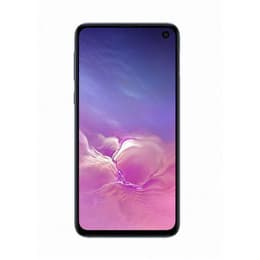
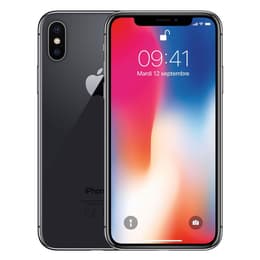
  • Design and Viewing Experience: The Galaxy S10e utilizes a punch-hole cutout for its front camera, resulting in a more expansive screen-to-body ratio without a large notch. The iPhone X features a prominent notch at the top of its display, housing its TrueDepth camera system. Neither phone offers a high refresh rate display.

Resolution

1080 x 2280

1125 x 2436

Screen type

Dynamic AMOLED

Super Retina OLED

Audiovisual

The camera systems on both the Galaxy S10e and the iPhone X offer capable photography experiences, each with a distinct approach to lens configuration and image processing.

  • Rear Camera Versatility: The Galaxy S10e features a dual-camera setup on the rear, comprising a 12-megapixel wide-angle lens and a 16-megapixel ultra-wide-angle lens, providing flexibility for capturing broader scenes. The iPhone X also has a dual 12-megapixel rear camera system, consisting of a wide-angle lens and a telephoto lens, which enables 2x optical zoom.
  • Photography Performance: The iPhone X is recognized for its consistent image quality, natural color accuracy, and strong video stabilization. The Galaxy S10e delivers good detail and color range in well-lit conditions, with its ultra-wide lens being a notable advantage for certain shots. Both devices may struggle with low-light photography compared to newer models.
  • Front Camera and Video: The S10e includes a 10-megapixel front camera, capable of taking detailed selfies. The iPhone X features a 7-megapixel TrueDepth front camera, which also supports Portrait Mode and Animoji. Both phones are capable of recording 4K video at 60 frames per second with their rear cameras.

Main camera

12 megapixels

12 megapixels

Front camera

10 megapixels

7 megapixels

Miscellaneous

Beyond core performance and display, several practical features and design elements differentiate the Galaxy S10e and the iPhone X, impacting daily usability.

  • Biometric Authentication: The Galaxy S10e offers a side-mounted fingerprint sensor integrated into the power button, which is fast and convenient for many users, alongside face recognition. The iPhone X relies exclusively on Face ID, its facial recognition system, for unlocking and secure payments.
  • Connectivity and Ports: A key distinction is the presence of a 3.5mm headphone jack on the Galaxy S10e, a feature absent on the iPhone X. The S10e uses a USB-C port for charging and data transfer, while the iPhone X utilizes Apple's proprietary Lightning port. Both devices support wireless charging and are rated for dust and water resistance (IP68 for S10e, IP67 for iPhone X).
  • Design and Handling: The Galaxy S10e is slightly lighter at 150g compared to the iPhone X's 174g, making it feel more compact in hand. The S10e's flat display is preferred by some users over the curved edges found on other S10 models.

Weight

150 g

174 g

Screen size (in)

5.8

5.8

Network

4G

4G

SIM card

Physical SIM

Physical SIM

Carrier compatibility

Unlocked

Unlocked

Connector

USB-C + Jack 3.5mm

Lightning

User sentiment for both the Samsung Galaxy S10e and the iPhone X highlights their enduring appeal as compact, capable smartphones. The Galaxy S10e is often praised for its vibrant flat display, the inclusion of a headphone jack, and expandable storage, making it a versatile choice for Android users. Criticisms sometimes point to its battery life, which can be mediocre for heavy users, and its low-light camera performance.

The iPhone X receives commendation for its premium build quality, the seamless integration of iOS, and its consistent camera performance in good lighting. However, common concerns include its battery life, which many users find insufficient for a full day of heavy use, and the prominent display notch. The lack of a headphone jack and expandable storage are also frequently mentioned by users.

Users prioritizing a more modern design with a punch-hole display, expandable storage, and the convenience of a headphone jack may find the Galaxy S10e well-suited to their needs. Conversely, those who value the integrated Apple ecosystem, Face ID, and a telephoto camera for optical zoom might lean towards the iPhone X. Both devices, while older, continue to offer a solid smartphone experience, especially as quality-assured refurbished options, providing an eco-friendly alternative for consumers.


See all articles

Our recent comparisons






