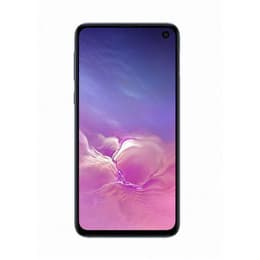
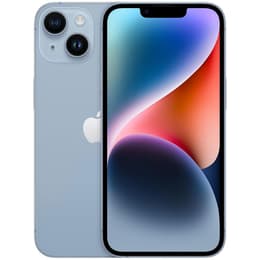


Galaxy S10e Vs iPhone 14

Galaxy S10e
Galaxy S10e
Starting at

Refurbished price:121.00

Versus €759.00 new

See options
iPhone 14
iPhone 14
Starting at

Refurbished price:287.25

Versus €759.00 new

See options

Ratings

The Samsung Galaxy S10e, released in March 2019, and the iPhone 14, launched in September 2022, represent distinct approaches to smartphone design and user experience. While both offer capable performance, they differ significantly in their operating systems, core hardware, and the features they prioritize. The Galaxy S10e operates on Android, offering a more open ecosystem, whereas the iPhone 14 runs on iOS, known for its integrated services and strong security. These differences cater to varying user preferences, particularly concerning software longevity and advanced camera capabilities.

Scores

Durability

The expected practical lifespan of a smartphone is heavily influenced by its release date and the manufacturer's software support policy.

  • Release Timeline: The Galaxy S10e was released in March 2019, making it a device from an earlier generation. The iPhone 14, released in September 2022, benefits from a significantly more recent launch, placing it several years ahead in its product cycle.
  • Software Support: The Galaxy S10e launched with Android 9.0 Pie and received updates up to Android 12. The iPhone 14, launching with iOS 16, is expected to receive software updates for several more years, typically extending support for 5-6 years from its release. This means the iPhone 14 will continue to receive the latest features and security patches for a considerably longer period.
  • Physical Durability: Both devices carry an IP68 rating for dust and water resistance, indicating protection against submersion. However, the iPhone 14 incorporates Ceramic Shield on its front display, which is designed to offer enhanced drop performance compared to the Gorilla Glass 5 found on the Galaxy S10e.

Year of Release

2019

2022

Compatible with latest Update

No

Yes

OS

Android

iOS

Foldable

No

No

Performance

Performance in daily use, from app handling to multitasking, is a key differentiator between these two devices, largely influenced by their internal components and software optimization.

  • Processing Power: The iPhone 14 features a current-generation processor that delivers robust performance, ensuring smooth operation for demanding applications, complex games, and seamless multitasking. The Galaxy S10e, while powerful for its release year, utilizes an older flagship processor (Exynos 9820 or Snapdragon 855 depending on region) which, while still capable for everyday tasks, will show its age with newer, more intensive applications.
  • Battery Behavior: The iPhone 14 is equipped with a 3279 mAh battery, offering up to 20 hours of video playback. The Galaxy S10e has a 3100 mAh battery, providing approximately 11-12 hours of internet usage. The iPhone 14 generally offers longer battery life due to its more efficient processor and software optimizations.
  • Storage and Multitasking: The iPhone 14 offers internal storage options up to 512GB, with 6GB of RAM, providing ample space and smooth multitasking capabilities. The Galaxy S10e comes with up to 256GB of internal storage and 6GB or 8GB of RAM, with the added flexibility of expandable storage via a microSD card, a feature not present on the iPhone 14.

Memory (GB)

6 GB

6 GB

Screen quality

The visual experience on a smartphone is primarily defined by its display technology, resolution, and overall brightness, impacting everything from media consumption to outdoor visibility.

  • Display Technology and Size: The iPhone 14 features a 6.1-inch Super Retina XDR OLED display, known for its deep blacks and vibrant colors. The Galaxy S10e has a slightly smaller 5.8-inch Dynamic AMOLED display, also offering excellent color reproduction and contrast. Both utilize OLED technology, providing rich visual experiences.
  • Resolution and Clarity: The iPhone 14 offers a resolution of 2532 x 1170 pixels at approximately 460 pixels per inch (ppi), resulting in sharp and detailed images. The Galaxy S10e provides a resolution of 2280 x 1080 pixels at 438 ppi, which also delivers a clear viewing experience for most content.
  • Brightness and Refresh Rate: The iPhone 14's display can reach up to 800 nits typical brightness and 1200 nits peak brightness for HDR content, making it highly visible in various lighting conditions. Both devices feature a standard 60Hz refresh rate, providing a smooth but not exceptionally fluid scrolling experience compared to higher refresh rate displays.

Resolution

1080 x 2280

1170 x 2532

Screen type

Dynamic AMOLED

Super Retina XDR OLED

Audiovisual

The camera systems on both devices are designed to capture moments, but they offer different capabilities and features for photography and videography.

  • Rear Camera System: The iPhone 14 features a dual-camera system with a 12MP main camera (f/1.5) and a 12MP ultrawide camera (f/2.4), benefiting from larger sensors and improved low-light performance through Apple's Photonic Engine. The Galaxy S10e also has a dual-camera setup, including a 12MP wide-angle lens with a variable aperture (f/1.5-f/2.4) and a 16MP ultrawide lens, offering versatility in different shooting scenarios.
  • Photography Features: The iPhone 14 includes features like sensor-shift optical image stabilization for the main camera, Smart HDR 4, and Photographic Styles, enhancing image quality and creative control. The Galaxy S10e offers optical image stabilization on its main lens and a wide field of view with its ultrawide camera.
  • Video Recording and Front Camera: Both phones are capable of recording 4K video at 60 frames per second. The iPhone 14 introduces Cinematic mode for video, allowing for depth-of-field effects, and has a 12MP front camera with autofocus. The Galaxy S10e has a 10MP front camera.

Main camera

12 megapixels

12 megapixels

Front camera

10 megapixels

12 megapixels

Miscellaneous

Beyond core performance and display, several practical elements contribute to the overall user experience, including connectivity, physical design, and unique features.

  • Connectivity and Ports: The iPhone 14 supports 5G connectivity, Wi-Fi 6, and Bluetooth 5.3, utilizing a Lightning port for charging and data transfer. The Galaxy S10e supports 4G LTE, Wi-Fi 6, and Bluetooth 5.0, and features a USB-C port, along with a traditional 3.5mm headphone jack, which is absent on the iPhone 14.
  • Biometrics and Sensors: The iPhone 14 relies on Face ID for secure authentication and includes advanced sensors like Crash Detection and Emergency SOS via Satellite. The Galaxy S10e uses a side-mounted fingerprint sensor for unlocking and security.
  • Dimensions and Handling: The Galaxy S10e is a more compact and lighter device, measuring 142.2 x 69.9 x 7.9 mm and weighing 150 grams, making it easier for one-handed use. The iPhone 14 is slightly larger and heavier at 146.7 x 71.5 x 7.8 mm and 172 grams.

Weight

150 g

172 g

Screen size (in)

5.8

6.1

Network

4G

5G

SIM card

Physical SIM

Physical SIM + eSIM

Carrier compatibility

Unlocked

Unlocked

Connector

USB-C + Jack 3.5mm

Lightning

User feedback for the Samsung Galaxy S10e often highlights its compact size, the convenience of a physical headphone jack, and the flexibility of expandable storage as significant advantages. Users appreciate its ability to deliver a flagship experience in a smaller form factor. However, common criticisms revolve around its aging software support and battery life, which, while adequate for moderate use, may not meet the demands of heavy users in the current landscape. The camera, though capable, is also noted as being less advanced than newer models.

The iPhone 14 receives praise for its powerful performance, excellent camera capabilities, and the long-term software support characteristic of Apple devices. Its new safety features, such as Crash Detection and Emergency SOS via Satellite, are also frequently mentioned as valuable additions. Conversely, some users express disappointment over the continued absence of a headphone jack and expandable storage, as well as the standard 60Hz refresh rate display, which some feel is a limitation compared to other modern smartphones.

Users prioritizing a compact device, the versatility of a headphone jack, and expandable storage within the Android ecosystem may find the Galaxy S10e well-suited to their needs. For those who value long-term software updates, robust performance, advanced camera features, and the integrated experience of the iOS ecosystem, the iPhone 14 presents a compelling option. Both devices can be excellent choices, especially when considering quality-assured refurbished options, which offer an eco-friendly alternative for consumers.
See all articles

Our recent comparisons






