


Compare models
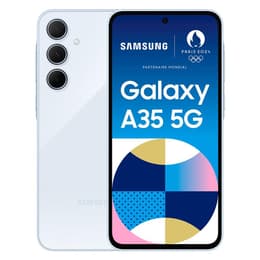
Galaxy A35 Vs iPhone 17e
- 1-year minimum warranty
- Free delivery on all orders
- Free 30-day returns
Differences at a glance
The Samsung Galaxy A35 (2024) and the Apple iPhone 17e (2026) are contemporary smartphones designed for users seeking reliable daily performance without stepping into ultra-premium flagship tiers. While the Galaxy A35 runs on the Android ecosystem with Samsung's custom interface, the iPhone 17e operates on Apple's iOS platform. These devices cater to different preferences in software environments and design philosophies while offering practical capabilities for everyday communication, media consumption, and productivity.
Available Models
Colour
Storage
Scores
Durability
When evaluating hardware longevity and software support, both devices provide reliable structures tailored to long-term daily use, though their release timelines differ.
- Software longevity: The iPhone 17e benefits from a newer release date and extended Apple software update support, whereas the Galaxy A35 relies on Samsung's multi-year update commitment starting from its 2024 launch.
- Repairability and build: Both smartphones feature solid structural builds with official dust and water resistance ratings, helping protect internal components from everyday wear and tear.
- Expected lifespan: Users can expect stable multi-year operation from both models, with battery health management features helping preserve longevity over years of regular charging cycles.
Year of Release
2024
2026
OS
Android
iOS
Foldable
No
No
Performance
Performance varies based on hardware architecture and operating system optimization, affecting how each phone handles multitasking and resource-heavy tasks.
- System responsiveness: The iPhone 17e handles demanding applications and swift multitasking with high efficiency, while the Galaxy A35 manages everyday navigation, social media, and moderate multitasking reliably.
- Battery behavior: The Galaxy A35 includes a larger capacity power cell designed to easily clear a full day of mixed use, whereas the iPhone 17e relies on power-efficient hardware to optimize battery endurance throughout daily tasks.
- Storage capacity: Both models offer spacious internal storage tiers, though the Galaxy A35 includes expandable storage support via a memory card slot for users requiring extra offline media space.
Screen quality
Display characteristics differ in size, technology implementation, and motion smoothness to accommodate various viewing habits.
- Display technology: The Galaxy A35 features a vibrant Super AMOLED panel with deep contrast levels, while the iPhone 17e utilizes a crisp Super Retina XDR OLED screen known for sharp color accuracy.
- Refresh rate and motion: The Galaxy A35 incorporates a smooth 120Hz refresh rate for fluid scrolling, whereas the iPhone 17e balances visual smoothness with power-saving display technology for everyday navigation.
- Outdoor visibility: Both screens offer high peak brightness modes that maintain clear legibility and text visibility when used under direct sunlight.
Resolution
1080 x 2340
2532 x 1170
Audiovisual
Camera systems on these devices offer distinct configurations geared toward capturing everyday moments and recording video content.
- Camera setup flexibility: The Galaxy A35 utilizes a versatile multi-lens rear array including an ultra-wide option, while the iPhone 17e focuses on a streamlined single high-resolution rear lens backed by advanced computational photography.
- Video recording: The iPhone 17e provides robust stabilization and cinematic video features for steady recording, whereas the Galaxy A35 delivers stable high-definition capture suitable for casual sharing.
- Audio and media output: Both models feature stereo speakers that produce clear sound output for hands-free calls, video streaming, and casual media playback.
Front camera
13 megapixels
12 megapixels
Miscellaneous
Practical daily features, connectivity standards, and physical handling characteristics shape the overall user experience.
- Physical handling: The Galaxy A35 offers a larger screen footprint within a slightly heavier frame, whereas the iPhone 17e provides a more compact and lightweight form factor for easier single-handed use.
- Biometric security: The Galaxy A35 uses an in-display fingerprint scanner, while the iPhone 17e relies on facial recognition technology for secure unlocking and authentication.
- Ecosystem connectivity: Both devices support fast 5G connectivity, modern Wi-Fi standards, and Bluetooth for reliable accessory pairing and rapid data transfer.
Weight
209 g
169 g
Screen size (in)
6.6
6.1
Network
5G
5G
SIM card
Dual Physical SIM
eSIM
Carrier compatibility
Unlocked
Unlocked
Connector
USB-C
USB-C (USB 2)
What the community thinks
User feedback from online communities highlights distinct preferences for each device based on everyday habits. Owners of the Galaxy A35 frequently praise its smooth display refresh rate, reliable battery endurance, and the inclusion of expandable storage. Conversely, users of the iPhone 17e highlight its swift system processing, compact handling, and seamless integration within the iOS software ecosystem. Common criticisms for the Galaxy A35 sometimes mention its heavier physical weight, while some users note that the iPhone 17e maintains a more restricted file management structure.
Users prioritizing a fluid screen refresh rate, expandable storage, and the Android operating system will find the Galaxy A35 well-suited to their preferences. Meanwhile, users focusing on compact ergonomics, long-term software support, and the iOS environment may lean toward the iPhone 17e. For those looking for a sustainable choice, a quality-assured refurbished option provides an eco-friendly alternative that reduces electronic waste while delivering fully tested functionality. Ultimately, the choice depends on personal preference for operating systems and physical sizing rather than a universal performance advantage.