

Compare models
iPhone 15 Pro Vs iPhone 17e
- 1-year minimum warranty
- Free delivery on all orders
- Free 30-day returns
Differences at a glance
The iPhone 15 Pro (2023) and the iPhone 17e (2026) represent two different approaches to Apple's smartphone lineup, balancing flagship heritage with modern entry-level updates. While the iPhone 15 Pro offers professional-grade multi-lens flexibility, the iPhone 17e introduces a later-generation hardware platform focused on everyday efficiency and a streamlined feature set. Both devices operate on the iOS platform, though they launch users into slightly different generations of hardware capability and long-term software ecosystems.
Available Models
Colour
Storage (GB)
Scores
Durability
The iPhone 15 Pro and iPhone 17e offer strong long-term usability, though their release years create a timeline gap that influences overall support longevity and expected service life.
- Release timeline and support: The iPhone 15 Pro debuted in late 2023, whereas the iPhone 17e launched in early 2026, granting the newer model an extended window of official software updates and security patches.
- Repairability and durability: Both models feature robust water and dust resistance alongside durable outer glass, while maintaining standard repair pathways through certified service networks for battery and screen replacements.
- Practical lifespan: Users can expect reliable multi-year operation from both devices, though the newer internal components of the iPhone 17e provide an advantage for long-term software compatibility.
Year of Release
2023
2026
OS
iOS
iOS
Foldable
No
No
Performance
System responsiveness and daily multitasking differ slightly between the two devices based on their generational internal architectures and available storage configurations.
- Storage and multitasking: The iPhone 17e starts with higher baseline storage capacities, whereas the iPhone 15 Pro offers configurations ranging from smaller introductory tiers up to expansive capacities, with both models handling split-screen tasks and background apps smoothly.
- App loading and gaming: Applications open instantly and demanding mobile games run with stable frame rates on both devices, though the current-generation processing architecture of the iPhone 17e handles sustained thermal loads efficiently during heavy usage sessions.
- Battery behavior: The iPhone 17e features a larger battery capacity that comfortably sustains a full day of mixed browsing and media streaming, while the iPhone 15 Pro relies on efficient power management to navigate typical daily usage.
Screen quality
Visual output and display responsiveness vary between the two models, impacting media consumption, outdoor legibility, and everyday interaction comfort.
- Display technology: The iPhone 15 Pro features a high-refresh-rate OLED panel that delivers fluid scrolling and deep contrast, while the iPhone 17e utilizes a crisp Super Retina XDR OLED screen optimized for sharp everyday viewing.
- Brightness levels: Both screens reach high peak brightness thresholds that ensure clear text and imagery visibility when used outdoors under direct sunlight.
- Viewing experience: Identical screen diagonal dimensions ensure that both devices provide immersive viewing areas for videos, reading, and navigation without feeling cumbersome in the hand.
Resolution
1179 x 2556
2532 x 1170
Audiovisual
Photographic versatility and audio recording hardware diverge significantly between the professional focus of one model and the streamlined approach of the other.
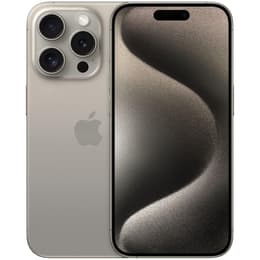
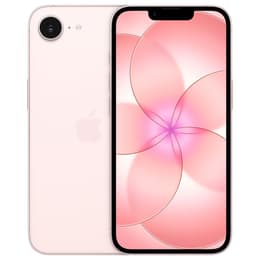
- Camera systems: The iPhone 15 Pro includes a triple-lens setup featuring dedicated optical zoom capabilities for distant subjects, whereas the iPhone 17e employs a single high-resolution main camera system for everyday photography.
- Low-light and video capture: Both devices handle challenging lighting conditions with clarity and detail, while recording stable, high-definition video accompanied by clear multi-microphone audio capture.
- Media output: Stereo speakers on both models deliver balanced sound reproduction for hands-free calls, podcasts, and casual video playback.
Front camera
12 megapixels
12 megapixels
Miscellaneous
Physical handling characteristics, connectivity protocols, and everyday functional sensors shape the practical ergonomics of both smartphones.
- Build and materials: The iPhone 15 Pro incorporates a titanium frame with contoured edges for a balanced handheld feel, while the iPhone 17e utilizes a lightweight slate form factor designed for comfortable single-handed operation.
- Connectivity and ports: Both devices adopt universal USB-C ports for charging and data transfer, alongside modern 5G cellular capabilities and fast wireless networking standards.
- Security and sensors: Fast biometric authentication via Face ID and standard motion sensors are integrated into both designs for secure unlocking and navigational accuracy.
Weight
187 g
169 g
Screen size (in)
6.1
6.1
Network
5G
5G
SIM card
Physical SIM + eSIM
eSIM
Carrier compatibility
Unlocked
Unlocked
Connector
USB-C
USB-C (USB 2)
What the community thinks
User feedback highlights the dependable build quality and reliable daily performance of both devices, though real-world discussions frequently note distinct preferences. Owners of the iPhone 15 Pro frequently praise its versatile multi-lens camera system and fluid display technology, while some users mention that its battery requires mid-day recharging under heavy workloads. Conversely, users of the iPhone 17e emphasize appreciation for its long-lasting battery performance and generous baseline storage, though some miss having a dedicated telephoto zoom lens for photography.
Users prioritizing advanced photographic reach and multi-lens flexibility may prefer the iPhone 15 Pro, while users prioritizing extended battery longevity and modern internal efficiency often lean toward the iPhone 17e. For buyers exploring sustainable shopping habits, a quality-assured refurbished option provides an eco-friendly alternative that reduces electronic waste without compromising on performance. Ultimately, the choice depends on whether optical zoom capability or everyday endurance aligns more closely with your personal daily routine.