

Compare models

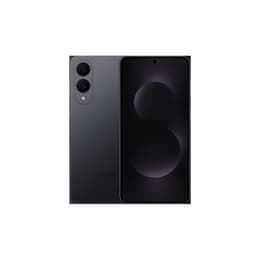
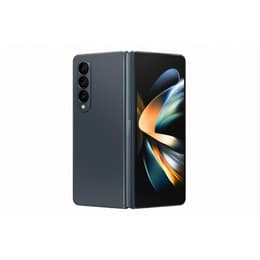
Galaxy S25 Edge Vs Galaxy Z Fold4

  • 1-year minimum warranty
  • Free delivery on all orders
  • Free 30-day returns
Galaxy S25 Edge
Starting at

Refurbished price:€488.00

Versus €1,275.21 new

See options
Galaxy Z Fold4
Starting at

Refurbished price:€478.00

Versus €1,799.00 new

See options

Differences at a glance

The Samsung Galaxy S25 Edge (2025) and Samsung Galaxy Z Fold4 (2022) represent two completely distinct approaches to modern mobile engineering, contrasting an ultra-slim slate design with a multi-screen foldable form factor. While both devices run on the Android operating system with Samsung's custom interface overlay, they cater to fundamentally different hardware preferences. The primary differentiator lies in their physical structure, dividing a conventional lightweight profile from a convertible tablet-like layout.

Available Models

Colour

Storage

Scores

Durability

When evaluating hardware longevity and software support, both devices offer distinct timelines shaped by their respective release years and engineering constraints.

  • Software Support Window: The Galaxy S25 Edge benefits from a longer extended update schedule due to its newer release year, whereas the Galaxy Z Fold4 operates further along its designated system update lifecycle.
  • Build and Mechanical Durability: The Galaxy S25 Edge utilizes a rigid, slim titanium chassis with reinforced glass designed for drop resistance, while the Galaxy Z Fold4 relies on a complex folding hinge mechanism and inner flexible screen that require careful handling over years of daily use.
  • Expected Practical Lifespan: Users can anticipate extended multi-year viability from both models, though slate devices generally present fewer mechanical wear points compared to early-generation foldables.

Year of Release

2025

2022

Compatible with latest Update

Yes

Yes

OS

Android

Android

Foldable

No

Yes

Performance

Processing power and daily operational speed differ noticeably under heavy workloads, influencing multitasking efficiency and responsiveness.

  • App Loading and Multitasking: The Galaxy S25 Edge handles demanding applications, high-end mobile gaming, and rapid background app switching smoothly thanks to its current-generation processor and ample random access memory.
  • System Responsiveness: The Galaxy Z Fold4 delivers reliable performance for standard productivity tasks and split-screen app management, though its processor generation handles intense, continuous computing loads with slightly lower thermal headroom.
  • Battery Behavior: The slimmer profile of the Galaxy S25 Edge houses a smaller battery capacity that requires more frequent charging under heavy usage, while the Galaxy Z Fold4 distributes power across dual screens, resulting in distinct consumption patterns depending on whether the inner or outer display is active.

Screen quality

Display technology is a major separating factor between these devices, offering completely different viewing scales and visual experiences.

  • Display Technology: The Galaxy S25 Edge features a single, vibrant Dynamic AMOLED display with deep contrast and high pixel density, whereas the Galaxy Z Fold4 provides a dual-screen experience consisting of a narrow outer cover screen and an expansive, tablet-sized inner foldable screen.
  • Outdoor Visibility: Both panels offer high peak brightness levels that maintain legibility under direct sunlight, though reflective properties vary slightly due to the protective plastic layer on the foldable inner screen.
  • Refresh Rate and Smoothness: Both devices support high refresh rates up to 120Hz, ensuring fluid scrolling animations and responsive touch feedback during daily navigation and media playback.

Resolution

1440 x 3120

1812 x 2176

Audiovisual

Photography and media consumption capabilities vary based on the specific lens configurations and physical form factors of each device.

  • Camera System Capabilities: The Galaxy S25 Edge focuses on a high-resolution main sensor paired with an ultra-wide lens for crisp everyday photography, while the Galaxy Z Fold4 utilizes a versatile triple-lens setup including a dedicated telephoto zoom lens for distant subjects.
  • Media and Audio Output: The Galaxy Z Fold4 excels at media consumption when unfolded, turning video playback into a tablet-like experience supported by stereo speakers, whereas the Galaxy S25 Edge offers balanced audio output within a traditional smartphone footprint.
  • Low-Light Performance: Both devices capture clear images in challenging lighting conditions using automated image processing software, though processing speeds reflect their respective chip generations.

Miscellaneous

Practical daily usability elements, physical dimensions, and connectivity standards highlight the ergonomic divide between these two models.

  • Handling and Portability: The Galaxy S25 Edge prioritizes lightweight ergonomics with an exceptionally thin profile that fits easily into pockets, while the Galaxy Z Fold4 is heavier and thicker when closed due to its dual-screen folding assembly.
  • Connectivity and Ports: Both models support fast 5G cellular networks, modern Wi-Fi standards, and Bluetooth pairing, utilizing USB-C ports for charging and data transfer.
  • Authentication Sensors: The Galaxy S25 Edge features integrated screen biometrics for security, while the Galaxy Z Fold4 relies on a responsive physical fingerprint sensor embedded in the side power button.

Weight

163 g

263 g

Screen size (in)

6.7

7.6

Network

5G

5G

SIM card

Physical SIM + eSIM

Dual Physical SIM + eSIM

Carrier compatibility

Unlocked

Unlocked

Connector

USB-C

USB-C

What the community thinks

User feedback from online communities highlights distinct preferences for each device. Owners of the Galaxy S25 Edge frequently praise its exceptionally light, thin profile and effortless pocketability, though some note that battery life requires careful management during intensive days. Conversely, Galaxy Z Fold4 users heavily praise the productivity benefits of the large inner screen for multitasking and reading, while noting that the folded thickness and visible screen crease remain trade-offs of the folding design. Choosing between the two comes down to individual workflow priorities.

Users prioritizing maximum portability, a sleek traditional feel, and long-term software update longevity will find the Galaxy S25 Edge well-suited to their needs. Meanwhile, users prioritizing split-screen productivity, a tablet-sized canvas, and versatile media viewing will lean toward the Galaxy Z Fold4. For buyers seeking a sustainable choice, exploring a quality-assured refurbished option provides a reliable path to acquiring these devices while reducing electronic waste.








