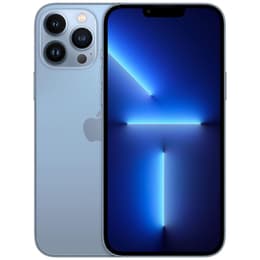


iPhone 13 Pro Max Vs Xiaomi Redmi Note 14 Pro

iPhone 13 Pro Max
iPhone 13 Pro Max
Starting at

Refurbished price:372.00

Versus €1,249.00 new

See options
Xiaomi Redmi Note 14 Pro
Starting at

Refurbished price:260.77

Versus €349.99 new

See options

Ratings

The iPhone 13 Pro Max, released in September 2021, and the Xiaomi Redmi Note 14 Pro, launched in late 2024 and early 2025, represent distinct approaches to smartphone design and functionality. While the iPhone 13 Pro Max offers a premium experience within Apple's iOS ecosystem, the Redmi Note 14 Pro provides a feature-rich Android alternative. The primary differentiators lie in their operating systems, camera capabilities, and overall build philosophies, catering to different user preferences.

Scores

Durability

The longevity of a smartphone is influenced by its initial build quality, software support, and the availability of repairs.

  • Software Support: The iPhone 13 Pro Max, running on iOS, is expected to receive major operating system updates for approximately 6-7 years from its release, potentially extending support until 2028 or 2029. The Redmi Note 14 Pro, operating on Android with Xiaomi's HyperOS, is anticipated to receive around 3 major Android OS upgrades and 4 years of security updates.
  • Physical Durability: The iPhone 13 Pro Max features a Ceramic Shield front cover and a surgical-grade stainless steel frame, along with an IP68 rating for water and dust resistance, allowing submersion up to 6 meters for 30 minutes. The Redmi Note 14 Pro also boasts an IP68/IP69 rating and Corning Gorilla Glass Victus 2 protection on its display, offering robust resistance against dust, water, and drops.
  • Expected Lifespan: Users prioritizing extended software longevity and a proven track record of long-term support may find the iPhone 13 Pro Max more aligned with their needs. The Redmi Note 14 Pro offers strong physical durability, which contributes to its practical lifespan.

Year of Release

2021

2025

OS

iOS

Android

Foldable

No

No

Performance

Performance in daily use is determined by a device's internal components, affecting app responsiveness, multitasking, and gaming experiences.

  • System Responsiveness: The iPhone 13 Pro Max is equipped with a powerful processor that ensures smooth operation across demanding applications and graphically intensive games. The Redmi Note 14 Pro, powered by a current-generation MediaTek Dimensity processor, handles everyday tasks, multitasking, and casual gaming with stability.
  • Multitasking Capabilities: Both devices offer ample RAM configurations to support efficient multitasking, allowing users to switch between applications without significant delays. The iPhone 13 Pro Max provides a fluid experience even with numerous apps open. The Redmi Note 14 Pro, with its 8GB or 12GB RAM options, also facilitates smooth transitions between applications.
  • Storage Options: The iPhone 13 Pro Max offers a wide range of storage capacities, from 128GB up to 1TB, catering to users with extensive storage needs for media and applications. The Redmi Note 14 Pro comes with storage options up to 512GB, which is suitable for most users.

Memory (GB)

6 GB

8 GB

Screen quality

The display is a primary interface for smartphone interaction, with differences in technology, resolution, and brightness impacting the visual experience.

  • Display Technology and Clarity: The iPhone 13 Pro Max features a 6.7-inch Super Retina XDR OLED display, known for its deep blacks, vibrant colors, and high contrast. The Redmi Note 14 Pro also utilizes a 6.67-inch AMOLED panel, offering rich colors and a sharp 1.5K resolution.
  • Brightness and Outdoor Visibility: The iPhone 13 Pro Max achieves a typical brightness of 1000 nits and a peak HDR brightness of 1200 nits, providing excellent visibility in various lighting conditions. The Redmi Note 14 Pro boasts an impressive peak brightness of up to 3000 nits, which can enhance outdoor viewing and HDR content.
  • Smoothness and Responsiveness: Both devices offer a 120Hz adaptive refresh rate, ensuring smooth scrolling and fluid animations. The iPhone 13 Pro Max's ProMotion technology dynamically adjusts the refresh rate, while the Redmi Note 14 Pro also provides a responsive touch experience.

Resolution

1284 x 2778

1080x2400

Audiovisual

Camera systems are crucial for capturing memories, with variations in sensor capabilities, lens configurations, and software features defining their photographic strengths.

  • Main Camera Performance: The iPhone 13 Pro Max features a 12MP main camera with a large sensor and sensor-shift optical image stabilization, excelling in capturing detailed images and performing well in low-light conditions. The Redmi Note 14 Pro offers a high-resolution 200MP main camera, often with optical image stabilization, capable of capturing highly detailed photos and offering optical-grade zoom through in-sensor cropping.
  • Versatility and Special Features: The iPhone 13 Pro Max includes a 12MP ultra-wide camera with autofocus that supports macro photography, and a 12MP telephoto lens with 3x optical zoom. It also offers Cinematic mode for video with shallow depth of field and ProRes video recording. The Redmi Note 14 Pro includes an 8MP ultra-wide lens and a 2MP macro camera, with its main camera supporting 2x and 4x optical-grade lossless zoom.
  • Video Recording and Audio: The iPhone 13 Pro Max supports 4K video recording at up to 60fps and ProRes video. The Redmi Note 14 Pro can record video at up to 4K 30fps from its main camera. Both devices offer capable audio recording and playback for media consumption.

Front camera

12 megapixels

32 MP

Miscellaneous

Beyond core features, connectivity, physical design, and additional functionalities contribute to the overall user experience.

  • Connectivity and Ports: Both devices support 5G connectivity and modern Wi-Fi standards for fast internet access. The iPhone 13 Pro Max uses a Lightning port for charging and data transfer. The Redmi Note 14 Pro features a USB-C port and retains a 3.5mm headphone jack, offering more universal connectivity options.
  • Biometric Security: The iPhone 13 Pro Max relies on Face ID for secure facial recognition. The Redmi Note 14 Pro offers both an in-screen fingerprint sensor and AI Face Unlock for biometric authentication.
  • Design and Handling: The iPhone 13 Pro Max has a substantial build, weighing 240 grams, with a flat-edged design. The Redmi Note 14 Pro is lighter at approximately 190 grams and features a curved design, potentially offering a different feel in hand. The Redmi Note 14 Pro also offers a vegan leather finish option.

Weight

238 g

180 g

Screen size (in)

6.7

6.67

Network

5G

4G

SIM card

Physical SIM + eSIM

Dual Physical SIM

Carrier compatibility

Unlocked

Unlocked

The iPhone 13 Pro Max and the Xiaomi Redmi Note 14 Pro cater to users with differing priorities, each excelling in specific areas based on user feedback and specifications.

Users often praise the iPhone 13 Pro Max for its exceptional battery life, frequently noted to last a full day or even two for many users, and its robust software support longevity. Its camera system, particularly the main sensor's low-light performance and the versatility of its telephoto and macro capabilities, receives consistent acclaim. Some users, however, might find its weight and the proprietary Lightning port less convenient compared to more universal standards.

The Redmi Note 14 Pro is frequently lauded for its vibrant AMOLED display with high peak brightness, making it suitable for outdoor viewing. Its 200MP main camera is often highlighted for capturing highly detailed images, and the inclusion of a 3.5mm headphone jack and USB-C port are practical advantages for many. Criticisms sometimes point to the secondary cameras being less impressive than the main sensor, and some variants may not offer 4K video recording from all lenses.

Users prioritizing a long-term software commitment, a highly refined user experience, and a powerful, consistent camera system across all lenses may find the iPhone 13 Pro Max well-suited to their needs. Conversely, those who value a high-resolution main camera, a very bright display, universal charging, and potentially a lighter device might lean towards the Redmi Note 14 Pro. Both devices offer compelling features, and considering a quality-assured refurbished option for either model can be an eco-friendly alternative for making an informed choice.

See all articles

Our recent comparisons







