

Galaxy A25 Vs Xiaomi 14

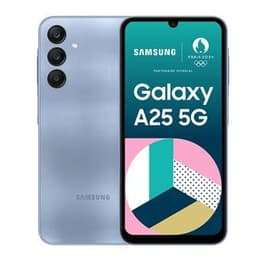
Galaxy A25
Galaxy A25
Starting at

Refurbished price:134.00

Versus €319.11 new

See options
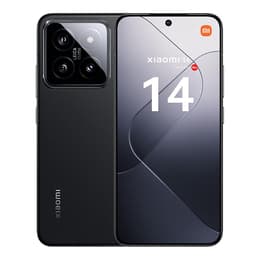
Xiaomi 14
Xiaomi 14
Starting at

Refurbished price:384.00

Versus €1,099.00 new

See options

Ratings

The Samsung Galaxy A25 (released December 2023) and the Xiaomi 14 (globally released February 2024) are both Android-based smartphones, yet they cater to different segments of the market. While the Galaxy A25 focuses on delivering a balanced experience with its One UI software, the Xiaomi 14, running HyperOS, positions itself as a high-performance device with advanced camera capabilities and a premium build.

Scores

Durability

The longevity of a smartphone is influenced by its build quality, software support, and the materials used in its construction.

  • Release Timeline and Software Support: The Galaxy A25, launched in late 2023, is expected to receive four major Android OS upgrades and five years of security updates from Samsung, offering a solid period of software relevance. The Xiaomi 14, with its global release in early 2024, also promises four generations of Android OS upgrades and five years of security patches, ensuring comparable software longevity.
  • Physical Durability: The Galaxy A25 features a Gorilla Glass 5 panel on the front and a plastic back. While some sources mention an IP67 rating, others indicate no official IP rating, suggesting limited water resistance. The Xiaomi 14, on the other hand, boasts Gorilla Glass Victus protection on its display and a glass back, coupled with an IP68 rating for significant dust and water resistance, allowing it to withstand immersion in fresh water up to 1.5 meters for 30 minutes.
  • Practical Lifespan: Both devices offer substantial software support. The Xiaomi 14's higher IP rating and more robust glass protection suggest a greater resilience to environmental factors, potentially contributing to a longer practical lifespan for users in varied conditions.

Year of Release

2023

2023

Compatible with latest Update

Yes

Yes

OS

Android

Android

Foldable

No

No

Performance

Performance is a key differentiator, impacting how smoothly applications run and how efficiently the device handles demanding tasks.

  • Processing Power: The Galaxy A25 is equipped with a processor that capably handles everyday applications and multitasking. It can manage graphically intensive games at medium settings, though some users have noted it can generate heat during extended gaming sessions. The Xiaomi 14 features a more advanced processor, designed for high-end performance, ensuring demanding applications and complex games run with greater fluidity and responsiveness.
  • Memory and Storage: The Galaxy A25 is available with 6GB or 8GB of RAM and 128GB or 256GB of internal storage. The Xiaomi 14 offers more generous configurations, starting from 8GB of RAM and going up to 16GB, with storage options ranging from 256GB to 1TB, providing more headroom for extensive multitasking and storing large files.
  • Battery Performance: The Galaxy A25 includes a 5000 mAh battery, which generally provides good endurance, often lasting more than a full day for many users. The Xiaomi 14 has a 4610 mAh battery. While user experiences vary, many find its battery life sufficient for a full day of use, though some power users have expressed a desire for longer endurance.

Memory (GB)

6 GB

16 GB

Screen quality

The display is the primary interface for interaction, and differences in screen technology and specifications can significantly affect the viewing experience.

  • Display Technology and Clarity: Both devices feature AMOLED display technology, known for deep blacks and vibrant colors. The Galaxy A25 has a 6.5-inch Super AMOLED display with a 1080 x 2340 pixel resolution (FHD+). The Xiaomi 14 comes with a slightly smaller 6.36-inch LTPO AMOLED display, but it offers a higher resolution of 1200 x 2670 pixels, resulting in a sharper image.
  • Brightness and Refresh Rate: The Galaxy A25's display can reach a peak brightness of 1000 nits, which is adequate for outdoor visibility. It also features a 120Hz refresh rate for smooth scrolling. The Xiaomi 14 significantly surpasses this with a peak brightness of 3000 nits, offering exceptional visibility even in bright sunlight. Its LTPO panel allows for an adaptive refresh rate ranging from 1Hz to 120Hz, which can contribute to power efficiency.
  • Viewing Experience: The Xiaomi 14's higher resolution and substantially brighter display provide a more immersive and detailed viewing experience, particularly for high-definition content and outdoor use. The adaptive refresh rate also offers a smoother and potentially more power-efficient operation.

Resolution

1080x2340

1200 x 2670

Screen type

Super AMOLED

LTPO OLED

Audiovisual

Camera capabilities are a crucial aspect for many users, and both smartphones offer distinct photographic experiences.

  • Rear Camera Systems: The Galaxy A25 features a triple-camera setup on the rear, including a 50-megapixel main sensor with optical image stabilization (OIS), an 8-megapixel ultrawide lens, and a 2-megapixel macro lens. The Xiaomi 14 also has a triple-camera system, but all three lenses are 50-megapixels, including a main sensor with OIS and Leica optics, an ultrawide lens, and a telephoto lens offering 3.2x optical zoom.
  • Photography Performance: The Galaxy A25's cameras are considered competent for everyday photography, producing good detail and colors. The Xiaomi 14, with its Leica-engineered lenses and larger sensors, is praised by users for its strong camera performance, particularly in capturing dynamic images and utilizing its telephoto capabilities. However, some users have noted that zoom quality can deteriorate at higher magnifications and have reported occasional focusing issues in macro mode.
  • Video Recording and Front Camera: The Galaxy A25 can record video at up to 4K resolution at 30 frames per second (fps) and has a 13-megapixel front camera. The Xiaomi 14 offers more advanced video recording, capable of 8K at 24fps and 4K at 60fps, and features a higher-resolution 32-megapixel front camera that can also record 4K video at 60fps.

Main camera

50 megapixels

50 megapixels

Front camera

13 megapixels

32 megapixels

Miscellaneous

Beyond core specifications, various other features contribute to the overall user experience and device utility.

  • Connectivity and Ports: Both devices support 5G connectivity. The Galaxy A25 includes Wi-Fi 5 (802.11ac) and Bluetooth 5.3, along with a USB-C 2.0 port and a 3.5mm headphone jack. The Xiaomi 14 offers more advanced connectivity with Wi-Fi 7 and Bluetooth 5.4, a faster USB-C 3.2 Gen 1 port, but it omits the traditional headphone jack.
  • Biometric Security and Design: The Galaxy A25 features a side-mounted fingerprint sensor integrated into the power button. The Xiaomi 14 utilizes an under-display optical fingerprint sensor. In terms of physical design, the Galaxy A25 measures 161.0 x 76.5 x 8.3 mm and weighs 197 grams. The Xiaomi 14 is slightly more compact and lighter at 152.8 x 71.5 x 8.2 mm and 193 grams.
  • Build Materials: The Galaxy A25 uses a plastic frame and back, with Gorilla Glass 5 on the front. The Xiaomi 14 features a more premium construction with a glass back and Gorilla Glass Victus on the front.

Weight

197 g

188 g

Screen size (in)

6.5

6.36

Network

5G

5G

SIM card

Physical SIM

Dual Physical SIM

Carrier compatibility

Unlocked

Unlocked

User feedback for the Xiaomi 14 often highlights its fast and responsive performance, excellent camera capabilities, particularly with the Leica collaboration, and its vibrant display. Some common criticisms include battery life that, while generally good, might not meet the expectations of heavy users, and occasional software glitches or notification management quirks in HyperOS. For the Galaxy A25, users frequently praise its bright OLED display, reliable battery life, and Samsung's commitment to long-term software updates. Criticisms sometimes point to its less powerful processor compared to higher-end devices, which can lead to heating during intensive use.

Users prioritizing a premium build, top-tier performance for demanding applications, and advanced camera features, especially for photography enthusiasts, may find the Xiaomi 14 well-suited to their needs. Its superior display brightness and higher water resistance also make it a strong contender for those who use their phone extensively outdoors or desire added durability. Conversely, users who value extended battery life, a familiar software experience with consistent updates, and a more accessible device for everyday tasks might lean towards the Galaxy A25. It offers a solid overall experience for general use without the need for flagship-level processing power.

For those considering either device, exploring quality-assured refurbished options can provide an eco-friendly alternative to purchasing new, allowing for informed and sustainable choices.


See all articles

Our recent comparisons






