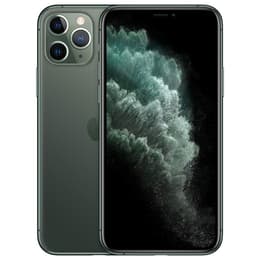
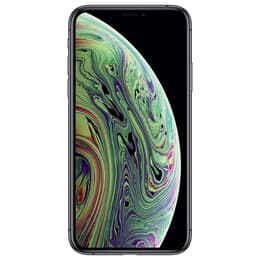


iPhone 11 Pro Vs iPhone XS

iPhone 11 Pro
iPhone 11 Pro
Starting at

Refurbished price:184.00

Versus €809.00 new

See options
iPhone XS
iPhone XS
Starting at

Refurbished price:125.00

Versus €489.00 new

See options

Ratings

The iPhone Xs, released in September 2018, and the iPhone 11 Pro, launched in September 2019, represent two consecutive generations of Apple's premium smartphone line. While both devices share a similar design philosophy and operate on the iOS ecosystem, the iPhone 11 Pro introduced notable advancements in its camera system, processing power, and battery endurance. These differences cater to varying user needs, from everyday communication to more demanding creative and professional tasks.

Scores

Durability

When considering the long-term usability of these devices, their release timelines and software support are key factors. The iPhone 11 Pro, being a year newer, generally benefits from an extended period of official software updates compared to its predecessor.

  • Software Longevity: The iPhone Xs shipped with iOS 12 and received major iOS updates up to iOS 18, which was released in 2024. It will not support iOS 26. The iPhone 11 Pro, launched with iOS 13, is currently supported by iOS 26, offering a longer runway for new features and security patches.
  • Physical Durability: Both models feature a stainless steel frame and glass construction, contributing to a robust feel. The iPhone 11 Pro offers enhanced water and dust resistance with an IP68 rating allowing submersion up to 4 meters for 30 minutes, an improvement over the iPhone Xs's IP68 rating of 2 meters for 30 minutes.
  • Repairability: Both devices are designed with critical display and battery repairs as a priority, making these common service needs relatively accessible. The battery replacement procedure was simplified in the iPhone 11 Pro.

Year of Release

2019

2018

Compatible with latest Update

Yes

Yes

OS

iOS

iOS

Foldable

No

No

Performance

The performance of a smartphone impacts everything from app loading times to multitasking efficiency and gaming experiences. Both the iPhone Xs and iPhone 11 Pro deliver capable performance for daily tasks, but the newer model offers a noticeable step up in processing power and efficiency.

  • Processing Capabilities: The iPhone 11 Pro features a newer-generation processor that provides faster CPU and GPU speeds compared to the iPhone Xs. This translates to quicker app launches, smoother navigation, and more fluid performance in graphically intensive applications and games.
  • Multitasking and Responsiveness: Both devices come with 4GB of RAM, allowing for competent multitasking. However, the iPhone 11 Pro's more efficient processor handles background tasks and transitions between applications with greater ease, maintaining overall system responsiveness even under heavier loads.
  • Battery Endurance: The iPhone 11 Pro includes a larger battery capacity and a more power-efficient processor, resulting in significantly improved battery life. Users often report experiencing several hours more screen-on time with the iPhone 11 Pro, making it more likely to last a full day of heavy use compared to the iPhone Xs.

Memory

4 GB

4 GB

Screen quality

Both the iPhone Xs and iPhone 11 Pro feature high-quality OLED displays, offering vibrant visuals and deep blacks. However, the iPhone 11 Pro introduced advancements that enhance the viewing experience, particularly in challenging lighting conditions.

  • Display Technology and Clarity: Both phones utilize Super Retina OLED displays with a resolution of 2436x1125 pixels at 458 pixels per inch, providing sharp and clear visuals. The iPhone 11 Pro upgrades to a Super Retina XDR display, which offers a higher contrast ratio for more dynamic and lifelike images.
  • Brightness Levels: The iPhone 11 Pro's display can reach a higher typical maximum brightness of 800 nits and a peak HDR brightness of 1200 nits, compared to the iPhone Xs's 625 nits. This increased brightness improves visibility outdoors and enhances HDR content viewing.
  • User Interaction: The iPhone Xs features 3D Touch for pressure-sensitive interactions, while the iPhone 11 Pro replaced this with Haptic Touch, which relies on a longer press and haptic feedback.

Resolution

1125 x 2436

1125 x 2436

Screen type

Super Retina XDR OLED

Super Retina OLED

Audiovisual

The camera systems are a primary differentiator between these two models, with the iPhone 11 Pro introducing a significant upgrade, particularly with the addition of an ultra-wide lens.

  • Rear Camera System: The iPhone Xs features a dual 12MP camera setup (wide and telephoto) with optical image stabilization and Smart HDR. The iPhone 11 Pro elevates this with a triple 12MP camera system, adding an ultra-wide lens to the wide and telephoto lenses. This provides greater versatility for capturing expansive landscapes and group shots.
  • Low-Light and Advanced Features: The iPhone 11 Pro introduced Night mode, significantly improving performance in low-light conditions, a feature not present on the iPhone Xs. It also includes Deep Fusion for enhanced texture and detail in medium to low light, and an improved Smart HDR.
  • Front Camera and Video: The iPhone Xs has a 7MP front camera, while the iPhone 11 Pro upgrades to a 12MP front camera capable of recording 4K video and slo-mo selfies, offering more detail and flexibility for video calls and self-portraits. Both models offer 4K video recording with optical image stabilization on their main rear cameras.

Main camera

12 megapixels

12 megapixels

Front camera

12 megapixels

7 megapixels

Miscellaneous

Beyond the core specifications, several practical elements contribute to the overall user experience and differentiate the iPhone Xs and iPhone 11 Pro.

  • Connectivity and Ports: Both devices support dual SIM functionality (Nano-SIM and eSIM) and Gigabit-Class LTE with 4x4 MIMO for fast cellular data speeds. They both utilize the Lightning port for charging and data transfer.
  • Weight and Dimensions: The iPhone Xs measures 143.6 x 70.9 x 7.7 mm and weighs 177g. The iPhone 11 Pro is slightly thicker and heavier at 144 x 71.4 x 8.1 mm and 188g, a difference that some users might notice in hand.
  • Included Accessories: The iPhone 11 Pro was the first iPhone to include an 18W fast charger and a USB-C to Lightning cable in the box, allowing for quicker charging out of the box, whereas the iPhone Xs typically came with a standard 5W charger.

Weight

188 g

177 g

Screen size (in)

5.8

5.8

Network

4G

4G

SIM card

Physical SIM + eSIM

Physical SIM + eSIM

Carrier compatibility

Unlocked

Unlocked

Connector

Lightning

Lightning

The iPhone Xs and iPhone 11 Pro both offer a premium smartphone experience, but they cater to slightly different priorities. Users frequently praise the iPhone 11 Pro for its significantly improved battery life, which often allows for a full day or more of use without needing a recharge. Its advanced triple-camera system, particularly the addition of the ultra-wide lens and Night mode, is also a common highlight among users who prioritize photography and videography. Some users of the iPhone Xs, while appreciating its initial performance, have noted that its battery life can be a concern with heavy usage compared to newer models.

For individuals who prioritize extended battery life, a more versatile camera system with enhanced low-light capabilities, and a longer period of software support, the iPhone 11 Pro will be well-suited. Its newer processor also provides a smoother experience for demanding applications and ensures better future compatibility. On the other hand, users who primarily need a reliable device for everyday communication, web browsing, and social media, and who are content with a capable dual-camera system, may find the iPhone Xs still meets their needs. Both models offer a quality-assured refurbished option, providing an eco-friendly alternative for those looking to make a sustainable choice.


See all articles

Our recent comparisons