

Galaxy A13 Vs Google Pixel 6A

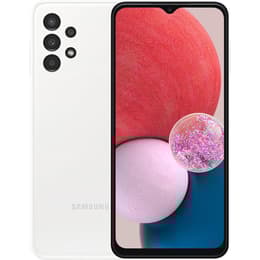
Galaxy A13
Galaxy A13
Starting at

Refurbished price:97.00

Versus €249.00 new

See options
Google Pixel 6A
Google Pixel 6A
Starting at

Refurbished price:143.00

Versus €459.00 new

See options

Ratings

The Samsung Galaxy A13, released in March 2022, and the Google Pixel 6A, launched in July 2022, are both Android smartphones designed to offer essential features to a broad user base. While both devices operate on the Android platform, they present different approaches to hardware and software integration. The Galaxy A13 emphasizes a larger display and expandable storage, whereas the Pixel 6A focuses on a more compact form factor and advanced computational photography capabilities.

Scores

Durability

When considering the longevity of these devices, their release timelines and software support policies are key factors. The Samsung Galaxy A13 was released in March 2022, while the Google Pixel 6A followed in July 2022.

  • Software Updates: The Galaxy A13 has received two major Android OS updates since its launch and is eligible for security updates for the duration of its support lifecycle. Google initially promised three years of OS updates and five years of security updates for the Pixel 6A. However, the Pixel 6A is expected to receive OS updates until at least July 2025 and security updates until at least July 2027, with some reports indicating potential support for Android 17.
  • Build Materials: The Galaxy A13 features a plastic frame and back, with its screen protected by Corning Gorilla Glass 5. The Pixel 6A has an aluminum frame, a plastic back, and Corning Gorilla Glass 3 protecting its display. The Pixel 6A also carries an IP67 rating for dust and water resistance, offering a degree of protection against environmental elements.
  • Practical Lifespan: Users of the Galaxy A13 have noted that performance can degrade over time, with some experiencing slower operation after several months of use. The Pixel 6A, with its longer guaranteed software support and more robust build, may offer a more consistent experience over an extended period.

Year of Release

2022

2022

Compatible with latest Update

No

Yes

OS

Android

Android

Foldable

No

No

Performance

The performance of a smartphone impacts daily usability, from launching applications to managing multiple tasks simultaneously.

  • Storage and RAM: The Galaxy A13 offers various configurations, including 3GB, 4GB, or 6GB of RAM and 32GB, 64GB, or 128GB of internal storage, which is expandable via a microSD card. The Pixel 6A comes with a single configuration of 6GB of RAM and 128GB of non-expandable internal storage.
  • Everyday Responsiveness: The Galaxy A13 is suitable for basic tasks, but users may experience slower speeds, juddery app transitions, and less fluid gaming performance. The Pixel 6A, powered by a processor designed for demanding tasks, handles demanding apps and multitasking smoothly, providing a responsive user experience.
  • Battery Behavior: The Galaxy A13 is equipped with a 5000 mAh battery, which typically provides over a day of use, and potentially two days with careful usage. The Pixel 6A has a 4410 mAh battery, which, despite being smaller, is optimized to deliver a full day of use for most users, with an extreme battery saver mode capable of extending usage significantly.

Memory (GB)

4 GB

6 GB

Screen quality

The display is a primary interface for smartphone interaction, influencing everything from content consumption to daily navigation.

  • Display Technology and Size: The Galaxy A13 features a larger 6.6-inch PLS LCD display. The Pixel 6A has a more compact 6.1-inch OLED display. OLED technology generally offers deeper blacks and higher contrast compared to LCD.
  • Resolution and Clarity: Both devices offer a Full HD+ resolution, with the Galaxy A13 at 1080 x 2408 pixels and the Pixel 6A at 1080 x 2400 pixels, resulting in sharp visuals for typical viewing distances.
  • Brightness and Refresh Rate: The Galaxy A13's display is suitably bright and vivid for general use. The Pixel 6A's OLED panel can achieve higher brightness levels, reaching an average of 767.2 cd/m² and nearly 1000 cd/m² in certain conditions, which is beneficial for outdoor visibility. Both phones feature a standard 60Hz refresh rate.

Resolution

1080 x 2408

1080 x 2400

Screen type

PLS LCD

OLED

Audiovisual

Camera capabilities are a significant consideration for many users, impacting the quality of photos and videos captured.

  • Rear Camera Systems: The Galaxy A13 features a quad-camera setup with a 50MP main sensor, a 5MP ultrawide, a 2MP macro, and a 2MP depth sensor. The Pixel 6A has a dual-camera system, including a 12.2MP main sensor with optical image stabilization (OIS) and a 12MP ultrawide lens.
  • Photography Performance: The Galaxy A13's 50MP main camera can produce decent images in good lighting, though low-light performance is less impressive, and the additional macro and depth sensors may not always provide significant practical benefits. The Pixel 6A, despite using older camera hardware, leverages advanced computational photography to deliver consistently good results across various conditions, excelling in color accuracy, dynamic range, and low-light performance.
  • Video Recording and Front Camera: The Galaxy A13 records video at 1080p at 30 frames per second (fps) and has an 8MP front camera. The Pixel 6A supports 4K video recording at 30 or 60fps and 1080p at up to 240fps, with an 8MP front camera that also benefits from Google's image processing.

Main camera

50 megapixels

12.2 megapixels

Front camera

8 megapixels

8 megapixels

Miscellaneous

Beyond core features, several practical elements contribute to the overall user experience of a smartphone.

  • Connectivity and Ports: The Galaxy A13 supports 4G LTE, Wi-Fi 5, and Bluetooth 5.0, and includes a 3.5mm headphone jack and a USB-C port. The Pixel 6A offers 5G connectivity, Wi-Fi 6, and Bluetooth 5.2, with a USB-C port but no headphone jack.
  • Security and Biometrics: The Galaxy A13 features a side-mounted fingerprint sensor. The Pixel 6A incorporates an in-display fingerprint sensor and the Titan M2 security chip for enhanced data protection.
  • Design and Handling: The Galaxy A13 is larger and heavier at 165.1 x 76.4 x 8.8 mm and 195g. The Pixel 6A is more compact and lighter, measuring 152.2 x 71.8 x 8.9 mm and weighing 178g, making it easier for one-handed use.

Weight

195 g

178 g

Screen size (in)

6.6

6.1

Network

4G

5G

SIM card

Dual Physical SIM

Physical SIM + eSIM

Carrier compatibility

Unlocked

Unlocked

The Samsung Galaxy A13 and Google Pixel 6A cater to different user priorities, reflecting their distinct design philosophies. User feedback for the Galaxy A13 often praises its large battery capacity, which can comfortably last a full day or more, and its expansive display for media consumption. However, common criticisms point to its performance, which can feel sluggish with demanding applications, and the overall quality of its secondary cameras.

Conversely, the Google Pixel 6A is frequently lauded for its exceptional camera performance, which benefits significantly from Google's computational photography, delivering impressive photos even with its hardware. Its compact size and consistent software experience are also highly regarded. Some users, however, note the 60Hz refresh rate as a potential drawback compared to other devices in its segment, and the absence of a headphone jack.

Users prioritizing a larger screen, expandable storage, and extended battery life for general use may find the Galaxy A13 well-suited to their needs. Those who value a more compact device, superior camera capabilities, and a streamlined software experience with longer update support will likely lean towards the Pixel 6A. Both devices offer a solid foundation for daily smartphone use, and considering a quality-assured refurbished option for either model can provide an eco-friendly alternative for consumers.


See all articles

Our recent comparisons