

Google Pixel Fold Vs iPhone 13 Pro Max

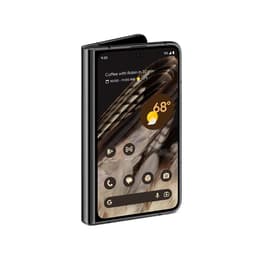
Google Pixel Fold
Google Pixel Fold
Starting at

Refurbished price:534.55

Versus €1,750.29 new

See options
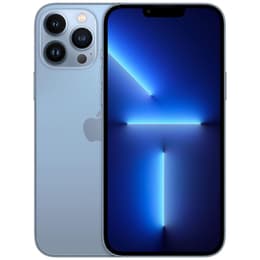
iPhone 13 Pro Max
iPhone 13 Pro Max
Starting at

Refurbished price:375.00

Versus €1,249.00 new

See options

Ratings

The Google Pixel Fold, released in June 2023, represents Google's entry into the foldable smartphone market, offering a unique dual-screen experience. In contrast, the iPhone 13 Pro Max, launched in September 2021, is a traditional high-end slab smartphone from Apple. These devices cater to different user preferences, with the Pixel Fold emphasizing versatility through its folding design and the iPhone 13 Pro Max focusing on a premium, consistent user experience within a conventional form factor. Both run on their respective operating systems, Android and iOS, providing distinct software ecosystems.

Scores

Durability

When considering the long-term usability of these devices, their release timelines and software support policies are key factors.

  • Software Longevity: The Google Pixel Fold, having been released in June 2023, is expected to receive OS and security updates until at least June 2028, offering five years of support from its launch. The iPhone 13 Pro Max, released in September 2021, typically receives major iOS updates for around five to six years, with current predictions suggesting support until iOS 27 or 28, likely extending to around 2028.
  • Repairability: The Pixel Fold received a repairability score of 6.5 out of 10, indicating that while some repairs can be managed, components like the battery can be challenging to access. The iPhone 13 Pro Max, on the other hand, scored 5 out of 10 for repairability, with some components being modular but specific hardware-software links making certain repairs, such as screen replacement, more complex.
  • Practical Lifespan: Both devices are built with robust materials, but the Pixel Fold's folding mechanism introduces additional considerations for long-term mechanical durability, a common point of discussion for foldable phones. The iPhone 13 Pro Max, with its solid unibody design, generally offers predictable physical longevity.

Performance

The performance of a smartphone is crucial for daily tasks, from app usage to demanding multimedia. Both devices deliver capable performance, but their underlying architectures differ.

  • System Responsiveness: The Google Pixel Fold handles demanding applications and multitasking smoothly, benefiting from its current-generation processor designed for efficient AI and machine learning tasks. The iPhone 13 Pro Max also offers a highly responsive experience, excelling in app loading times and fluid navigation, even with graphically intensive games.
  • Battery Behavior: The Pixel Fold features a 4821mAh battery, which users report provides good endurance for a foldable device, often lasting a full day with mixed usage, though heavy use of the inner display may require more frequent charging. The iPhone 13 Pro Max, with its 4352mAh battery, is widely recognized for its exceptional battery life, frequently offering up to two days of use for many users.
  • Storage and Multitasking: The Pixel Fold comes with 12GB of RAM and storage options of 256GB or 512GB, supporting efficient multitasking across its dual displays. The iPhone 13 Pro Max offers 6GB of RAM and a wider range of storage capacities, from 128GB up to 1TB, providing ample space and smooth operation for numerous open applications.

Memory (GB)

12 GB

6 GB

Screen quality

The display is a primary interaction point, and these two devices offer distinct visual experiences, particularly due to the Pixel Fold's unique form factor.

  • Display Technology and Clarity: The Google Pixel Fold features a 7.6-inch foldable OLED main display with a resolution of 2208x1840 pixels and a 5.8-inch OLED cover display at 2092x1080 pixels. Both offer vibrant colors and deep blacks. The iPhone 13 Pro Max boasts a 6.7-inch OLED display with a resolution of 2778x1284 pixels, known for its sharp text and detailed images.
  • Refresh Rate and Smoothness: Both devices feature a 120Hz refresh rate, contributing to smooth scrolling and fluid animations. The iPhone 13 Pro Max's ProMotion technology dynamically adjusts the refresh rate for efficiency.
  • Viewing Experience: The Pixel Fold's wider cover screen aspect ratio makes it more comfortable for single-handed use compared to some other foldables, and its large inner screen provides an immersive tablet-like experience for media consumption and productivity. The iPhone 13 Pro Max offers a consistently excellent viewing experience on its single, expansive display, though it includes a notch at the top.

Audiovisual

Both smartphones are equipped with advanced camera systems designed to capture high-quality photos and videos, though their approaches and capabilities vary.

  • Photography Capabilities: The Google Pixel Fold features a triple rear camera system with a 48-megapixel main sensor, a 10.8-megapixel ultrawide, and a 10.8-megapixel telephoto lens with 5x optical zoom. It is praised for its Pixel-quality image processing, including features like Real Tone and Night Sight. The iPhone 13 Pro Max also has a triple 12-megapixel rear camera setup, including wide, ultrawide, and a 3x optical zoom telephoto lens, along with a LiDAR sensor. It is known for its consistent image quality, strong low-light performance, and macro photography capabilities.
  • Video Recording: The iPhone 13 Pro Max introduced Cinematic Mode, allowing for depth-of-field transitions in videos, and offers high-quality video recording across all its lenses. The Pixel Fold also provides capable video recording, leveraging Google's computational photography for stable and clear footage.
  • Audio Experience: Both devices offer robust speaker outputs suitable for media consumption and clear microphone quality for calls and recordings. The iPhone 13 Pro Max's speakers are noted for being loud and clear.

Miscellaneous

Beyond core features, several practical elements contribute to the overall user experience and daily convenience of these devices.

  • Connectivity and Ports: The Google Pixel Fold supports Wi-Fi 802.11ax, Bluetooth v5.2, NFC, and uses a USB Type-C port for charging and data transfer. The iPhone 13 Pro Max supports 5G networks, Wi-Fi 802.11ax, Bluetooth v5.0, NFC, and utilizes Apple's proprietary Lightning port.
  • Biometric Security: The Pixel Fold incorporates a fingerprint sensor integrated into the power button for secure unlocking. The iPhone 13 Pro Max relies on Face ID, Apple's facial recognition system, for secure authentication.
  • Build Materials and Durability: The Pixel Fold features Gorilla Glass Victus on its cover and back, with an Ultra Thin Glass for the inner display, and an IPX8 water resistance rating. Its hinge allows it to fold completely flat, minimizing gaps. The iPhone 13 Pro Max uses a Ceramic Shield front cover, a stainless steel frame, and a matte glass back, offering IP68 water and dust resistance.
  • Dimensions and Handling: When unfolded, the Pixel Fold measures 139.70 x 158.70 x 5.80mm and weighs 283 grams. Its wider, shorter form factor when folded is often preferred for one-handed use of the cover screen. The iPhone 13 Pro Max is a larger, heavier slab phone at 160.8 x 78.1 x 7.65 mm and 240 grams, which can be substantial for single-handed operation.

Screen size (in)

7.6

6.7

Network

5G

5G

SIM card

Physical SIM + eSIM

Physical SIM + eSIM

Carrier compatibility

Unlocked

Unlocked

The Google Pixel Fold and iPhone 13 Pro Max offer distinct smartphone experiences, each with its own set of strengths and considerations based on user feedback.

Users often praise the Pixel Fold for its innovative folding design, which provides a large tablet-like screen for productivity and media consumption, while still being relatively compact when folded. The wider aspect ratio of its cover screen is frequently highlighted as more usable than some other foldables. Its camera system, leveraging Google's computational photography, also receives positive remarks for producing quality images. However, common criticisms include concerns about the long-term durability of foldable screens, the visible crease on the inner display, and its overall weight. Some users also note that app optimization for the foldable form factor is still evolving.

The iPhone 13 Pro Max is consistently lauded for its exceptional battery life, often cited as one of its strongest features, providing extended usage even for heavy users. Its camera system is highly regarded for its consistent performance, excellent video capabilities, and strong low-light photography. The device's robust build quality and the smooth, responsive iOS experience are also frequent points of praise. Criticisms sometimes revolve around its large size and weight, which can make one-handed use challenging, and the presence of the display notch.

Users prioritizing a versatile device that transforms from a compact smartphone to a larger tablet-like screen for multitasking and immersive content may prefer the Google Pixel Fold. Its unique form factor suits those who value screen real estate and the latest Android innovations. Conversely, users who prioritize industry-leading battery life, a highly refined and consistent camera experience, and the established iOS ecosystem within a traditional, durable smartphone design will find the iPhone 13 Pro Max well-suited to their needs. Both devices represent premium options in their respective categories, and for those seeking an eco-friendly alternative, quality-assured refurbished options are available for both models.








