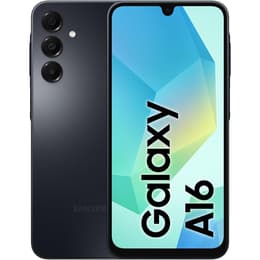
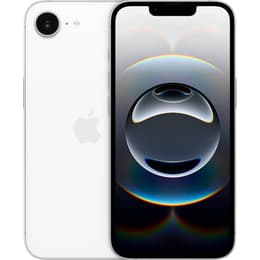


Galaxy A16 Vs iPhone 16e

Galaxy A16
Galaxy A16
Starting at

Refurbished price:134.00

Versus €250.00 new

See options
iPhone 16e
iPhone 16e
Starting at

Refurbished price:387.00

Versus €719.00 new

See options

Ratings

The Samsung Galaxy A16, released in late 2024, and the Apple iPhone 16E, launched in early 2025, represent distinct offerings within the smartphone market. While the Galaxy A16 operates on the Android platform, emphasizing a customizable user experience, the iPhone 16E runs on Apple's iOS, known for its integrated ecosystem and user-friendly interface. Key differentiators between these devices include their operating systems, display technologies, and overall performance profiles, catering to users with varying priorities.

Scores

Durability

When considering the practical lifespan of these devices, several factors come into play, including their release timelines, software support, and physical resilience.

  • Release Timeline: The Samsung Galaxy A16 was introduced in late 2024, with its US release in January 2025. The iPhone 16E, part of the iPhone 16 series, was released in February 2025 but was discontinued in March 2026 in favor of a newer model.
  • Software Longevity: Samsung has committed to providing six generations of Android OS upgrades and six years of security updates for the Galaxy A16, extending support until October 2030. The iPhone 16E launched with iOS 18.3 and supports iOS 26, with Apple typically offering several years of software updates for its devices.
  • Durability Features: The iPhone 16E incorporates Ceramic Shield protection for its display and features IP68 dust and water resistance, indicating a high level of protection against environmental elements. The Galaxy A16 offers IP54 water and dust resistance, providing protection against splashes and limited dust ingress.

Year of Release

2024

2025

OS

Android

iOS

Foldable

No

No

Performance

Both devices offer capable performance for everyday tasks, though they approach system responsiveness and multitasking differently based on their underlying architecture.

  • System Responsiveness: The iPhone 16E is powered by a current-generation Apple chip, enabling smooth navigation, rapid app launches, and efficient handling of demanding applications and Apple Intelligence features. The Galaxy A16 utilizes a capable processor that handles daily tasks and multitasking effectively, though some users report occasional sluggishness with intensive applications or gaming.
  • Multitasking and Storage: The iPhone 16E comes with 8 GB of RAM, facilitating fluid transitions between multiple applications, and offers internal storage options up to 512 GB. The Galaxy A16 is available with various RAM configurations, including 4 GB, 6 GB, and 8 GB, and offers internal storage up to 256 GB, with the added flexibility of a microSDXC card slot for expandable storage.
  • Battery Behavior: The Galaxy A16 is equipped with a 5000 mAh battery, supporting 25W wired charging, which typically translates to extended usage times, often lasting up to two days for many users. The iPhone 16E features a battery with approximately 4005 mAh capacity, offering up to 26 hours of video playback and supporting 20W wired charging, along with Qi wireless charging.

Memory (GB)

4 GB

8 GB

Screen quality

The visual experience on both devices is a significant factor, with each offering distinct display technologies and characteristics.

  • Display Technology and Clarity: The iPhone 16E features a 6.1-inch Super Retina XDR OLED display, providing deep blacks, vibrant colors, and a resolution of 2532 x 1170 pixels for sharp image quality. The Galaxy A16 sports a larger 6.7-inch Super AMOLED display with a 1080 x 2340 (FHD+) resolution, also known for its rich colors and contrast.
  • Brightness and Refresh Rate: The iPhone 16E's display offers a typical maximum brightness of 800 nits and a peak HDR brightness of up to 1200 nits, ensuring good visibility in various lighting conditions. Its refresh rate is 60 Hz. The Galaxy A16 features a 90 Hz refresh rate, contributing to smoother scrolling and animations, and offers a brightness of 800 nits (HBM).
  • Viewing Experience: The iPhone 16E provides a compact viewing experience with its 6.1-inch screen, while the Galaxy A16 offers a more expansive 6.7-inch display, which can be beneficial for media consumption and multitasking.

Resolution

1080x2340

2532x1170

Audiovisual

Both smartphones offer camera systems designed to capture everyday moments, with differences in their configurations and capabilities.

  • Rear Camera System: The iPhone 16E features a single 48-megapixel main rear camera that utilizes sensor cropping to offer a 2x optical-quality zoom. The Galaxy A16 comes with a triple-camera setup, including a 50-megapixel main sensor, a 5-megapixel ultrawide lens, and a 2-megapixel macro camera, providing versatility for different shot types.
  • Photography Performance: The iPhone 16E's main camera delivers sharp images with good dynamic range and accurate colors, performing well in various lighting conditions, including night mode. The Galaxy A16's main camera produces sharp and vibrant daylight photos, though its ultrawide and macro lenses offer more basic performance.
  • Video Recording and Front Camera: The iPhone 16E is capable of recording 4K video at up to 60 frames per second and features a 12-megapixel front camera. The Galaxy A16 supports 1080p video recording at 30 frames per second, with some 5G variants offering 4K video, and includes a 13-megapixel front camera.

Miscellaneous

Beyond core performance, several practical elements differentiate these devices in terms of daily usability and design.

  • Connectivity and Ports: Both devices support 5G connectivity and modern Wi-Fi standards. The iPhone 16E features Wi-Fi 6 and Bluetooth 5.3, while the Galaxy A16 also includes Bluetooth 5.3. Both utilize a USB-C port for charging and data transfer. The iPhone 16E supports dual eSIM (in the US), whereas the Galaxy A16 is dual SIM capable with a physical SIM slot.
  • Biometric Security and Navigation: The iPhone 16E relies on Face ID for secure authentication and includes an Action Button for customizable quick access to features. The Galaxy A16 typically features a side-mounted fingerprint sensor for unlocking. Both devices offer GPS and other location technologies for navigation.
  • Physical Design and Handling: The iPhone 16E has dimensions of 146.7 × 71.5 × 7.8 mm and weighs 167 grams, offering a more compact and lighter form factor. The Galaxy A16 has dimensions of 164.4 x 77.9 x 7.9 mm and weighs 200 grams, indicating a larger overall footprint that can impact one-handed use and pocketability.

Weight

200 g

167 g

Screen size (in)

6.7

6.1

Network

4G

5G

SIM card

Physical SIM

eSIM

Carrier compatibility

Unlocked

Unlocked

Connector

USB-C

USB-C

The Samsung Galaxy A16 and the Apple iPhone 16E cater to different user preferences and priorities. User feedback for the Galaxy A16 often praises its extended battery life and Samsung's commitment to long-term software updates, making it a practical choice for users who prioritize longevity and a large display for media consumption. Some criticisms point to its performance being adequate for everyday use but potentially struggling with more demanding applications.

The iPhone 16E, on the other hand, receives commendation for its robust performance, integrated iOS ecosystem, and a capable camera system that delivers consistent results. Users appreciate its compact design and the inclusion of features like Ceramic Shield for enhanced durability. However, its 60 Hz display refresh rate is sometimes noted as a point of comparison against some Android counterparts.

Users prioritizing a larger display, extensive battery life, and the flexibility of the Android operating system with expandable storage may find the Galaxy A16 well-suited to their needs. Conversely, users who value a more compact device, the seamless integration of the Apple ecosystem, strong performance for a wide range of applications, and advanced camera features will likely lean towards the iPhone 16E. Both devices offer compelling features, and considering a quality-assured refurbished option for either model can be an eco-friendly alternative for consumers.


See all articles

Our recent comparisons





