


Galaxy A34 Vs Galaxy S23 FE

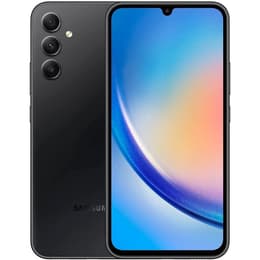
Galaxy A34
Galaxy A34
Starting at

Refurbished price:135.00

Versus €399.00 new

See options
Galaxy S23 FE
Galaxy S23 FE
Starting at

Refurbished price:226.00

Versus €708.98 new

See options

Ratings

The Samsung Galaxy A34 (2023) and the Samsung Galaxy S23 FE (2023) are Android smartphones from Samsung's diverse lineup. While both devices offer a modern smartphone experience, the Galaxy S23 FE, released later in the year, generally provides more advanced features and performance, positioning it as a step up from the more accessible Galaxy A34. Both run on the Android operating system with Samsung's One UI.

Scores

Durability

When considering the long-term usability of these devices, both the Galaxy A34 and Galaxy S23 FE offer substantial software support, though with slight differences in update frequency.

  • Release Timeline: The Galaxy A34 was released in March 2023, while the Galaxy S23 FE followed in October 2023. This later release date for the S23 FE means its software support cycle will naturally extend a few months longer than the A34's.
  • OS and Security Updates: Both devices are promised four major Android OS upgrades and five years of security patches from their respective launch dates. The Galaxy S23 FE receives monthly security updates, ensuring more frequent protection against vulnerabilities. The Galaxy A34, on the other hand, is on a quarterly security update schedule.
  • Durability Features: The Galaxy S23 FE features an IP68 rating for dust and water resistance, allowing submersion in up to 1.5 meters of fresh water for 30 minutes. The Galaxy A34 has an IP67 rating, protecting against dust and submersion in up to 1 meter of fresh water for 30 minutes. Both devices feature Corning Gorilla Glass 5 on their displays for scratch resistance.

Year of Release

2023

2023

Compatible with latest Update

Yes

Yes

OS

Android

Android

Foldable

No

No

Performance

The performance capabilities of the Galaxy A34 and Galaxy S23 FE cater to different user demands, with the S23 FE offering a more robust experience for intensive tasks.

  • Processing Power: The Galaxy S23 FE is equipped with a more powerful processor, which translates to noticeably faster app loading times and smoother multitasking, especially with demanding applications and graphics-intensive games. Benchmarking tests indicate the S23 FE can be significantly faster in both single-core and multi-core operations. The Galaxy A34 provides solid performance for everyday use, handling common apps and general navigation without significant delays.
  • Memory and Storage: The Galaxy S23 FE typically comes with 8GB of RAM, contributing to its fluid multitasking capabilities. The Galaxy A34 is available with either 6GB or 8GB of RAM. For storage, both offer 128GB or 256GB options. A key difference is that the Galaxy A34 supports expandable storage via a microSD card, allowing users to increase storage capacity, a feature not present in the Galaxy S23 FE.
  • Battery Behavior: The Galaxy A34 houses a larger 5000mAh battery, which generally provides extended usage times for many users. The Galaxy S23 FE has a 4500mAh battery. While the A34 often demonstrates longer battery life in typical use, the S23 FE's processor can be more efficient in certain scenarios.

Memory (GB)

6 GB

8 GB

Screen quality

Both devices offer vibrant displays, but the Galaxy S23 FE incorporates a more advanced panel with enhanced brightness and color reproduction.

  • Display Technology: The Galaxy S23 FE features a Dynamic AMOLED 2X display, known for its superior color accuracy, deeper blacks, and higher contrast. The Galaxy A34 uses a Super AMOLED display, which also delivers rich colors and good contrast.
  • Brightness and Clarity: The Galaxy S23 FE can achieve a peak brightness of 1450 nits, making it more comfortable to view content in bright outdoor conditions. The Galaxy A34 reaches a peak brightness of 1000 nits, which is still ample for most environments. Both displays offer a Full HD+ resolution (1080x2340 pixels), providing clear and sharp visuals.
  • Refresh Rate and Size: Both phones feature a 120Hz refresh rate, ensuring smooth scrolling and fluid animations. The Galaxy A34 has a slightly larger 6.6-inch display, offering a more expansive viewing area, while the Galaxy S23 FE has a 6.4-inch display.

Resolution

1080 x 2340

1080 x 2340

Screen type

Super AMOLED

Dynamic AMOLED 2X

Audiovisual

The camera systems on the Galaxy A34 and Galaxy S23 FE offer distinct capabilities, particularly in terms of zoom and video recording.

  • Rear Camera System: The Galaxy S23 FE features a versatile triple-camera setup with a 50MP main sensor, a 12MP ultrawide lens, and an 8MP telephoto lens capable of 3x optical zoom. This dedicated telephoto lens allows for clear zoomed-in shots without significant loss of detail. The Galaxy A34 also has a triple-camera system, comprising a 48MP main sensor with optical image stabilization (OIS), an 8MP ultrawide lens, and a 5MP macro lens. It lacks a dedicated telephoto lens.
  • Photography Performance: The S23 FE generally offers improved image processing and better low-light performance, capturing more detail and dynamic range. The A34 delivers good results in well-lit conditions, with its OIS helping to reduce blur.
  • Video Recording and Front Camera: The Galaxy S23 FE supports video recording up to 8K resolution at 24 frames per second, and its 10MP front camera can record 4K video at 60 frames per second. The Galaxy A34 records video up to 4K at 30 frames per second with both its 48MP main rear camera and its 13MP front camera.

Main camera

48 megapixels

50 megapixels

Front camera

13 megapixels

10 megapixels

Miscellaneous

Beyond core specifications, several practical elements differentiate the user experience between these two Samsung smartphones.

  • Build Materials and Handling: The Galaxy S23 FE features a more premium construction with an aluminum frame and a glass back, contributing to a solid in-hand feel. It weighs 209g. The Galaxy A34 has a plastic back and frame, weighing 199g, which makes it slightly lighter.
  • Connectivity and Ports: Both devices support 5G connectivity and modern Wi-Fi standards. They both utilize a USB-C port for charging and data transfer. A notable distinction is that the Galaxy S23 FE supports wireless charging, a convenience feature not available on the Galaxy A34.
  • Biometrics and Audio: Both phones incorporate an optical in-display fingerprint sensor for secure unlocking. They also feature stereo speakers, providing a more immersive audio experience for media consumption.

Weight

199 g

209 g

Screen size (in)

6.6

6.4

Network

5G

5G

SIM card

Dual Physical SIM

Physical SIM

Carrier compatibility

Unlocked

Unlocked

The Samsung Galaxy A34 and Galaxy S23 FE cater to slightly different user priorities within the Android ecosystem. The Galaxy A34 is frequently praised by users for its excellent battery life and smooth performance for everyday tasks, making it a reliable choice for general use. Its larger display and expandable storage are also common positive points. Some users note its plastic build and the absence of wireless charging as areas where it differs from higher-end models.

The Galaxy S23 FE, on the other hand, is often highlighted for its more powerful processing capabilities, superior camera system with a telephoto lens, and a brighter, more vibrant display. However, some users have reported concerns regarding its battery life and potential heating during prolonged use, particularly with certain processor variants.

Users prioritizing extended battery life, a slightly larger screen, and the flexibility of expandable storage may find the Galaxy A34 well-suited to their needs. Conversely, those who value higher performance for demanding applications, a more advanced camera with optical zoom, wireless charging, and a more premium build will likely lean towards the Galaxy S23 FE. Both devices offer a quality-assured refurbished option, providing an eco-friendly alternative for consumers seeking to make informed and sustainable choices.


See all articles

Our recent comparisons