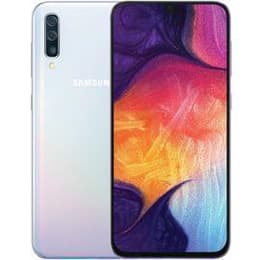
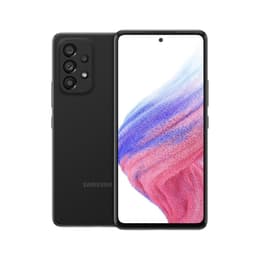


Galaxy A50 Vs Galaxy A53 5G

Galaxy A50
Galaxy A50
Starting at

Refurbished price:107.00

Versus €349.00 new

See options
Galaxy A53 5G
Galaxy A53 5G
Starting at

Refurbished price:119.00

Versus €459.00 new

See options

Ratings

The Samsung Galaxy A50, released in March 2019, and the Samsung Galaxy A53 5G, launched in March 2022, are both mid-range smartphones from Samsung's popular A-series. While they share the Android operating system and Samsung's One UI, the A53 5G introduces several advancements in performance, display technology, and camera capabilities, reflecting the three-year gap in their release. These differences cater to varying user needs and expectations from a modern smartphone.

Scores

Durability

The longevity of a smartphone is influenced by its initial release date and the manufacturer's software support policy. The Galaxy A50, being an older model, has reached the end of its major software update cycle, while the Galaxy A53 5G benefits from a more extended support period.

  • Release Timeline: The Galaxy A50 was released in March 2019, making it a device from an earlier generation. The Galaxy A53 5G, launched in March 2022, is a significantly newer model.
  • Software Support: The Galaxy A50 originally launched with Android 9.0 Pie and received updates up to Android 11. In contrast, the Galaxy A53 5G launched with Android 12 and is promised four major OS upgrades, extending its support through Android 16, along with five years of security updates. This means the A53 5G offers a longer period of receiving the latest Android features and security patches.
  • Durability Features: The Galaxy A50 features a glass front with a plastic back and frame. The Galaxy A53 5G enhances durability with Corning Gorilla Glass 5 on the front and an IP67 rating for dust and water resistance, allowing it to withstand submersion in up to one meter of water for 30 minutes.

Year of Release

2019

2022

Compatible with latest Update

No

Yes

OS

Android

Android

Foldable

No

No

Performance

Performance in smartphones is crucial for daily operations, from launching applications to handling demanding tasks. The three-year difference between these models brings notable changes in processing power and overall system responsiveness.

  • Processing Power: The Galaxy A53 5G offers a more current-generation processor, which translates to smoother operation and better handling of demanding applications and multitasking compared to the Galaxy A50's older processor. Users of the A50 have reported occasional stutters, especially with the 4GB RAM variant, though it generally performs adequately for light daily use.
  • Multitasking and Storage: Both devices offer various RAM configurations, with the A53 5G generally providing higher options, contributing to more fluid multitasking. The A53 5G also offers larger internal storage options, up to 256GB, compared to the A50's maximum of 128GB, with both supporting expandable storage via microSD.
  • Battery Performance: The Galaxy A50 is equipped with a 4000 mAh battery, which users have found to provide a full day of moderate use, sometimes extending to a day and a half. The Galaxy A53 5G features a larger 5000 mAh battery, often delivering more than a day's worth of power even with a high refresh rate display enabled, with some users reporting up to two days of casual use.

Memory (GB)

4 GB

4 GB

Screen quality

The display is a primary interface for smartphone interaction, and both models feature Samsung's Super AMOLED technology, known for vibrant colors and deep blacks. However, the newer model introduces enhancements for a more fluid visual experience.

  • Display Technology and Clarity: Both the Galaxy A50 and A53 5G feature Super AMOLED displays, offering rich colors and excellent contrast. Both have a Full HD+ resolution, providing sharp and clear visuals for everyday viewing.
  • Refresh Rate: A key difference lies in the refresh rate. The Galaxy A50 has a standard 60Hz refresh rate. The Galaxy A53 5G significantly upgrades this to a 120Hz refresh rate, resulting in noticeably smoother scrolling and a more responsive feel during navigation and gaming.
  • Brightness and Size: The Galaxy A50 has a 6.4-inch display, while the A53 5G features a slightly larger 6.5-inch display. The A53 5G also offers higher peak brightness, improving visibility in bright outdoor conditions.

Resolution

1080 x 2340

1080 x 2400

Screen type

Super AMOLED

Super AMOLED

Audiovisual

Camera capabilities are a significant factor for many users, and both the Galaxy A50 and A53 5G offer versatile camera systems, though the newer model brings advancements in sensor technology and features.

  • Rear Camera System: The Galaxy A50 features a triple rear camera setup with a 25 MP main sensor, an 8 MP ultrawide, and a 5 MP depth sensor. The Galaxy A53 5G steps up with a quad-camera system, including a 64 MP main sensor with Optical Image Stabilization (OIS), a 12 MP ultrawide, a 5 MP macro, and a 5 MP depth sensor. The OIS on the A53 5G's main camera helps in reducing blur from handshakes, especially in challenging lighting.
  • Photography Performance: Users generally found the A50's camera to perform well in good lighting conditions, capturing vibrant photos suitable for social media, though low-light performance was noted as a weakness. The A53 5G offers improved daylight performance and enhanced features like an improved night mode, which automatically takes multiple shots to create a brighter image.
  • Video Recording and Front Camera: Both devices can record video at 1080p, with the A53 5G also capable of 4K video recording at 30fps on all cameras, though some users note a loss of stabilization at 4K. The A50 has a 25 MP front camera, while the A53 5G features a higher-resolution 32 MP front camera, offering more detail for selfies and video calls.

Main camera

25 megapixels

64 megapixels

Front camera

25 megapixels

32 megapixels

Miscellaneous

Beyond core features, several practical elements contribute to the overall user experience, including connectivity, physical ports, and biometric security.

  • Connectivity: A major distinction is network support. The Galaxy A50 supports 4G LTE. The Galaxy A53 5G, as its name suggests, includes 5G connectivity, offering faster mobile data speeds where available. Both support Wi-Fi 5 (802.11ac) and Bluetooth.
  • Ports and Sensors: The Galaxy A50 includes a 3.5mm headphone jack and a USB-C port. The Galaxy A53 5G removes the 3.5mm headphone jack, relying solely on its USB-C port for wired audio and charging. Both devices feature an in-display optical fingerprint sensor for biometric security.
  • Design and Handling: The Galaxy A50 weighs 166g and has dimensions of 158.5 x 74.7 x 7.7 mm. The Galaxy A53 5G is slightly heavier at 189g and marginally larger at 159.6 x 74.8 x 8.1 mm. Both have a plastic back and frame, contributing to their overall feel.

Weight

166 g

189 g

Screen size (in)

6.4

6.5

Network

4G

5G

SIM card

Dual Physical SIM

Physical SIM

Carrier compatibility

Unlocked

Unlocked

Connector

USB-C + Jack 3.5mm

USB-C

The Samsung Galaxy A50 and Galaxy A53 5G cater to different user priorities, largely due to the technological advancements made in the three years separating their releases. User feedback for the Galaxy A50 often praises its vibrant Super AMOLED display, reliable battery life for its time, and a versatile camera system that performed well in good lighting. Criticisms sometimes pointed to its low-light camera performance and occasional software stutters.

For the Galaxy A53 5G, common praise highlights its smooth 120Hz display, excellent battery life, and a capable camera system with OIS, particularly for daylight photography. Some users have noted that its performance, while improved, might not be as snappy as some competitors in its segment, and the absence of a headphone jack is a point of consideration for some.

Users prioritizing a device with a longer software support lifespan, 5G connectivity, a smoother display experience, and enhanced camera stability, especially with OIS, will find the Galaxy A53 5G well-suited to their needs. Its IP67 water and dust resistance also adds a layer of durability for those who need it. Conversely, users who value the presence of a 3.5mm headphone jack and are content with a device that has completed its major software update cycle might still find the Galaxy A50 a functional option for basic tasks. Both models, particularly the A53 5G, can be considered as quality-assured refurbished options, offering a sustainable choice for consumers.


See all articles

Our recent comparisons