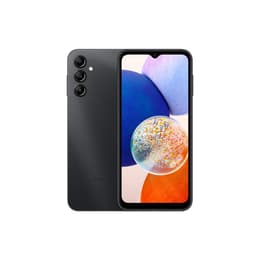
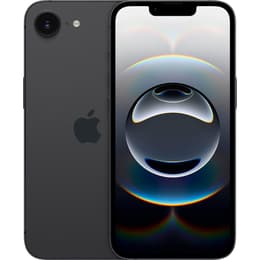


Galaxy A14 Vs iPhone 16e

Galaxy A14
Galaxy A14
Starting at

Refurbished price:97.00

Versus €269.00 new

See options
iPhone 16e
iPhone 16e
Starting at

Refurbished price:387.00

Versus €719.00 new

See options

Ratings

The Samsung Galaxy A14, released in January 2023, and the Apple iPhone 16E, introduced in February 2025, represent distinct approaches to smartphone design and functionality. While the Galaxy A14 operates on the Android platform, offering a customizable experience, the iPhone 16E runs on Apple's iOS, known for its integrated ecosystem. Key differentiators between these two devices include their operating systems, display technologies, and overall performance profiles, catering to different user preferences.

Scores

Durability

The longevity of a smartphone is influenced by its release date, build quality, and the manufacturer's commitment to software updates. These factors determine how long a device remains functional and secure for daily use.

  • Release Timeline and Software Support: The Galaxy A14, launched in early 2023, typically receives two to three major Android OS updates and four years of security updates from its release. In contrast, the iPhone 16E, released in early 2025, benefits from Apple's extended software support, generally receiving major iOS updates for six to eight years. This difference means the iPhone 16E will likely receive new features and security patches for a significantly longer period.
  • Physical Durability: The Galaxy A14 features a plastic build, which offers a degree of resilience against minor impacts but lacks official dust or water protection. The iPhone 16E, on the other hand, incorporates a Ceramic Shield front and an aluminum frame, contributing to enhanced durability and an IP68 rating for dust and water resistance, allowing it to withstand submersion in water.
  • Practical Lifespan: Users prioritizing a device with a longer practical lifespan, particularly in terms of software updates and robust physical protection, may find the iPhone 16E to be a more suitable option. The Galaxy A14 offers a solid lifespan for its category, especially for users who do not require the absolute latest software features for an extended period.

Year of Release

2023

2025

OS

Android

iOS

Foldable

No

No

Performance

Performance in a smartphone is not solely about raw processing power but how smoothly the device handles everyday tasks, demanding applications, and multitasking. The underlying hardware and software optimization play significant roles in the user experience.

  • Everyday Responsiveness: The Galaxy A14 is equipped to handle daily tasks such as web browsing, social media, and email efficiently. However, some users have noted occasional lags and stutters when opening and closing applications, indicating that it is designed for more casual usage rather than intensive multitasking. The iPhone 16E, powered by a more advanced processor, delivers a consistently smooth and responsive experience across all applications, from basic navigation to more demanding tasks.
  • Application Handling and Multitasking: For users who frequently switch between multiple applications or engage in moderate gaming, the Galaxy A14 provides a functional experience, though it may exhibit slower loading times for graphically intensive games. The iPhone 16E, with its enhanced processing capabilities and increased RAM, manages demanding applications and extensive multitasking with ease, ensuring a fluid transition between apps and a high-quality gaming experience.
  • Storage and Efficiency: Both devices offer various internal storage configurations, with the Galaxy A14 providing the flexibility of expandable storage via a microSD card. The iPhone 16E offers larger base storage options but does not support external memory expansion. The iPhone 16E's processor is also designed for improved power efficiency, contributing to its overall performance and battery management.

Memory (GB)

4 GB

8 GB

Screen quality

The display is a primary interface for smartphone interaction, and its quality significantly impacts the viewing experience, from casual browsing to multimedia consumption.

  • Display Technology and Clarity: The Galaxy A14 features a 6.6-inch PLS LCD display, offering a large viewing area with Full HD+ resolution, resulting in clear visuals for general use. The iPhone 16E, with its 6.1-inch OLED display, provides deeper blacks, higher contrast, and more vibrant colors, enhancing the visual fidelity, especially for photos and videos.
  • Brightness and Refresh Rate: The Galaxy A14's screen has a 90Hz refresh rate, contributing to smoother scrolling and animations, but its peak brightness can make outdoor visibility challenging in direct sunlight. The iPhone 16E maintains a standard 60Hz refresh rate, which is consistent for everyday use, and its OLED panel generally offers better outdoor visibility due to its inherent brightness capabilities.
  • Viewing Experience: Users who prioritize a larger screen for media consumption and general browsing may appreciate the Galaxy A14's expansive display. Those who value superior color accuracy, contrast, and overall visual richness, even on a slightly smaller screen, will find the iPhone 16E's OLED panel more appealing.

Resolution

1080 x 2408

2532x1170

Audiovisual

Camera capabilities are a significant factor for many smartphone users, encompassing everything from capturing everyday moments to high-quality photography and video recording.

  • Rear Camera System: The Galaxy A14 features a triple-camera setup with a 50-megapixel main sensor, accompanied by 2-megapixel macro and depth sensors. It performs well in bright daylight, capturing decent detail, but its performance diminishes in low-light conditions due to the absence of a dedicated night mode. The iPhone 16E is equipped with a single 48-megapixel main camera, which benefits from advanced computational photography to deliver consistent image quality across various lighting scenarios, including improved low-light performance.
  • Versatility and Video Recording: The Galaxy A14's camera system offers a macro lens for close-up shots, but it lacks an ultrawide lens in its 5G variant, limiting its versatility for landscape or group photos. Video recording is available at 1080p resolution at 30 frames per second. The iPhone 16E, while featuring a single rear lens, offers a 2x crop zoom and high-quality video recording capabilities, though it also omits an ultrawide or telephoto lens.
  • Front Camera and Audio: Both devices feature capable front-facing cameras for selfies and video calls, with the Galaxy A14 offering a 13-megapixel sensor and the iPhone 16E a 12-megapixel sensor. The iPhone 16E generally provides clear microphone quality for calls and recordings, and its speaker output is optimized for media consumption.

Front camera

13 megapixels

TrueDepth 12MP

Miscellaneous

Beyond the core specifications, several practical features and design elements contribute to the overall user experience and daily convenience of a smartphone.

  • Connectivity and Ports: The Galaxy A14 supports 5G connectivity, Wi-Fi 5, and Bluetooth 5.2, and notably includes a 3.5mm headphone jack and a USB-C port for charging and data transfer. It also offers expandable storage via a microSD card slot. The iPhone 16E also supports 5G (though not mmWave), Wi-Fi 6, and Bluetooth 5.3. It features a USB-C port for charging and data, but it does not include a headphone jack or expandable storage.
  • Biometrics and User Interface: The Galaxy A14 utilizes a side-mounted fingerprint sensor for secure unlocking. The iPhone 16E employs Face ID for biometric authentication, offering a seamless and secure facial recognition system. The iPhone 16E also features an Action Button, which can be customized for quick access to various functions.
  • Design and Handling: The Galaxy A14 has a larger 6.6-inch display and a plastic construction, weighing around 201 grams. The iPhone 16E, with its 6.1-inch display and aluminum frame, is slightly lighter at 167 grams, offering a more compact feel in hand. Both devices aim for a comfortable grip, though their dimensions and materials result in different tactile experiences.

Weight

201 g

167 g

Screen size (in)

6.6

6.1

Network

4G

5G

SIM card

Dual Physical SIM

eSIM

Carrier compatibility

Unlocked

Unlocked

Choosing between the Samsung Galaxy A14 and the iPhone 16E involves weighing different priorities in smartphone usage. The Galaxy A14 is often praised for its large display, long-lasting battery, and the inclusion of a headphone jack and expandable storage, making it a practical choice for users who value these features. Some common criticisms include its performance for demanding tasks and its camera's low-light capabilities.

The iPhone 16E, on the other hand, receives commendation for its robust performance, extended software support, and advanced camera system, particularly its consistent image quality. User feedback often highlights its smooth iOS experience and durable build. However, the absence of a headphone jack and expandable storage, along with its 60Hz display, are points of consideration for some users.

Users prioritizing a larger screen, the flexibility of expandable storage, and a traditional headphone jack may find the Galaxy A14 well-suited to their needs. It offers a comprehensive Android experience for everyday tasks. Conversely, users who place a higher value on long-term software support, a consistently fluid performance, and advanced camera capabilities will likely lean towards the iPhone 16E. Its integrated ecosystem and durable design also appeal to those seeking a premium experience.

Both devices offer compelling features for different user profiles. For those considering a more sustainable choice, exploring quality-assured refurbished options for either model can provide an eco-friendly alternative without compromising on functionality.


See all articles

Our recent comparisons





