

Compare models

iPhone 12 mini Vs Xiaomi Redmi Note 13 Pro

  • 1-year minimum warranty
  • Free delivery on all orders
  • Free 30-day returns
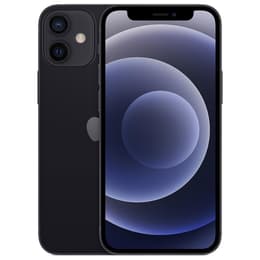
iPhone 12 mini
Starting at

Refurbished price:163.00

Versus €689.00 new

See options
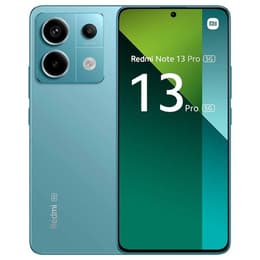
Xiaomi Redmi Note 13 Pro
Starting at

Refurbished price:184.00

Versus €999.00 new

See options

Differences at a glance

The iPhone 12 Mini, released in late 2020, is Apple's compact offering, featuring a smaller form factor and running on iOS. In contrast, the Xiaomi Redmi Note 13 Pro, launched globally in early 2024, is an Android-based smartphone that emphasizes a larger display and advanced camera capabilities. These devices cater to different user preferences, primarily differing in their operating systems, physical size, and core hardware philosophies.

Available Models

Colour

Storage (GB)

Scores

Durability

The longevity of a smartphone is influenced by its build quality, software support, and the availability of replacement parts. Both devices offer a degree of durability, though their release timelines impact their expected software lifespans.

  • Software Support: The iPhone 12 Mini, running iOS, typically receives major software updates for approximately five to six years from its release, suggesting continued support into late 2025 or early 2026. The Xiaomi Redmi Note 13 Pro, an Android device, generally receives two to three major Android version updates and around four years of security updates, extending its support into early 2028. [7]
  • Physical Durability: The iPhone 12 Mini features a Ceramic Shield front cover and an IP68 rating for water and dust resistance, indicating a high level of protection against environmental elements. [8, 11] The Redmi Note 13 Pro comes with Corning Gorilla Glass Victus protection on its display and an IP54 rating, offering protection against dust and splashes. [1, 4, 7]
  • Repairability: The iPhone 12 Mini received a repairability score of 6 out of 10 from iFixit, noting that display and battery repairs are relatively straightforward due to modular components. [20, 22, 25] Information on the specific repairability score for the Redmi Note 13 Pro is less widely available, but Xiaomi devices generally offer reasonable repair access for common components.

Year of Release

2020

2023

Compatible with latest Update

Yes

Yes

OS

iOS

Android

Foldable

No

No

Performance

Performance in a smartphone is crucial for daily tasks, from navigating applications to engaging in demanding activities like gaming. The core components of both devices are designed to handle a range of user needs, though with different underlying architectures.

  • Everyday Responsiveness: The iPhone 12 Mini provides a fluid user experience, handling common applications and multitasking with ease. Its optimized software and hardware integration ensure smooth transitions and quick app launches. [11] The Redmi Note 13 Pro offers solid everyday performance, capable of managing multiple applications simultaneously and providing a responsive interface for general use. [40]
  • Demanding Applications and Gaming: For more intensive tasks, the iPhone 12 Mini capably runs graphics-heavy games and demanding applications without significant slowdowns, maintaining consistent performance during extended use. The Redmi Note 13 Pro also performs well with games and resource-intensive apps, offering a capable experience for users who engage in mobile gaming or use powerful productivity tools. [40]
  • Storage and Multitasking: The iPhone 12 Mini is available with storage options up to 256GB and features 4GB of RAM, which supports efficient multitasking within the iOS environment. [5, 11] The Redmi Note 13 Pro offers more generous storage configurations, up to 512GB, and comes with 8GB or 12GB of RAM, providing ample space for files and robust multitasking capabilities for Android users. [1, 9, 30]

Screen quality

The display is a primary interface for smartphone interaction, and both devices offer distinct visual experiences tailored to their respective designs and target audiences.

  • Display Technology and Clarity: The iPhone 12 Mini features a 5.4-inch Super Retina XDR OLED display, delivering deep blacks, vibrant colors, and excellent contrast. [2, 8, 27] Its resolution of 2340 x 1080 pixels results in a high pixel density, ensuring sharp text and detailed images. [2, 8] The Redmi Note 13 Pro boasts a larger 6.67-inch AMOLED display with a resolution of 2400 x 1080 pixels, also providing rich colors and clear visuals across its expansive screen. [1, 3, 9]
  • Brightness and Outdoor Visibility: The iPhone 12 Mini offers a typical maximum brightness of 625 nits, peaking at 1200 nits for HDR content, which contributes to good visibility in various lighting conditions, including outdoors. [2, 27] The Redmi Note 13 Pro features a typical brightness of 500 nits, with a peak brightness of up to 1300 nits (or 1800 nits for the 5G variant), ensuring strong outdoor readability and vibrant HDR playback. [4, 7, 9, 13, 31]
  • Refresh Rate and Smoothness: The iPhone 12 Mini has a standard 60Hz refresh rate, providing a smooth experience for most users. [11] The Redmi Note 13 Pro offers a higher 120Hz refresh rate, which results in noticeably smoother scrolling and more fluid animations, enhancing the overall visual experience, particularly in fast-paced content or gaming. [1, 3, 4, 7, 9, 13]

Resolution

1080 x 2340

1220 x 2712

Screen type

Super Retina XDR OLED

AMOLED

Audiovisual

Camera capabilities are a significant factor for many smartphone users, and both the iPhone 12 Mini and the Redmi Note 13 Pro offer distinct photographic and videographic strengths.

  • Rear Camera System: The iPhone 12 Mini is equipped with a dual 12MP camera system, comprising wide and ultra-wide lenses. [2, 11, 16] It excels in capturing detailed photos with accurate color reproduction and strong low-light performance, thanks to features like Night mode and Deep Fusion. [2, 11, 16, 37] The Redmi Note 13 Pro features a triple camera setup, highlighted by a 200MP main camera with optical image stabilization (OIS), an 8MP ultrawide, and a 2MP macro lens. [1, 3, 4, 7, 9, 12] This high-resolution main sensor allows for significant detail and offers features like 4x lossless zoom. [4, 12, 26]
  • Video Recording Quality: The iPhone 12 Mini supports HDR video recording with Dolby Vision at up to 4K resolution and 30 frames per second, providing cinematic quality video capture. [2, 16, 37] It also offers excellent video stabilization. [37] The Redmi Note 13 Pro can record 4K videos at 30 frames per second, with the main camera benefiting from OIS and electronic image stabilization (EIS) for stable footage. [7, 12, 40]
  • Front Camera and Audio: Both devices feature a 12MP front camera on the iPhone 12 Mini and a 16MP front camera on the Redmi Note 13 Pro, capable of capturing detailed selfies and supporting video calls. [2, 3, 9, 16] For audio, the iPhone 12 Mini delivers clear sound through its speakers, while the Redmi Note 13 Pro features stereo speakers that provide a good audio experience for media consumption. [40]

Main camera

12 megapixels

200 megapixels

Front camera

12 megapixels

16 megapixels

Miscellaneous

Beyond the core features, several practical elements contribute to the overall user experience, from connectivity to physical design.

  • Connectivity and Ports: Both smartphones support 5G connectivity, enabling faster mobile data speeds. [2, 11, 18, 19, 21] The iPhone 12 Mini utilizes Wi-Fi 6 and Bluetooth 5.0, and features a Lightning port for charging and data transfer. [2, 34] The Redmi Note 13 Pro supports Wi-Fi 5 and Bluetooth 5.3, and includes a USB-C port, which is a more widely adopted standard, along with a 3.5mm headphone jack. [6, 7, 9, 32]
  • Biometric Security and Sensors: The iPhone 12 Mini relies on Face ID for secure facial recognition. [23] The Redmi Note 13 Pro incorporates an in-display fingerprint sensor for biometric authentication, alongside AI face unlock. [4, 7]
  • Design and Handling: The iPhone 12 Mini is notably compact and lightweight, measuring 131.5 x 64.2 x 7.4 mm and weighing 135 grams, making it ideal for one-handed use and easy pocketability. [2, 10, 23, 35] The Redmi Note 13 Pro is a larger device, with dimensions of 161.1 x 74.95 x 7.98 mm and a weight of 188 grams, offering a more expansive screen experience. [9, 31] The iPhone 12 Mini features an aluminum frame and glass back, while the Redmi Note 13 Pro has a plastic frame and glass front. [14, 40]

Weight

135 g

187 g

Width

6,42 cm

7,43 cm

Height

13,15 cm

16,12 cm

Depth

0,74 cm

0,8 cm

Screen size (in)

5.4

6.67

Network

5G

5G

SIM card

Physical SIM + eSIM

Dual Physical SIM

Carrier compatibility

Unlocked

Unlocked

Connector

Lightning

USB-C

What the community thinks

The iPhone 12 Mini and the Xiaomi Redmi Note 13 Pro cater to distinct user preferences, each excelling in different areas. Users often praise the iPhone 12 Mini for its compact size, making it comfortable for one-handed use and easy to carry. [10, 35] Its consistent performance and robust software support are also frequently highlighted as strong points. Some common criticisms include its smaller battery capacity, which may require more frequent charging for heavy users, and the 60Hz display refresh rate. [11, 24] The Redmi Note 13 Pro, on the other hand, receives commendation for its large, vibrant 120Hz AMOLED display, offering a smooth visual experience, and its high-resolution main camera. [1, 4, 7, 13] Its larger battery capacity is also a positive for many users. [1, 7] Criticisms sometimes point to the software update longevity compared to some competitors and occasional inconsistencies in low-light camera performance. [1, 40]

Users prioritizing a highly compact device with a premium build, long-term software support, and a streamlined operating system will find the iPhone 12 Mini well-suited to their needs. Conversely, users who value a larger, more immersive display, a higher refresh rate, extensive camera features, and a more open Android ecosystem may lean toward the Redmi Note 13 Pro. Both devices offer compelling features for their respective audiences. For those considering either of these models, exploring quality-assured refurbished options can provide an eco-friendly alternative to purchasing new, extending the life cycle of these capable smartphones.