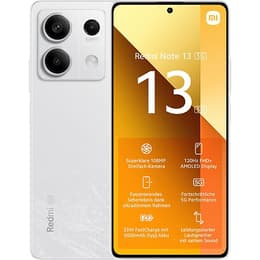


Xiaomi Redmi Note 13 Vs Xiaomi Redmi Note 14 4G

Xiaomi Redmi Note 13
Starting at

Refurbished price:137.00

Versus €340.00 new

See options
Xiaomi Redmi Note 14 4G
Starting at

Refurbished price:162.00

Versus €229.99 new

See options

Ratings

The Xiaomi Redmi Note 13 (2024) and Xiaomi Redmi Note 14 4G (2025) are successive generations of smartphones designed for everyday use. While both devices offer a similar user experience with their large displays and Android operating systems, the Redmi Note 14 4G introduces updates to its internal components, display protection, and battery capacity. Both models run on the Android platform, with the Note 14 4G launching with a newer version of the operating system.

Scores

Durability

When considering the long-term usability of these devices, their release timelines and software support are key factors. The Redmi Note 13 was released in January 2024, while the Redmi Note 14 4G followed in late 2024 or early 2025, giving the latter a slight advantage in terms of future software updates.

  • Software Longevity: The Redmi Note 13 launched with Android 13 and is expected to receive 2 years of OS updates and 3 years of security updates. The Redmi Note 14 4G, launching with Android 14, is anticipated to receive a longer support period, with some reports suggesting up to 4 Android OS upgrades and 6 years of security updates, extending its practical lifespan. [4, 8, 12, 18, 19, 20]
  • Physical Durability: Both phones feature an IP54 rating for dust and splash resistance, offering protection against everyday elements. [9, 18, 20] However, the Redmi Note 14 4G upgrades its screen protection to Corning Gorilla Glass 5, compared to the Gorilla Glass 3 on the Redmi Note 13, potentially offering enhanced resistance against drops and scratches. [3, 7, 9, 18]
  • Repairability: While specific repairability scores can vary by region and model, both devices are generally designed with components that allow for servicing, aligning with typical mid-range smartphone construction.

Year of Release

2024

2025

OS

Android

Android

Foldable

No

No

Performance

The performance of these smartphones is influenced by their internal processing units and memory configurations, impacting how smoothly they handle daily tasks and more demanding applications. Both devices are equipped to manage common smartphone activities, but there are differences in their underlying hardware.

  • Processing Power: The Redmi Note 13 is powered by a processor that handles everyday applications and multitasking adequately, suitable for general use and light gaming. [5, 19] The Redmi Note 14 4G features a newer generation processor, which provides a noticeable improvement in overall system responsiveness and efficiency, making it better suited for more intensive tasks and smoother app transitions. [6, 11, 20, 24]
  • Multitasking and Storage: Both models offer configurations with 6GB or 8GB of RAM, allowing for efficient multitasking. Storage options typically range from 128GB to 256GB, with both supporting expandable storage via a microSD card, providing flexibility for users with large media libraries. [3, 5, 7, 8, 15, 19]
  • Battery Performance: The Redmi Note 13 includes a 5000mAh battery, providing sufficient power for a full day of moderate use, with 33W fast charging support. [5, 18, 19] The Redmi Note 14 4G features a larger 5500mAh battery, which, combined with its efficient processor, generally translates to extended usage times between charges, also supporting 33W fast charging. [8, 9, 11, 15, 20, 22, 24, 25]

Memory (GB)

8 GB

6 GB

Screen quality

The visual experience on both the Redmi Note 13 and Redmi Note 14 4G is a highlight, as both feature large, vibrant displays. However, the newer model brings some enhancements to the viewing experience.

  • Display Technology and Size: Both smartphones are equipped with a 6.67-inch AMOLED display, offering deep blacks, vibrant colors, and excellent contrast. [3, 5, 7, 18, 19] This technology ensures a rich visual experience for media consumption and general browsing.
  • Resolution and Refresh Rate: Both displays feature a Full HD+ resolution (1080x2400 pixels) and a 120Hz refresh rate, contributing to sharp images and smooth scrolling and animations. [3, 5, 7, 18, 19] This high refresh rate makes interactions feel more fluid.
  • Brightness and Clarity: The Redmi Note 13 offers a peak brightness of up to 1800 nits, ensuring good visibility even in bright outdoor conditions. [5] The Redmi Note 14 4G further enhances this with a peak brightness of up to 2100 nits, providing even better outdoor readability and a more impactful HDR viewing experience. [3, 15]

Resolution

1080 x 2400

1080x2400

Audiovisual

The camera systems on both the Redmi Note 13 and Redmi Note 14 4G are designed to capture detailed images, particularly with their main sensors. While they share some similarities, there are notable differences in their secondary lenses and overall capabilities.

  • Main Camera Performance: Both devices feature a 108MP main camera sensor, capable of capturing high-resolution photos with good detail in well-lit conditions. [5, 9, 11, 18, 19] The Redmi Note 14 4G's main sensor also offers 3x in-sensor zoom for detailed close-ups. [11]
  • Secondary Cameras and Versatility: The Redmi Note 13 includes an 8MP ultrawide camera and a 2MP macro camera, offering more versatility for different types of shots. [5, 18, 19] In contrast, the Redmi Note 14 4G omits the ultrawide lens, featuring only a 2MP macro and a 2MP depth sensor alongside its main camera, which some users might find less versatile for landscape or group shots. [9, 11, 15, 24]
  • Video and Selfie Capabilities: Both phones support 1080p video recording. [18, 24] The Redmi Note 13 has a 16MP front camera, while the Redmi Note 14 4G upgrades to a 20MP front camera, potentially offering more detailed selfies and improved video call quality. [5, 11, 18]

Miscellaneous

Beyond the core specifications, several practical features and design elements differentiate these two smartphones, influencing daily convenience and user interaction.

  • Connectivity and Ports: Both devices support 4G LTE connectivity, Wi-Fi, and Bluetooth. They retain a 3.5mm headphone jack and feature a USB-C port for charging and data transfer. [11, 18, 20] The Redmi Note 14 4G also includes NFC (region-dependent) and an infrared blaster. [3, 11, 15]
  • Design and Handling: The Redmi Note 13 has a sleek design with a plastic build and an IP54 rating. [18, 19] The Redmi Note 14 4G maintains a similar aesthetic but is slightly larger and heavier, with a plastic back and an IP54 rating. [9, 20, 22] Both offer a comfortable grip, though the Note 14 4G's increased dimensions might be noticeable to some.
  • Security and Audio: Both phones offer fingerprint sensors for secure unlocking; the Redmi Note 13 typically has a side-mounted sensor, while the Redmi Note 14 4G features an in-display fingerprint sensor. [5, 11, 16] Both also provide stereo speakers for an enhanced audio experience. [3, 11, 18]

Weight

175 g

196 g

Screen size (in)

6.67

6.67

Network

5G

4G

SIM card

Dual Physical SIM

Physical SIM + eSIM

Carrier compatibility

Unlocked

Unlocked

The Xiaomi Redmi Note 13 and Redmi Note 14 4G both present compelling options for users seeking a capable smartphone. User feedback for the Redmi Note 13 often praises its vibrant AMOLED display, reliable battery life for its class, and the performance of its main camera. [17, 18, 19] Some criticisms have pointed to the secondary cameras being less impactful and occasional inconsistencies in battery performance or UI experience. [13, 17]

For the Redmi Note 14 4G, users frequently highlight the improved display protection, the larger battery capacity, and the enhanced performance from its newer processor as significant advantages. [9, 12, 24] However, a common point of contention is the removal of the ultrawide camera, which some users consider a downgrade in versatility. There have also been mentions of potential software bugs or delays in updates. [9, 12, 25]

Users prioritizing a slightly more compact design and a versatile camera setup with an ultrawide lens might find the Redmi Note 13 well-suited to their needs. Conversely, those who value extended software support, a more robust display, a larger battery, and a boost in overall processing power for demanding applications may lean toward the Redmi Note 14 4G. Both devices offer a solid foundation for daily use, and considering a quality-assured refurbished option for either model can be an eco-friendly alternative to purchasing new.


See all articles

Our recent comparisons