

Galaxy S23 Vs Xiaomi Redmi Note 13

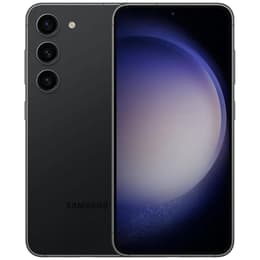
Galaxy S23
Galaxy S23
Starting at

Refurbished price:240.00

Versus €959.00 new

See options
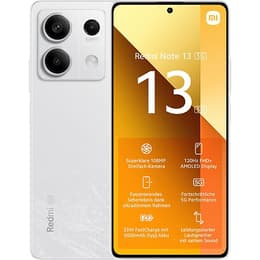
Xiaomi Redmi Note 13
Starting at

Refurbished price:137.00

Versus €340.00 new

See options

Ratings

The Samsung Galaxy S23, released in February 2023, and the Xiaomi Redmi Note 13, launched in January 2024, are both Android-based smartphones. While the Galaxy S23 positions itself as a compact flagship device, the Redmi Note 13 offers a feature-rich experience in a more accessible category. Both devices run on the Android operating system, with distinct software overlays that shape their user interfaces and overall experience.

Scores

Durability

The longevity of a smartphone is significantly influenced by its release date and the manufacturer's commitment to software updates.

  • Release Timeline: The Samsung Galaxy S23 was released in February 2023, making it approximately a year older than the Xiaomi Redmi Note 13, which launched in January 2024. This difference in release dates impacts their respective software support cycles.
  • Software Support: Samsung has committed to providing the Galaxy S23 with four major Android OS updates and five years of security updates, extending support until 2028. The Redmi Note 13 series is expected to receive three major Android OS updates and four years of security patches, also reaching support until 2028. This means both devices offer a comparable long-term software experience, though the Galaxy S23 started with a slightly longer initial commitment.
  • Durability Features: The Galaxy S23 features Corning Gorilla Glass Victus 2 on both its front and back, along with an aluminum frame and an IP68 rating for dust and water resistance. The Redmi Note 13 features Corning Gorilla Glass 3 for screen protection and an IP54 rating, indicating protection against splashes and dust.

Year of Release

2023

2024

Compatible with latest Update

Yes

Yes

OS

Android

Android

Foldable

No

No

Performance

Performance in smartphones is about how smoothly they handle daily tasks, from browsing and social media to more demanding applications and gaming.

  • Processor Capabilities: The Galaxy S23 is equipped with a processor designed for high-end performance, allowing it to handle demanding applications and multitasking with ease. Users can expect a very responsive experience, even with graphically intensive games or multiple apps running simultaneously. The Redmi Note 13 features a processor that provides stable performance for everyday use and can manage mobile games, though it may not offer the same level of high-end graphical performance as the Galaxy S23.
  • Storage and RAM: The Galaxy S23 offers 8GB of RAM with storage options including 128GB, 256GB, and 512GB, utilizing UFS 4.0 for faster data access in most configurations. The Redmi Note 13 comes with 6GB, 8GB, or 12GB of RAM and storage options of 128GB, 256GB, or 512GB, using LPDDR4X RAM and UFS 2.2 storage. The Galaxy S23's faster storage technology can contribute to quicker app loading and file transfers.
  • Battery Behavior: The Galaxy S23 has a 3900 mAh battery, which, combined with its efficient processor and display technology, is designed to provide a full day of use for many users. The Redmi Note 13 features a larger 5000 mAh battery, offering extended usage times, with some reports indicating up to 1.5 days or 39 hours on a single charge for the 5G variant, and up to 51 hours for the 4G variant. Both support fast charging, with the Galaxy S23 supporting 25W wired charging and the Redmi Note 13 supporting 33W wired charging.

Memory (GB)

8 GB

8 GB

Screen quality

The display is a primary interface for smartphone interaction, and differences in screen technology can significantly impact the visual experience.

  • Display Technology and Clarity: Both devices feature AMOLED displays, known for vibrant colors and deep blacks. The Galaxy S23 uses a Dynamic AMOLED 2X display, offering a 6.1-inch screen with a resolution of 2340x1080 pixels. The Redmi Note 13 has a larger 6.67-inch AMOLED display with a resolution of 2400x1080 pixels. The Galaxy S23's display is noted for its energy efficiency due to new organic materials.
  • Brightness and Refresh Rate: The Galaxy S23's display can reach a peak brightness of 1750 nits, providing excellent visibility even in bright outdoor conditions, and features an adaptive refresh rate of 48-120Hz for smooth scrolling and responsiveness. The Redmi Note 13 offers a peak brightness of 1800 nits and a 120Hz refresh rate, contributing to a fluid visual experience.
  • Screen Size and Viewing Experience: The Galaxy S23 offers a more compact 6.1-inch display, which can be preferred by users seeking a device that is easier to handle with one hand. The Redmi Note 13's larger 6.67-inch display provides a more expansive viewing area, which can enhance media consumption and gaming experiences.

Resolution

1080 x 2340

1080 x 2400

Screen type

Dynamic AMOLED 2X

AMOLED

Audiovisual

Camera performance is a key consideration for many users, with both devices offering distinct photographic capabilities.

  • Rear Camera System: The Samsung Galaxy S23 features a versatile triple-camera setup, including a 50MP main wide-angle camera, a 12MP ultra-wide camera, and a 10MP telephoto lens with 3x optical zoom. This configuration allows for a range of photographic styles, from expansive landscapes to detailed zoomed-in shots. The Xiaomi Redmi Note 13 also has a triple-camera system, led by a 108MP main camera, an 8MP ultra-wide camera, and a 2MP macro camera. The higher megapixel count on the Redmi Note 13's main sensor can capture detailed images, especially in good lighting.
  • Photography Performance: The Galaxy S23 is known for its consistent image quality across various lighting conditions, with strong low-light performance and detailed photos. Its telephoto lens provides genuine optical zoom capabilities. The Redmi Note 13's main camera performs well in good lighting, producing solid shots with decent dynamic range, though its ultra-wide and macro cameras may show more noise, particularly in low-light situations.
  • Video Recording and Audio: The Galaxy S23 supports video recording up to 8K resolution at 24/30fps, along with 4K at 30/60fps, offering advanced video capabilities. It also features stereo speakers. The Redmi Note 13 typically records video up to 1080p at 30fps, with some variants supporting 60fps, and includes stereo speakers with Dolby Atmos support.

Main camera

50 megapixels

108 megapixels

Front camera

12 megapixels

16 megapixels

Miscellaneous

Beyond core features, several practical elements contribute to the overall user experience and daily convenience of a smartphone.

  • Connectivity and Ports: Both the Galaxy S23 and Redmi Note 13 support 5G connectivity, along with modern Wi-Fi standards (Wi-Fi 6e for S23, Wi-Fi 802.11 a/b/g/n/ac for Note 13) and Bluetooth 5.3. The Galaxy S23 features a USB Type-C 3.2 port, while the Redmi Note 13 has a USB Type-C 2.0 port. The Redmi Note 13 also retains a 3.5mm headphone jack, which is absent on the Galaxy S23.
  • Biometrics and Sensors: The Galaxy S23 incorporates an ultrasonic in-screen fingerprint sensor for secure unlocking. The Redmi Note 13 also features an in-display fingerprint sensor. Both devices include standard sensors like accelerometers, gyroscopes, and proximity sensors.
  • Design and Build: The Galaxy S23 has dimensions of 146.3 x 70.9 x 7.6mm and weighs 168g, featuring a glass front and back with an aluminum frame. The Redmi Note 13 measures 162.24 x 75.55 x 7.97mm and weighs 188.5g, with a sleek design and a plastic frame. The Galaxy S23's more compact size and lighter build may appeal to users preferring a smaller device.

Weight

167 g

175 g

Screen size (in)

6.1

6.67

Network

5G

5G

SIM card

Physical SIM + eSIM

Dual Physical SIM

Carrier compatibility

Unlocked

Unlocked

User feedback for the Samsung Galaxy S23 often highlights its powerful performance, excellent camera system, and premium build quality. Many users appreciate its compact form factor and the extended software support provided by Samsung. Criticisms sometimes point to its battery life, which, while improved over its predecessor, may not satisfy the heaviest users compared to larger devices. The Redmi Note 13 is frequently praised for its large, vibrant AMOLED display, impressive battery life, and capable main camera, especially considering its category. Some users note that its processor, while sufficient for daily tasks, may not offer the same raw power as higher-end phones, and the ultra-wide and macro camera performance can be inconsistent in challenging lighting.

Users prioritizing a compact device with top-tier performance, advanced camera features, and long-term software updates may find the Samsung Galaxy S23 well-suited to their needs. Its robust build and high-resolution video capabilities cater to those who demand a premium experience in a smaller package. Conversely, individuals who value a larger display for media consumption, extended battery life, and a more accessible device may lean towards the Xiaomi Redmi Note 13. Its strong display and battery performance make it a practical choice for everyday usage without compromising on screen real estate.

For those considering either device, exploring quality-assured refurbished options can be a sustainable choice, offering a way to access these technologies while contributing to a more eco-friendly approach to electronics.


See all articles

Our recent comparisons







