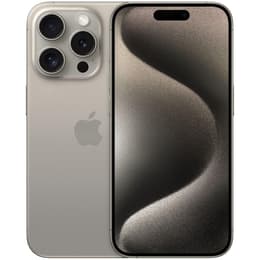
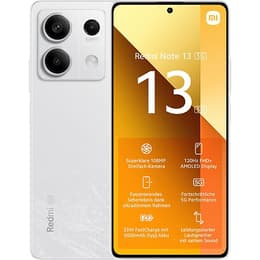


iPhone 15 Pro Vs Xiaomi Redmi Note 13

iPhone 15 Pro
iPhone 15 Pro
Starting at

Refurbished price:510.00

Versus €1,165.38 new

See options
Xiaomi Redmi Note 13
Starting at

Refurbished price:137.00

Versus €340.00 new

See options

Ratings

The iPhone 15 Pro, released in September 2023, and the Xiaomi Redmi Note 13, launched globally in January 2024, represent distinct offerings in the smartphone market. While both are designed to provide a comprehensive mobile experience, they cater to different user expectations through their hardware and software ecosystems. The iPhone 15 Pro operates on Apple's iOS, known for its integrated services and long-term software support, whereas the Redmi Note 13 runs on Android with Xiaomi's HyperOS overlay, offering a customizable experience. Key differentiators lie in their processing power, camera capabilities, and overall build.

Scores

Durability

The expected practical lifespan and software support differ between these two devices, reflecting their respective ecosystems and release strategies.

  • Software Longevity: The iPhone 15 Pro launched with iOS 17 and is compatible with subsequent major updates, including iOS 18 and iOS 26, indicating a commitment to several years of software support, potentially extending to at least 2028. The Redmi Note 13, initially running Android 13 with MIUI 14, has since been updated to HyperOS 2 based on Android 15, with Xiaomi typically providing 2 years of OS updates and 3 years of security updates.
  • Build Materials and Durability Features: The iPhone 15 Pro features a titanium frame, Ceramic Shield front cover, and an IP68 rating for dust and water resistance, allowing submersion up to 6 meters for 30 minutes. User reports suggest that while the titanium is lighter, the new contoured edges might be a weak point in some drop scenarios compared to previous stainless steel models. The Redmi Note 13 offers an IP54 rating, providing protection against splashes and dust. Its display is protected by Corning Gorilla Glass 3 or Gorilla Glass 5, depending on the specific model.
  • Repairability: While specific repairability scores are not detailed for both, the iPhone 15 Pro's design with a titanium frame and Ceramic Shield front suggests a robust construction. The Redmi Note 13's build includes internal reinforcements and multi-layer shock absorption in some variants, aimed at enhancing durability.

Year of Release

2023

2024

Compatible with latest Update

Yes

Yes

OS

iOS

Android

Foldable

No

No

Performance

Performance is a significant area of distinction, influencing how smoothly applications run and how the devices handle demanding tasks.

  • Processing Power: The iPhone 15 Pro is equipped with a current-generation processor designed for high performance, featuring a multi-core CPU and a powerful GPU. This configuration allows for exceptionally fast app launches, seamless multitasking, and smooth execution of graphically intensive games and professional applications. The Redmi Note 13 utilizes a mid-range processor, either a Snapdragon 685 or a MediaTek Dimensity 6080, depending on the model. This hardware is suitable for everyday tasks like browsing, social media, and video consumption, but may exhibit slower app startup times and less fluid performance in demanding games or heavy multitasking.
  • Multitasking and Responsiveness: The iPhone 15 Pro comes with 8GB of RAM, contributing to its ability to manage numerous open applications and switch between them without noticeable delays. The Redmi Note 13 is available with various RAM configurations, including 6GB, 8GB, and 12GB, and features dynamic RAM expansion technology to enhance multitasking capabilities.
  • Storage Options: The iPhone 15 Pro offers internal storage options ranging from 128GB up to 1TB. The Redmi Note 13 provides storage options from 128GB to 512GB, with some variants supporting expandable storage via a microSD card.

Memory (GB)

8 GB

8 GB

Screen quality

The visual experience on both devices is shaped by their display technologies and specifications.

  • Display Technology and Clarity: The iPhone 15 Pro features a 6.1-inch Super Retina XDR OLED display with a resolution of 2556 x 1179 pixels, resulting in a pixel density of 460 ppi. This OLED panel delivers deep blacks, vibrant colors, and excellent contrast. The Redmi Note 13 sports a larger 6.67-inch AMOLED display with a 1080x2400 pixel (FHD+) resolution. This also provides good contrast and color reproduction, suitable for media consumption.
  • Brightness and Outdoor Visibility: The iPhone 15 Pro's display offers a typical brightness of 1000 nits, with a peak brightness of 2000 nits for outdoor viewing, ensuring good visibility even in bright sunlight. The Redmi Note 13's display can reach a peak brightness of up to 1800 nits in some models, which also contributes to decent outdoor readability.
  • Refresh Rate and Smoothness: The iPhone 15 Pro incorporates ProMotion technology, providing an adaptive refresh rate that ranges from 1Hz to 120Hz, which contributes to smooth scrolling and responsive interactions. The Redmi Note 13 also features a 120Hz refresh rate, offering a smooth visual experience for scrolling and general navigation, though it may not be adaptive to the same extent as the iPhone.

Resolution

1179 x 2556

1080 x 2400

Screen type

LTPO Super Retina XDR OLED

AMOLED

Audiovisual

Both smartphones offer multi-camera systems, but with different approaches to image processing and feature sets.

  • Rear Camera System: The iPhone 15 Pro is equipped with a triple camera system, including a 48MP main sensor, a 12MP ultrawide lens, and a 12MP telephoto lens with 3x optical zoom. This setup is noted for its detailed images, improved low-light performance, and advanced features like 48MP HEIF photos and ProRes video recording. The Redmi Note 13 features a triple camera setup with a 108MP main sensor, an 8MP ultrawide camera, and a 2MP macro lens. The main camera performs well in good lighting conditions, capturing detailed images.
  • Low-Light and Video Capabilities: The iPhone 15 Pro offers enhanced low-light photography and video recording, with features like Night mode and Cinematic mode. It supports 4K video recording at up to 60fps, including Log video for professional workflows. The Redmi Note 13's main camera can produce fairly good images at night, but its ultrawide camera's performance diminishes in low light. Video recording quality is generally up to 1080p at 30fps, with some Pro models supporting 60fps, but it does not offer 4K recording.
  • Front Camera: The iPhone 15 Pro has a 12MP front camera with autofocus, providing clear selfies and improved video call quality. The Redmi Note 13 comes with either a 13MP or 16MP front-facing camera.

Main camera

48 megapixels

108 megapixels

Front camera

12 megapixels

16 megapixels

Miscellaneous

Beyond core performance and display, several other features contribute to the overall user experience and device utility.

  • Connectivity: The iPhone 15 Pro supports Wi-Fi 6E and 5G connectivity, offering fast wireless data speeds. It also features Bluetooth for connecting accessories. The Redmi Note 13 (5G model) also supports 5G and includes Wi-Fi and Bluetooth capabilities.
  • Ports and Biometrics: The iPhone 15 Pro has transitioned to a USB-C port, which supports 10Gbps data transfer speeds and external display output. It relies on Face ID for secure authentication. The Redmi Note 13 typically includes a USB-C port for charging and data transfer, and many models retain a 3.5mm headphone jack. It uses an in-screen fingerprint sensor for biometric security.
  • Design and Handling: The iPhone 15 Pro features a lightweight titanium design with contoured edges, making it comfortable to hold. It also introduces a customizable Action Button. The Redmi Note 13 series generally features a slim and lightweight body with a modern design.
  • Audio: The iPhone 15 Pro provides a strong audio experience through its speakers. The Redmi Note 13 (some models) features dual stereo speakers with Dolby Atmos support.

Weight

171 g

175 g

Screen size (in)

6.1

6.67

Network

5G

5G

SIM card

eSIM

Dual Physical SIM

Carrier compatibility

Unlocked

Unlocked

Connector

USB-C (USB 3)

USB-C

The iPhone 15 Pro and Xiaomi Redmi Note 13 cater to different user priorities, offering distinct strengths in their respective categories.

Users often praise the iPhone 15 Pro for its exceptional processing power, which ensures smooth performance across all applications, and its advanced camera system, particularly for detailed photos and professional-grade video capabilities. Its vibrant OLED display with adaptive refresh rate and robust build quality with an IP68 rating are also frequently highlighted. Some user concerns have been noted regarding the durability of the titanium frame in certain drop scenarios, despite its lighter weight.

The Xiaomi Redmi Note 13 is often commended for its large, bright AMOLED display and its long-lasting battery life, which can comfortably last a full day for many users. Its 108MP main camera is generally well-received for everyday photography in good lighting. However, some users have noted that the processor performance can be less responsive for demanding tasks, and the ultrawide and macro cameras may not match the quality of the main sensor.

Users prioritizing top-tier performance, advanced camera features, and a highly integrated software ecosystem with extended support will find the iPhone 15 Pro well-suited to their needs. Conversely, users who value a large, bright display, strong battery endurance, and a capable main camera for general use, within a more customizable Android environment, may lean toward the Redmi Note 13. Both devices offer a quality experience, and for those considering a more sustainable choice, exploring quality-assured refurbished options for either model can be an eco-friendly alternative.


See all articles

Our recent comparisons