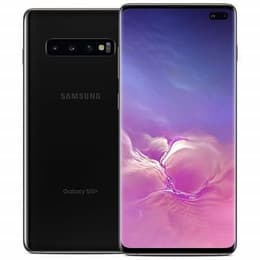



Galaxy S10+ Vs Google Pixel 6A

Galaxy S10+
Galaxy S10+
Starting at

Refurbished price:143.00

Versus €1,009.00 new

See options
Google Pixel 6A
Google Pixel 6A
Starting at

Refurbished price:143.00

Versus €459.00 new

See options

Ratings

The Samsung Galaxy S10 Plus, released in March 2019, and the Google Pixel 6a, launched in July 2022, are both Android smartphones that cater to different user priorities. While the Galaxy S10 Plus was a flagship device at its release, offering a premium experience with a focus on hardware features, the Pixel 6a is a more recent mid-range offering from Google, emphasizing a streamlined software experience and advanced computational photography. Both devices run on the Android operating system, but their approaches to performance, display, and camera technology reflect their respective release timelines and design philosophies.

Scores

Durability

When considering the longevity of these devices, their release dates and software support policies are key factors. The Galaxy S10 Plus, being an older device, has reached the end of its major Android operating system updates, while the Pixel 6a benefits from a more extended support window.

  • Release Timeline: The Samsung Galaxy S10 Plus was released in March 2019, making it several years older than the Google Pixel 6a, which launched in July 2022. This age difference directly impacts their expected software support.
  • Software Longevity: The Galaxy S10 Plus received Android updates up to Android 12. The Pixel 6a is slated to receive Android OS updates until at least July 2025 and security updates until at least July 2027. This means the Pixel 6a offers a significantly longer period of guaranteed software and security updates.
  • Physical Durability: The Galaxy S10 Plus features an IP68 rating for dust and water resistance, and its display is protected by Corning Gorilla Glass 6, with Gorilla Glass 5 on the back. The Pixel 6a has an IP67 rating and uses Corning Gorilla Glass 3 for screen protection. The S10 Plus generally offers a more robust physical build in terms of water resistance and glass protection.

Year of Release

2019

2022

Compatible with latest Update

No

Yes

OS

Android

Android

Foldable

No

No

Performance

The performance of these two smartphones reflects their different generations and design focuses. The Galaxy S10 Plus, a former flagship, offered top-tier performance for its era, while the Pixel 6a leverages a newer, custom-designed chip for efficient modern usage.

  • Processing Capabilities: The Galaxy S10 Plus, when released, provided smooth and responsive performance for demanding applications and multitasking, suitable for gaming and heavy daily use. The Pixel 6a is designed to handle everyday tasks, demanding apps, and multitasking smoothly, providing a fluid user experience.
  • Memory and Storage: The Galaxy S10 Plus was available with 8GB or 12GB of RAM and storage options ranging from 128GB up to 1TB, with the added benefit of a microSD card slot for expandable storage. The Pixel 6a comes with 6GB of RAM and 128GB of internal storage, which is not expandable.
  • Battery Behavior: The Galaxy S10 Plus features a 4100 mAh battery, with users often reporting it lasting a full day or more with moderate use. The Pixel 6a has a 4410 mAh battery, and users generally find its battery life to be good, capable of lasting a full day with heavy usage.

Memory (GB)

8 GB

6 GB

Screen quality

The visual experience on both devices is delivered through OLED technology, but there are distinctions in resolution, size, and refresh rate that impact overall clarity and smoothness.

  • Display Technology and Clarity: The Galaxy S10 Plus features a 6.4-inch Dynamic AMOLED display with a resolution of 1440 x 3040 pixels, resulting in a pixel density of 522 ppi. This provides a very sharp and vibrant viewing experience. The Pixel 6a has a 6.1-inch OLED display with a resolution of 1080 x 2400 pixels and a pixel density of 429 ppi, offering clear visuals suitable for everyday content consumption.
  • Brightness and Outdoor Visibility: The Galaxy S10 Plus can achieve a peak brightness of up to 1057 nits, which contributes to excellent readability even in bright outdoor conditions. The Pixel 6a offers a peak brightness of 800 nits, providing good visibility in various lighting environments.
  • Refresh Rate: Both the Galaxy S10 Plus and the Pixel 6a feature a standard 60Hz refresh rate. This means the screen updates 60 times per second, providing a smooth experience for most daily interactions, though not as fluid as higher refresh rate displays found on some newer devices.

Resolution

1440 x 3040

1080 x 2400

Screen type

Dynamic AMOLED

OLED

Audiovisual

Both smartphones offer capable camera systems, but they approach photography with different strengths, reflecting their respective manufacturers' philosophies and technological advancements.

  • Rear Camera Systems: The Samsung Galaxy S10 Plus features a versatile triple-camera setup on the rear, including a 12-megapixel wide-angle lens, a 12-megapixel telephoto lens, and a 16-megapixel ultrawide lens, with features like optical image stabilization (OIS) and phase-detection autofocus (PDAF). The Google Pixel 6a comes with a dual-camera system, comprising a 12.2-megapixel wide-angle lens and a 12-megapixel ultrawide lens.
  • Photography Performance: The Galaxy S10 Plus delivers detailed and vibrant photos in various conditions, with its telephoto lens offering optical zoom capabilities. The Pixel 6a, while having fewer lenses, excels in computational photography, offering features like Magic Eraser, Face Unblur, Real Tone, and Night Sight, which enhance image quality and provide unique editing capabilities.
  • Video Recording and Audio: Both devices are capable of recording 4K video at 60 frames per second. The Galaxy S10 Plus also offers features like dual-video recording. For audio, the S10 Plus includes a 3.5mm headphone jack, while the Pixel 6a relies on its USB-C port for wired audio accessories.

Main camera

12 megapixels

12.2 megapixels

Front camera

10 megapixels

8 megapixels

Miscellaneous

Beyond the core specifications, several practical elements differentiate the user experience and functionality of the Galaxy S10 Plus and the Pixel 6a.

  • Connectivity and Ports: The Galaxy S10 Plus supports Wi-Fi 6 and Bluetooth 5.0, and includes a 3.5mm headphone jack and a USB-C port. The Pixel 6a features newer connectivity standards with Wi-Fi 6e and Bluetooth 5.2, and supports 5G networks. It uses a USB-C port but omits the 3.5mm headphone jack.
  • Biometric Security: The Galaxy S10 Plus incorporates an ultrasonic in-display fingerprint sensor for secure unlocking. The Pixel 6a also features an in-display fingerprint sensor, which is optical.
  • Design and Handling: The Galaxy S10 Plus weighs 175 grams (or 198 grams for ceramic models) and measures 157.6 x 74.1 x 7.8 mm. The Pixel 6a is slightly heavier at 178 grams and has dimensions of 152.2 x 71.8 x 8.9 mm. The S10 Plus also offers Wireless PowerShare, allowing it to wirelessly charge other compatible devices.

Weight

175 g

178 g

Screen size (in)

6.4

6.1

Network

4G

5G

SIM card

Physical SIM

Physical SIM + eSIM

Carrier compatibility

Unlocked

Unlocked

Connector

USB-C + Jack 3.5mm

USB-C

The Samsung Galaxy S10 Plus and the Google Pixel 6a offer distinct experiences, shaped by their release eras and design philosophies. User feedback for the Galaxy S10 Plus often highlights its impressive display, the convenience of a 3.5mm headphone jack, expandable storage via microSD, and the innovative Wireless PowerShare feature. Some users, however, might note its older software experience compared to newer devices.

The Google Pixel 6a is frequently praised for its exceptional camera capabilities, driven by Google's advanced computational photography, and its clean, timely Android software updates. Its efficient performance for its segment is also a common positive. Conversely, some users have expressed a desire for a higher refresh rate display and the inclusion of a headphone jack or expandable storage.

Users who prioritize a larger, high-resolution display, the flexibility of expandable storage, and the traditional convenience of a headphone jack may find the Galaxy S10 Plus well-suited to their needs. Its robust build and Wireless PowerShare feature could also be appealing. On the other hand, individuals who value a modern, streamlined Android experience with guaranteed longer software support, coupled with a camera that excels through software processing, will likely lean towards the Pixel 6a. Its compact form factor and efficient performance make it a strong contender for those seeking a reliable and smart device.

For those considering either device, exploring quality-assured refurbished options can provide an eco-friendly alternative to purchasing new.


See all articles

Our recent comparisons